Iran’s growing use of low-cost attack drones has reshaped the security landscape across the Middle East. In recent years, Tehran and its allies have relied increasingly on unmanned aerial vehicles to strike military facilities, energy infrastructure and urban targets while avoiding direct conventional confrontation.
The strategy reflects broader changes in modern warfare, where relatively inexpensive drones can threaten high-value targets and force powerful militaries to spend vastly more to defend against them. The result is a new form of asymmetric conflict in which cost, scale and psychological pressure can matter as much as raw firepower.
Understanding how and why Iran deploys these drones requires examining the technology itself, the strategic logic behind it, and the regional security environment that has allowed such tactics to expand.

Iran’s drone program has evolved over decades, but it has become particularly prominent during periods of heightened tension between Tehran, the United States and regional rivals. In conflicts ranging from Yemen to Iraq and more recently broader regional confrontations, drones have increasingly been used to probe air defences, disrupt energy supplies and demonstrate the reach of Iranian military technology.
For policymakers and analysts, the rise of drone warfare in the Middle East represents not only a tactical shift but a structural change in the balance between offensive and defensive capabilities.
The Rise of Iran’s Drone Arsenal
Iran began investing in unmanned aircraft during the 1980s, partly as a response to international sanctions that limited access to advanced military equipment. Over time, its defence industry developed a wide range of drones for reconnaissance, surveillance and attack missions.
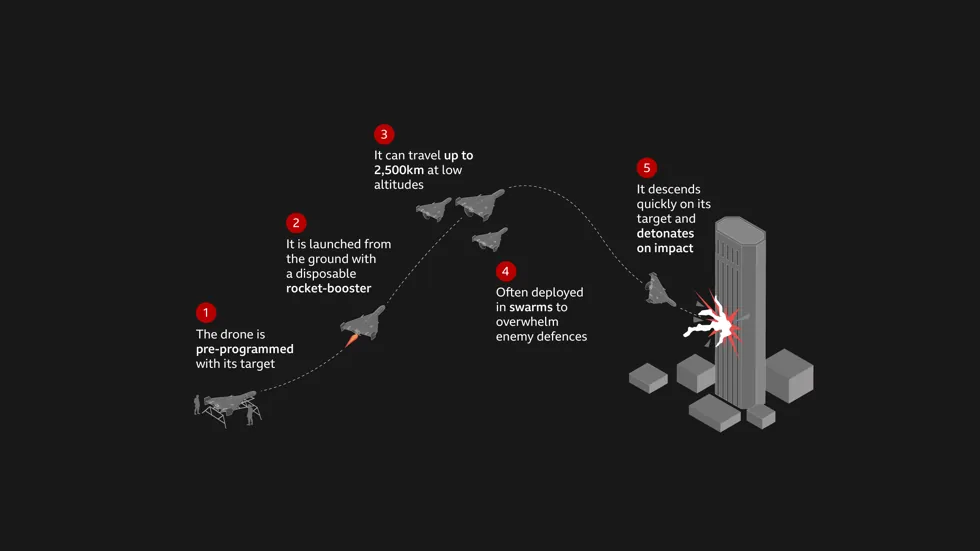
Among the most widely known are the Shahed-series drones, which have been deployed across multiple theatres of conflict. The Shahed-136, often described as a “loitering munition” or “kamikaze drone,” is designed to carry explosives and detonate when it strikes its target.
These drones are relatively simple compared with advanced military aircraft. They are typically pre-programmed before launch to follow a GPS-guided route to a designated location rather than being remotely piloted throughout their flight. Their modest speed and lightweight construction allow them to fly at relatively low altitude, making detection more difficult for radar systems designed primarily to track ballistic missiles or aircraft.
■ Related News



Cost has been a crucial factor in their appeal. Estimates from defence analysts suggest that some Iranian loitering drones can be produced for tens of thousands of dollars each, far less than the price of many missiles used to intercept them.
This cost disparity has become a central feature of drone warfare.
Why Cheap Drones Can Challenge Powerful Militaries
Traditional air defence systems were designed to stop high-speed aircraft or ballistic missiles, both of which are expensive weapons used sparingly. Drones, by contrast, can be produced and launched in large numbers.
Military planners sometimes refer to this tactic as “swarming,” in which multiple drones are sent toward a target simultaneously to overwhelm defensive systems. Even if most are intercepted, the sheer volume can increase the chances that some will penetrate defences.
For countries operating advanced air defence networks, the financial imbalance can be significant. Interceptor missiles, fighter jet sorties and sophisticated radar systems often cost far more per engagement than the drones they are designed to destroy.
As a result, defending against large numbers of low-cost drones can strain both budgets and military stockpiles, especially during prolonged periods of conflict.
This dynamic has been observed in several recent conflicts, where relatively inexpensive unmanned aircraft forced technologically advanced militaries to adapt rapidly.
Strategic Goals Behind Iran’s Drone Use
Iran’s drone deployments are widely interpreted as part of a broader strategy of asymmetric warfare. Rather than confronting adversaries through conventional large-scale battles, Tehran has often relied on tactics designed to exploit vulnerabilities in more powerful militaries.
Several objectives appear to shape this approach.
First, drones provide a means of projecting power across long distances without exposing Iranian personnel to direct combat. Many of the drones have ranges that allow them to reach targets across much of the Middle East.
Second, they can target infrastructure that is economically or symbolically significant. Energy facilities, airports and military bases are frequently highlighted by analysts as vulnerable sites because disruptions there can have wide-ranging consequences.
Third, the attacks can create psychological pressure. The distinctive sound of incoming drones, often captured in smartphone videos during conflicts, can generate fear among civilian populations even when damage is limited.
This psychological element is often viewed as part of a broader effort to demonstrate capability and impose costs on adversaries without escalating to full-scale war.
Regional Impact and Targeted Infrastructure
Drone attacks attributed to Iran or its allies have affected multiple countries across the Middle East in recent years. Targets have included military installations hosting foreign troops, diplomatic facilities and energy infrastructure.
Energy sites have been particularly sensitive because of their importance to global markets. The Middle East remains a critical supplier of oil and natural gas, and disruptions to production or export terminals can ripple through international energy prices.
In addition to energy facilities, drones have been used against airports, ports and urban areas. Even when interceptions prevent major damage, temporary shutdowns and security alerts can disrupt travel, trade and public life.
These attacks have also highlighted the vulnerability of densely populated cities where air defence coverage may not be as comprehensive as around military installations.
The Spread of Iranian Drone Technology
Iran’s drone technology has not remained confined within its own military. Over the past decade, variants of its unmanned systems have appeared in the arsenals of allied groups and partner states.
Some of these drones have been used by non-state actors in conflicts in Yemen, Iraq and Syria. Their deployment has allowed these groups to strike targets beyond the range of conventional weapons available to them.
The technology has also drawn international attention because similar designs have appeared in other conflicts outside the Middle East. Analysts note that the spread of relatively inexpensive drone systems has lowered the barrier for many actors to acquire long-range strike capabilities.
This diffusion of technology complicates efforts to control escalation, as drones can be produced, modified or assembled in different locations using widely available components.
Countermeasures and Defensive Challenges
As drone attacks have increased, countries across the Middle East and beyond have accelerated efforts to develop countermeasures.
One approach involves electronic warfare tools that disrupt satellite navigation signals used by drones. By jamming or spoofing GPS signals, defenders can potentially cause drones to lose their navigation capability or miss their intended targets.
Another method involves directed-energy weapons such as high-power lasers, which can disable drones without the need for costly interceptor missiles. Several countries are testing or deploying such systems as part of layered air defence strategies.
Traditional methods remain common as well. Fighter jets, anti-aircraft guns and surface-to-air missiles are still used to intercept drones, particularly when they approach critical infrastructure.
However, each interception can carry significant costs, especially if expensive missiles are used against relatively cheap unmanned aircraft.
Drone Warfare and the Changing Nature of Conflict
The widespread use of drones in the Middle East reflects a broader transformation in military technology. Unmanned systems have become central to modern warfare, used not only for surveillance but also for direct attacks.
Several trends have accelerated this shift.
Advances in commercial electronics have made components such as GPS receivers, cameras and guidance systems widely available. At the same time, manufacturing techniques have reduced the cost of producing airframes and propulsion systems.
These developments mean that sophisticated military capabilities are no longer limited to states with large defence budgets. Smaller countries and non-state groups can now acquire tools that allow them to strike targets hundreds or even thousands of kilometres away.
For defence planners, this raises difficult questions about how to protect infrastructure and civilian populations from increasingly accessible aerial threats.
Global Implications
The strategic impact of drone warfare extends beyond the Middle East. Conflicts in Eastern Europe, the Caucasus and other regions have demonstrated similar patterns in which drones are used to complement or substitute for traditional air power.
As more countries develop or acquire these systems, international security experts expect the role of unmanned aircraft to expand further.
The challenge lies in balancing offensive capabilities with effective defensive technologies. While drones offer a relatively affordable way to project power, defending against them at scale remains complex and costly.
This imbalance may shape military planning for years to come.
Conclusion
Iran’s use of low-cost drones illustrates how technological change can alter the dynamics of regional conflict. By deploying relatively inexpensive unmanned aircraft capable of striking distant targets, Tehran has found a way to challenge more advanced militaries while limiting direct confrontation.
The effectiveness of this approach rests partly on economics. Cheap drones can force adversaries to expend far greater resources defending against them, while also creating psychological pressure through unpredictable attacks.
At the same time, the spread of drone technology is reshaping security calculations across the Middle East and beyond. As governments invest in new defensive systems and countermeasures, the contest between inexpensive unmanned weapons and costly air defences is likely to remain a defining feature of modern warfare.