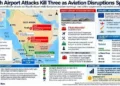
Global markets faced renewed volatility after oil prices climbed above $90 per barrel while U.S. labor data signaled a weakening employment outlook. The oil prices rise above $90 move pushed energy costs to their highest levels since 2023, contributing to a broad selloff in equities and amplifying concerns about inflation risks.
The S&P 500 fell 1.3% on Friday, marking Wall Street’s weakest weekly performance since October, according to market data cited by Associated Press. The downturn followed a report showing U.S. employers cut more jobs than they created in the latest month, while crude prices surged amid escalating tensions affecting Middle East energy supply routes.
The combination of rising energy costs and slower employment growth has heightened discussion among economists about the potential for stagflation — a scenario where economic growth slows while inflation remains elevated.

Oil markets react to geopolitical tensions
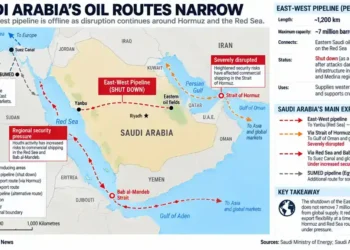
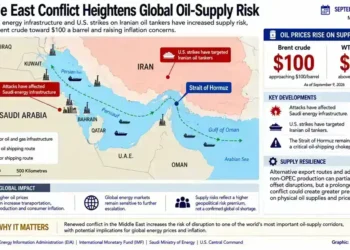
Energy markets moved sharply higher as conflict involving Iran raised concerns about supply disruptions in one of the world’s most important oil transit corridors.
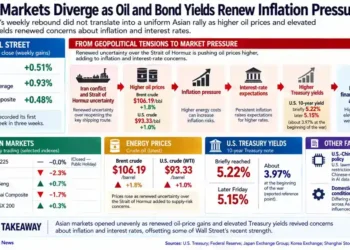
The global benchmark Brent crude settled at $92.69 per barrel, up 8.5% on the day after briefly exceeding $94, its highest level since September 2023. Meanwhile West Texas Intermediate crude, the primary U.S. benchmark, climbed 12.2% to $90.90, breaching the $90 threshold for the first time since 2023.
Oil prices had traded near $70 only a week earlier, underscoring how rapidly geopolitical risk has altered energy market expectations.
Analysts note that developments around the Strait of Hormuz, located off Iran’s southern coast, remain central to supply concerns. Roughly 20% of global oil shipments pass through the narrow waterway, making it a critical artery for energy markets.
The U.S. government also released details of a program proposed by Donald Trump to offer insurance support for commercial ships transiting the strait. Market reaction was limited, suggesting traders remain focused on the broader geopolitical outlook.
■ Related News


Labor data deepens macroeconomic uncertainty
Financial markets were also pressured by new labor data indicating U.S. payrolls declined in the latest reporting period. According to economists cited by Associated Press, the negative jobs figure added to evidence that economic momentum may be slowing.
A separate report also showed U.S. retail earnings for January came in below expectations, raising concerns about household spending capacity. Consumer spending accounts for a large share of U.S. economic activity, making the data closely watched by investors and policymakers.
Strategists noted that the simultaneous rise in energy prices and weakening labor conditions increases the risk of stagflation — a dynamic that complicates monetary policy.
Federal Reserve policy trade-offs
Under typical economic conditions, the Federal Reserve might lower interest rates to support employment and stimulate growth. Lower borrowing costs can encourage investment and consumer spending while supporting financial markets.
However, higher energy prices tend to feed into inflation, limiting the central bank’s room to ease policy. Oil price increases raise transportation and production costs across multiple sectors, which can eventually pass through to consumer prices.
The Federal Reserve reduced its benchmark interest rate several times in the previous year and had indicated the possibility of additional cuts. Market participants are now assessing whether renewed inflation pressures could alter that trajectory.
Equity markets retreat across sectors
Major U.S. equity indexes declined across the board following the data releases.
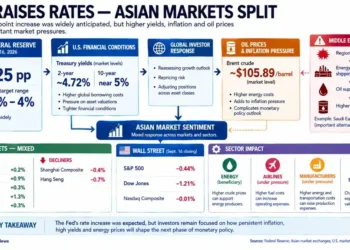
The Dow Jones Industrial Average ended the session down 453 points, or 0.9%, at 47,501.55, after earlier losses approaching 945 points. The Nasdaq Composite fell 1.6%, closing at 22,387.68.
Smaller companies faced sharper declines. The Russell 2000, which tracks small-capitalization firms, dropped 2.3%, reflecting the sector’s sensitivity to borrowing costs and domestic economic conditions.
Companies with significant fuel expenses were among the weakest performers. Shares of Old Dominion Freight Line declined 7.9%, while Carnival Corporation fell 5% and Southwest Airlines lost 5.3%.
Global market reaction
European equities also moved lower following the U.S. developments. London’s FTSE 100 index declined 1.2% during Friday trading.
Asian markets were more mixed. Hong Kong’s Hang Seng Index rose 1.7%, while South Korea’s KOSPI was largely unchanged after extreme volatility earlier in the week. The benchmark had fallen 12.1% on Wednesday before rebounding 9.6% the following session.
Strategic outlook for markets
Financial markets experienced rapid swings during the week as investors reassessed geopolitical risk and macroeconomic indicators. Historically, global equities have often stabilized after geopolitical conflicts if energy prices remain contained.
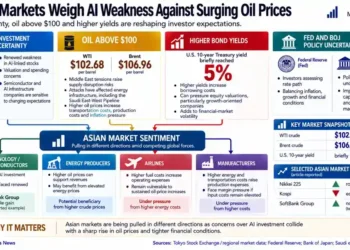
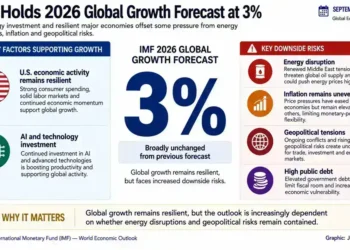
However, analysts note that sustained oil prices near or above $100 per barrel could place additional pressure on global growth and inflation dynamics.
Much of the near-term market outlook will depend on developments in Middle East energy transit routes and incoming economic data from the United States.