The recent weakening of the U.S. dollar is contributing to higher consumer costs, as rising import prices filter through supply chains and into household expenses. Market data and economic analysis indicate that currency depreciation is amplifying inflationary pressures at a time when policymakers are closely monitoring price stability.
The shift in the dollar’s value has implications across sectors, particularly for goods heavily reliant on imports, including energy, food, and consumer products. Economists note that while exchange-rate movements are often gradual, their cumulative impact on purchasing power can be significant.
Currency Movement and Cost Transmission
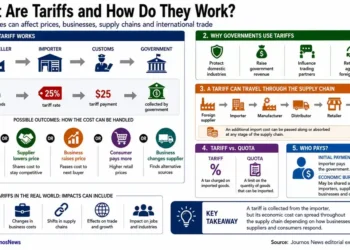
The U.S. dollar has declined against a basket of major currencies in recent months, according to data compiled by Bloomberg. A weaker dollar increases the cost of imported goods, as U.S. buyers must spend more to purchase foreign products priced in stronger currencies.

According to analysis cited by Reuters, businesses facing higher import costs often pass those increases on to consumers, contributing to broader inflation trends. This dynamic is particularly visible in sectors such as retail and manufacturing, where global supply chains play a central role.
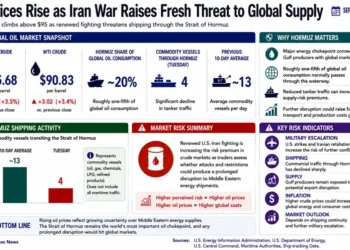
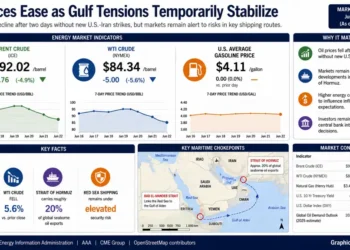
Energy markets also reflect this pattern. Oil, which is globally traded in dollars, becomes more expensive domestically when the currency weakens, even if global benchmark prices remain stable.
Impact on Households and Inflation Metrics
Consumer prices are affected unevenly, with imported goods experiencing more immediate cost increases. Data from the U.S. Bureau of Labor Statistics indicates that categories such as apparel, electronics, and certain food items are especially sensitive to exchange-rate fluctuations.
Economists interviewed by the Financial Times noted that currency-driven inflation can complicate central bank policy, as it operates independently of domestic demand conditions. While interest rate adjustments can influence borrowing and spending, they do not directly control exchange-rate movements.
The effect is often described as “imported inflation,” where external currency dynamics contribute to domestic price increases. This can reduce real household purchasing power, particularly in lower-income segments where a higher share of income is spent on goods.



Corporate and Market Implications
For corporations, a weaker dollar presents mixed outcomes. Export-oriented companies may benefit from improved competitiveness abroad, as their goods become cheaper in foreign markets. However, firms reliant on imported inputs face rising costs, which can pressure margins.
Corporate disclosures reported by The Wall Street Journal indicate that several multinational firms have flagged currency headwinds in recent earnings guidance. Exchange-rate volatility is increasingly being cited as a factor affecting cost structures and pricing strategies.
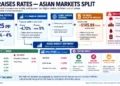
Market participants are also monitoring currency movements as part of broader macroeconomic signals. Analysts note that sustained dollar weakness can influence capital flows, commodity pricing, and global trade balances.
Policy and Strategic Outlook
The Federal Reserve does not target exchange rates directly, but currency trends remain relevant to its broader inflation mandate. According to central bank communications, policymakers are assessing multiple inflation drivers, including global supply conditions and currency fluctuations.
Looking ahead, economists suggest that the persistence of dollar weakness will depend on factors such as interest rate differentials, global economic growth, and investor sentiment. Any prolonged depreciation could reinforce inflationary pressures, particularly if combined with supply-side constraints.
While currency movements are only one component of the inflation equation, their role in shaping import costs underscores the interconnected nature of global economic dynamics.