Americans received a mixed picture of the economy this past week as policymakers, businesses and consumers continued to navigate persistent inflation, record-high home prices, slowing global growth and uncertainty tied to the conflict involving Iran.
New economic reports pointed to a resilient labor market and steady financial markets. However, they also highlighted ongoing housing affordability challenges, elevated energy costs and growing divisions within the Federal Reserve over the future path of interest rates.
IMF Cuts Global Growth Forecast
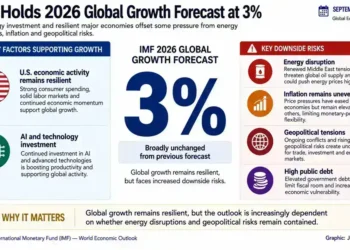
The International Monetary Fund (IMF) lowered its outlook for the global economy, citing higher energy costs linked to the Iran conflict. At the same time, it said investment in artificial intelligence and other emerging technologies continues to support global growth.

The IMF now expects the global economy to expand 3% in 2026, down from 3.5% in 2025 and below the 3.1% forecast it issued in April. It projects growth will improve to 3.4% in 2027.
For the United States, the IMF left its forecast unchanged. It expects the U.S. economy to grow 2.3% this year after expanding 2.1% in 2025.
Growth in Europe is expected to remain weaker. The IMF forecasts the 21 countries using the euro will collectively expand by just 0.9% this year after growing 1.4% last year.
U.S. Home Prices Hit Another Record
Housing affordability remained a challenge despite slower sales.
The National Association of Realtors (NAR) said sales of previously owned homes fell 2.4% in June from May to a seasonally adjusted annual rate of 4.09 million units. Compared with a year earlier, however, sales increased 2.8%.


The June sales pace also fell short of economists’ expectations of about 4.21 million units, according to FactSet.
Meanwhile, the national median existing-home price rose 1.8% from a year earlier to a record $440,600. It marked the highest price since NAR began tracking the data in 1999 and the 36th consecutive month of annual price increases.
Federal Reserve Officials Split on Rates
Minutes from the Federal Reserve’s June policy meeting showed officials remained divided over inflation and interest rates.
The discussions, the first reflected in meeting minutes under Federal Reserve Chair Kevin Warsh, showed policymakers disagreeing on whether inflation would ease after energy markets stabilize or remain elevated.
Projections released after the June 17 meeting showed that half of the 18 policymakers favored raising interest rates before the end of the year. The remaining officials supported either keeping rates unchanged or lowering them.
Warsh did not submit an individual forecast, saying policymakers should avoid committing to a fixed policy path while economic conditions remain uncertain.
The Federal Reserve’s benchmark interest rate stands at 3.6%.
Oil Demand Outlook Weakens
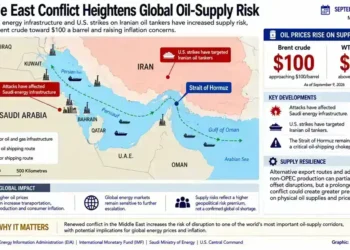
The International Energy Agency (IEA) expects global oil demand to decline this year for the first time since the COVID-19 pandemic in 2020.
The agency forecasts demand will fall by 1 million barrels per day in 2026 as higher prices and supply disruptions reduce consumption.
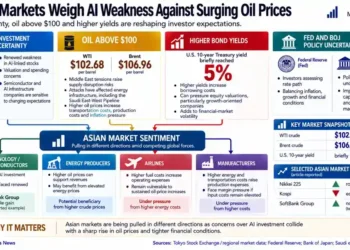
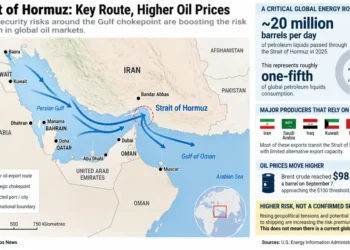
The slowdown has been most noticeable in Asia, where many economies rely on oil shipments through the Strait of Hormuz.
Several governments have responded by introducing energy-saving measures, including changes to work schedules.
The United States has been an exception. The IEA said U.S. gasoline demand increased during the second quarter even though pump prices in May were nearly 50% higher than before the conflict.
Labor Market Remains Resilient
The latest labor market data showed layoffs remained historically low despite slower hiring.
The Labor Department said initial claims for unemployment benefits fell by 2,000 to 215,000 during the week ending July 4. That was below economists’ expectations of 220,000 claims, according to FactSet.
Weekly jobless claims remain one of the earliest indicators of labor market conditions.
However, June’s employment report showed employers added only 57,000 jobs, less than half the total recorded in May, suggesting businesses remain cautious about expanding payrolls.
Markets Stay Steady
U.S. financial markets posted modest gains even as investors monitored developments involving Iran.
The S&P 500 remained on track for its fourth weekly gain in five weeks. Meanwhile, the Dow Jones Industrial Average edged higher, while the Nasdaq Composite traded little changed.
Oil prices also stabilized after earlier volatility, despite additional airstrikes in Iran following the U.S. announcement that it had completed its military operations.
Taken together, the week’s data pointed to an economy that remains resilient in key areas while continuing to face pressure from inflation, high housing costs, energy uncertainty and global geopolitical risks.
This report is based on reporting by The Associated Press.
Article Topics: U.S. Economy | Federal Reserve | Inflation | Housing Market | Oil Prices | Labor Market | IMF | Financial Markets