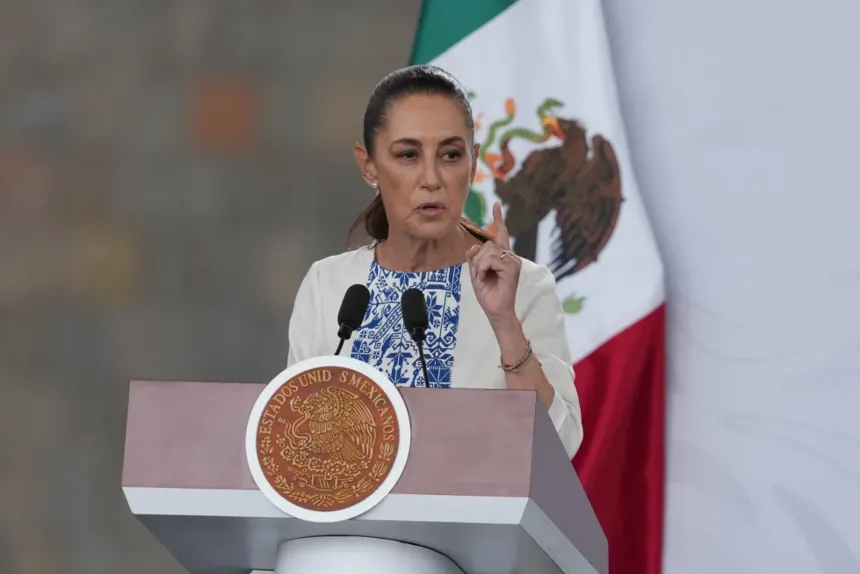
MEXICO CITY — The United States and Mexico have pledged to continue joint security and migration cooperation following meetings between Mexican President Claudia Sheinbaum and U.S. Homeland Security Secretary Markwayne Mullin, as both governments confront escalating cartel violence, diplomatic strains, and cross-border security challenges.
Mullin’s two-day visit to Mexico City comes at a sensitive moment in bilateral relations after the deaths of two CIA agents near Mexico’s northern border and recent U.S. indictments targeting 10 current and former Mexican officials accused of ties to organized crime.
Following the meeting, Sheinbaum said both sides agreed to maintain cooperation “based on mutual respect” and national sovereignty, while Mexico’s Foreign Ministry emphasized continued collaboration on migration management and anti-cartel operations.

Cartel Investigations Intensify Diplomatic Pressure
The diplomatic discussions unfolded as U.S. authorities increase pressure on Mexican officials allegedly linked to the Sinaloa Cartel. Recent indictments filed in New York accused several political and security figures of facilitating drug trafficking operations in exchange for bribes and political support.
Among those implicated are Sinaloa Governor Rubén Rocha and other regional officials, though Mexican authorities have stressed that any proven wrongdoing should be handled through legal processes. Mexico has also frozen several bank accounts connected to individuals under investigation.
Analysts say the allegations have placed additional political pressure on Sheinbaum’s administration, particularly as Washington intensifies efforts to combat transnational criminal networks tied to fentanyl trafficking and organized violence.
Migration and Human Rights Concerns Remain Central
Migration enforcement also featured prominently during the talks. Mexican officials highlighted a sharp decline in illegal border crossings by Mexican citizens, describing the numbers as the lowest in decades.
At the same time, Sheinbaum raised concerns over the deaths of 15 Mexican migrants in U.S. Immigration and Customs Enforcement detention centers since 2025. Mexico has formally brought the issue before the Inter-American Commission on Human Rights and instructed consulates to conduct daily visits to detention facilities in the United States.
■ Related News



The meetings also followed diplomatic friction surrounding a fatal April operation near the Chihuahua-Sinaloa border involving U.S. intelligence personnel. Mexican authorities protested that they had not been fully informed about the presence or activities of the CIA agents involved in the operation.
Regional Security Cooperation Expands
Security cooperation between the two countries has evolved significantly amid worsening cartel violence and growing U.S. concern over drug trafficking networks. Washington recently expanded counter-cartel coordination efforts through new interagency initiatives focused on intelligence-sharing and border enforcement.
Mexico continues to face mounting security challenges linked to organized crime groups operating across multiple states. Recent outbreaks of cartel violence and forced displacement have renewed international concern over regional stability and humanitarian conditions.
Despite ongoing tensions, officials from both governments indicated that maintaining bilateral coordination remains essential for addressing migration flows, drug trafficking, and broader regional security threats.