U.S. stocks closed modestly higher on Thursday after a sharp reversal in oil prices reduced immediate concerns about inflation and borrowing costs, helping investors regain confidence despite continued geopolitical uncertainty in the Middle East.
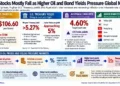
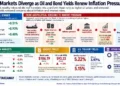
The S&P 500 rose 0.2% to 7,445.72, while the Dow Jones Industrial Average added 276 points, or 0.6%, to finish at a record 50,285.66. The Nasdaq Composite edged up 0.1% to 26,293.10, according to market data.
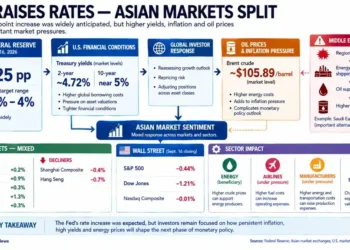
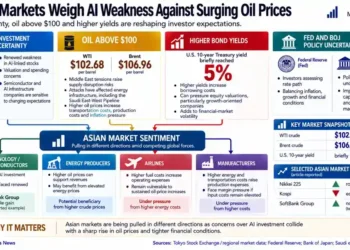
The session’s dominant market driver was volatility in crude oil. Brent crude briefly surged above $109 per barrel earlier in the day before reversing course and settling near $102.58, down roughly 2.3%, as investors weighed prospects for easing tensions linked to the conflict involving Iran and the Strait of Hormuz.

The decline in oil prices helped ease pressure on bond markets, where rising Treasury yields had recently fueled concerns about tighter financial conditions and prolonged inflation risks. The yield on the U.S. 10-year Treasury note retreated to around 4.55% after approaching 4.63% earlier in the session.
Oil Volatility Drives Market Sentiment
Financial markets have become increasingly sensitive to swings in energy prices as concerns persist over potential disruptions to global crude shipments through the Strait of Hormuz, a critical route for international oil exports.
Analysts said the intraday reversal in oil prices reduced fears of an extended inflation shock that could pressure central banks to maintain elevated interest rates longer than previously expected. Recent increases in crude prices had already pushed mortgage borrowing costs higher and raised concerns about financing conditions for capital-intensive industries, including artificial intelligence infrastructure projects.
Investor sentiment also improved after comments from U.S. President Donald Trump suggesting the conflict with Iran could end “very soon,” which contributed to a late-session recovery in equities and a pullback in oil futures.
Small Caps and Airlines Outperform
Lower bond yields particularly benefited smaller companies, which are generally more reliant on borrowing to finance expansion. The Russell 2000 index climbed 0.9%, outperforming larger-cap benchmarks.


Airline stocks also advanced as easing fuel prices improved outlooks for operating costs. Shares of Southwest Airlines rose 2.7%, while American Airlines gained 4.9%, according to market trading data.
In retail, Ralph Lauren surged 13.9% after reporting quarterly earnings and revenue that exceeded analysts’ expectations. Meanwhile, Walmart declined 7.3% after issuing weaker-than-expected profit guidance despite posting solid sales growth.
Nvidia Pullback Highlights AI Valuation Concerns
Shares of Nvidia fell 1.8% despite reporting quarterly profit and revenue above Wall Street forecasts and issuing stronger-than-expected revenue guidance.
Chief Executive Jensen Huang said demand tied to artificial intelligence infrastructure remained strong, describing the expansion of AI computing facilities as accelerating rapidly. However, some analysts said investors may have used the earnings release to lock in gains after the stock’s significant rally over the past year.
Market participants have increasingly debated whether valuations across the AI sector have become stretched following sustained gains among major semiconductor and technology companies.
Economic Data Signals Mixed Outlook
Fresh economic indicators released Thursday showed signs that higher prices may be beginning to weigh on business activity.
A preliminary survey from S&P Global indicated slower growth in the U.S. services sector, while manufacturing activity remained stronger than expected. Separately, weekly unemployment claims unexpectedly declined, suggesting the labor market remains resilient despite concerns about rising costs and slowing demand.
Global markets were mixed. South Korea’s Kospi index surged 8.4%, supported by strong gains in semiconductor shares including Samsung Electronics and SK Hynix after labor negotiations at Samsung avoided a potential strike. Japan’s Nikkei 225 rose 3.1%, while Chinese equities declined.