The tentative agreement ending the U.S.-Iran conflict has begun taking effect, reopening key shipping routes and setting the stage for direct negotiations over Tehran’s nuclear program.
The United States on Thursday lifted its blockade of Iran, allowing commercial shipping and oil tankers to resume movement through the Strait of Hormuz after months of disruption, while Iran’s supreme leader publicly endorsed future direct negotiations with American officials.
The developments mark the first major implementation steps of the recently signed agreement intended to halt hostilities between Washington and Tehran and create a framework for broader negotiations on security and nuclear issues.

Iranian state media carried a statement from Supreme Leader Ayatollah Mojtaba Khamenei endorsing future face-to-face discussions with the United States, signaling a notable shift in Tehran’s approach to engagement with Washington.
“It is obvious that the face-to-face negotiations that will be held in the future will not mean accepting the enemy’s opinion,” Khamenei said in remarks broadcast by state media.
The statement represented his first public reaction to the agreement and comes after years of resistance among Iranian hard-liners to direct talks with the United States, particularly following Washington’s withdrawal from the 2015 nuclear agreement between Iran and world powers.
Khamenei has not appeared publicly since reportedly being wounded during a strike at the beginning of the conflict.
Nuclear Inspection Plans Emerge
Additional details about the agreement emerged from a private briefing provided to U.S. lawmakers by Trump administration envoy Steve Witkoff.
■ Related News

According to two people familiar with the briefing who spoke on condition of anonymity because the discussions were closed to the public, Witkoff said Iran would invite the International Atomic Energy Agency (IAEA) to inspect its nuclear facilities and begin efforts to identify and account for Tehran’s stockpile of enriched nuclear material.
The White House did not directly address questions regarding the reported invitation but reiterated that the agreement requires Iran to formally renounce ambitions to develop nuclear weapons.
According to the briefing, Witkoff said the agreement itself contains no undisclosed side arrangements. However, he reportedly informed lawmakers that a separate letter had been drafted between Tehran and the IAEA to facilitate inspections.
The reported correspondence would allow IAEA Director-General Rafael Mariano Grossi to organize inspection efforts involving nuclear experts in Iran.
The agreement also requires that Iran’s stockpile of highly enriched uranium be diluted under international supervision while reaffirming Tehran’s commitment not to develop nuclear weapons.
Questions Remain Over Implementation
Despite the agreement taking effect, uncertainty remains regarding the next phase of negotiations.
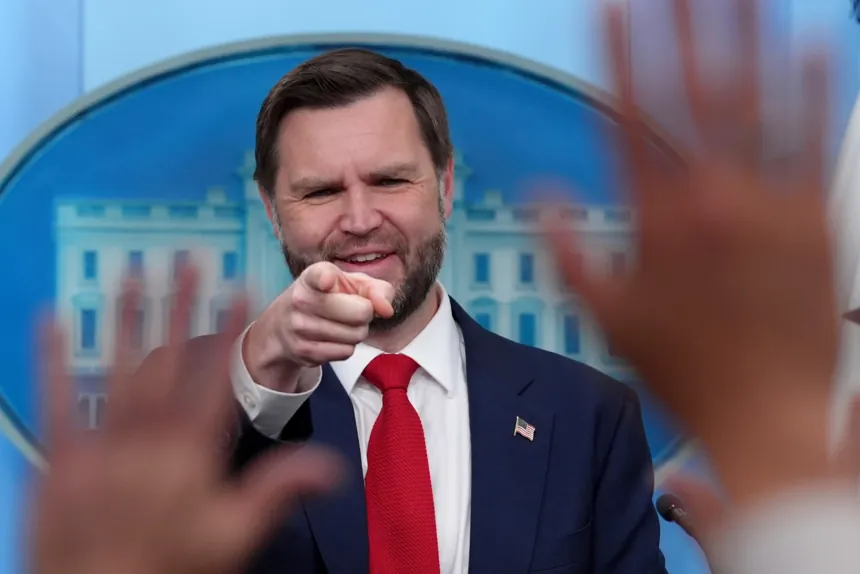
Vice President JD Vance suggested that a planned trip to Switzerland, where a ceremonial signing event had been expected, could be delayed.
Speaking to reporters at the White House, Vance said the administration still intends to travel to Switzerland but indicated that scheduling details remain unresolved.
The uncertainty comes as the Trump administration faces criticism from some political figures in Washington who argue that the agreement offers significant concessions to Iran.
President Donald Trump has defended the accord, saying it was necessary to prevent further economic disruption caused by the conflict, which contributed to higher oil prices, market volatility and inflation concerns.
The agreement extends the existing ceasefire while providing both governments with a 60-day period to negotiate broader arrangements addressing long-term issues between the two countries.
Vance Defends the Agreement
Vance, who has become one of the administration’s most visible defenders of the agreement, argued that the accord is designed to change Iran’s behavior through diplomatic engagement and verification measures.
Responding to criticism of the rollout, the vice president rejected suggestions that public communication surrounding the agreement had been inconsistent.
He also addressed tensions involving Israel, which has advocated for a tougher approach toward Iran and conducted military operations against Iranian-backed Hezbollah forces in Lebanon during the conflict.
Vance emphasized U.S. support for Israel while signaling that Washington remains committed to implementing the agreement with Tehran.
According to the vice president, more than 12.5 million barrels of oil passed through the Strait of Hormuz on Wednesday night, a development that could help stabilize global energy markets after months of disruption.
He said the easing of the blockade represented fulfillment of U.S. commitments under the initial military provisions of the agreement.
Meanwhile, U.S. Central Command said American naval forces would remain in the region to monitor compliance and ensure that all parties adhere to the terms of the accord.
Commercial Shipping Begins to Recover
Shipping activity has already started to increase following the agreement.
At least two oil tankers reportedly departed Iran and crossed the former blockade area without interference. Shipping data indicated the vessels were transporting a combined 3.8 million barrels of Iranian crude oil.
Iranian media reported that activity at southern ports had largely returned to normal, although military authorities continue to supervise maritime traffic through the strategically important waterway.
Maritime intelligence firm Lloyd’s List Intelligence said major international shipowners have resumed transits through the Strait of Hormuz for the first time in approximately 110 days.
During a media briefing, Lloyd’s List editor-in-chief Richard Meade said vessels owned by major shipping companies had effectively been stranded from using the route since February.
According to the company, ships operated by Grimaldi Group, Cosco, Knutsen and NYK have already transited the waterway. Two Iranian-flagged crude oil tankers affiliated with the National Iranian Tanker Company were also reported to have entered the strait.
Industry representatives cautioned that challenges remain.
Phillip Belcher, marine director at tanker trade association Intertanko, said the central shipping channel remains closed and that dozens of naval mines are still believed to require removal.
For now, vessels are using alternative northern and southern transit routes through Iranian and Omani waters.
Lloyd’s List estimates that approximately 550 merchant vessels still need to exit the Persian Gulf, suggesting that a full normalization of shipping operations could take weeks or even months despite the ceasefire agreement now being in effect.
Tags: United States, Iran, Strait of Hormuz, International Negotiations, Diplomatic Talks, Nuclear Inspections, IAEA, Energy Markets, Maritime Shipping, Ceasefire Agreement