U.S. gasoline prices have slipped below $4 per gallon for the first time since March, according to data from AAA, reflecting easing crude oil costs following recent geopolitical developments and a tentative U.S.–Iran agreement that has helped stabilize energy markets.
Fuel Prices Edge Lower Amid Oil Market Softening
The national average for regular gasoline fell to $3.999 per gallon on Thursday, marking its lowest level since late March, when energy markets were still adjusting to disruptions tied to conflict in the Middle East. The decline coincides with a drop in crude oil benchmarks, with Brent crude falling below $80 per barrel and U.S. West Texas Intermediate easing under $76.
While prices have cooled, they remain roughly 25% higher than a year ago, underscoring continued cost pressures for households and businesses reliant on fuel-intensive transport and logistics.

Geopolitical Shift Reshapes Energy Flows
Energy markets have been responding to a tentative agreement between the United States and Iran that includes measures to scale back uranium enrichment activity and ease certain sanctions, allowing Iranian oil exports to resume more freely.
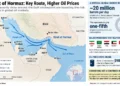
Maritime data from Lloyd’s List Intelligence indicated that major shipping operators have begun transiting the Strait of Hormuz again, a critical chokepoint that typically carries about one-fifth of global crude supply. However, analysts note that shipping volumes remain below pre-disruption levels as operators reassess security conditions.
The Strait of Hormuz, one of the world’s most strategic energy corridors, had seen significant disruption during earlier tensions, contributing to volatility in global oil prices and supply expectations.
Supply Chain Lag Keeps Prices Elevated
Despite recent declines in crude costs, retail fuel prices are expected to adjust slowly. Refiners often purchase crude oil weeks in advance, meaning lower input costs take time to reach consumers at the pump.
In addition, U.S. refining capacity remains a structural constraint, limiting the speed at which cheaper crude can translate into lower gasoline prices, according to industry analysis cited in the report.
■ Related News


Economic Pressures Still Weigh on Consumers
Economists cited in the report noted that fuel price swings tend to influence broader consumer behavior, including discretionary spending and even essential purchases. Higher transportation costs have already contributed to broader inflationary pressure across categories such as groceries, travel, and household goods.
Research highlighted by Georgia Institute of Technology suggests that households often adjust consumption patterns when fuel costs rise, while sustained declines may gradually ease spending constraints.
However, supply chain experts at Syracuse University warned that price relief may be uneven. Elevated input costs for agriculture and logistics earlier in the year are expected to continue feeding through to consumer prices in coming months.
Regional Price Gaps Remain Wide
Fuel costs continue to vary sharply across the United States. California recorded some of the highest averages at about $5.64 per gallon, followed by Hawaii at $5.57. In contrast, motorists in Texas and Indiana saw significantly lower prices, averaging around $3.40–$3.50 per gallon.
These differences reflect variations in state taxes, refining access, and distribution costs.
Outlook: Gradual Easing, Not Immediate Relief
While oil markets have responded quickly to geopolitical de-escalation, analysts caution that structural bottlenecks in refining and distribution will likely prevent rapid normalization of fuel prices.
Even as crude benchmarks retreat from recent highs above $100 per barrel, they remain above pre-conflict levels, suggesting continued but slowing inflationary pressure in energy markets.
Tags: Gasoline Prices, Oil Markets, Inflation, Crude Oil, Energy Prices, Supply Chain, Consumer Spending, Strait of Hormuz, Middle East, AAA Data