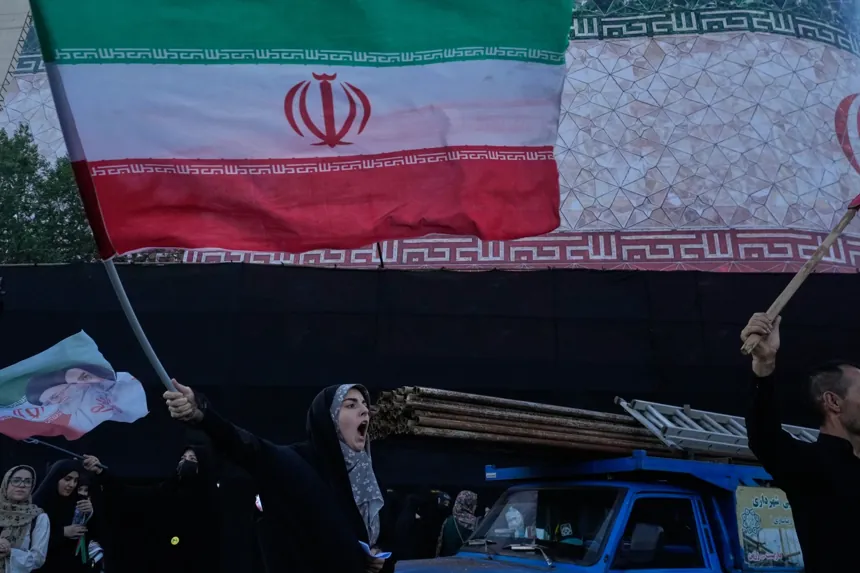
ISLAMABAD, Pakistan — The United States and Iran have reached a tentative agreement aimed at reopening the Strait of Hormuz and extending a fragile ceasefire in the wider regional conflict, according to Pakistani officials involved in mediation efforts. The announcement marks a potential turning point in a war that has disrupted global energy supplies and intensified tensions across the Middle East.
Prime Minister Shehbaz Sharif of Pakistan, which played a central mediating role, said both sides had agreed in principle to an “immediate and permanent termination of military operations on all fronts, including in Lebanon.” He added that the deal would now move toward formal signing expected later this week in Switzerland, with technical negotiations continuing in the meantime.
However, officials from both Iran and the United States indicated that implementation would not begin until the agreement is formally signed, underscoring the fragility of the arrangement.

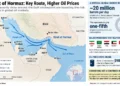
The agreement reportedly includes provisions to reopen the Strait of Hormuz — a critical global energy shipping route — and to lift a United States naval blockade that had been imposed during the conflict. U.S. President Donald Trump announced the measures on social media, stating he had authorized both the reopening of the waterway and the removal of the blockade, though he later clarified that the steps would take effect only after the signing ceremony.
Iran’s deputy foreign minister, Kazem Gharibabadi, confirmed on state television that a framework had been reached following negotiations involving Qatar and Pakistan. He said Tehran would not begin implementation until the agreement is formally signed.
High Stakes for Regional Stability
The tentative deal comes after months of escalating conflict that has drawn in multiple regional actors and caused widespread disruption across the Middle East. The war, which began earlier this year, has resulted in thousands of deaths and significantly damaged infrastructure across several countries.
Despite the announcement, key areas of tension remain unresolved. Israel’s continued military operations against Hezbollah in Lebanon have raised questions over whether all parties to the broader conflict are aligned with the ceasefire framework. Israeli authorities did not immediately comment on the agreement.
Pakistani officials said mediators would oversee further negotiations this week, aimed at establishing technical terms for implementation and addressing outstanding disputes.
■ Related News

Nuclear Program Timeline Adds Pressure
Under the proposed framework, negotiators have set a 60-day window to address Iran’s nuclear program and its stockpile of highly enriched uranium — an issue that previously stalled the 2015 nuclear agreement between Iran and world powers.
The United States has long sought the removal of enriched uranium from Iran, with Russia reportedly offering to take custody of the material. Iran, however, has maintained that its nuclear program is peaceful and has not publicly committed to transferring its stockpile.
Tehran’s ballistic missile capabilities also remain outside the scope of the immediate agreement, according to officials familiar with the talks.
Market Reaction and Political Scrutiny
Global markets reacted quickly to the announcement, with benchmark Brent crude falling by more than $3 per barrel and Asian stock markets posting gains amid expectations of eased supply disruptions.
However, the agreement is already facing scrutiny in Washington. U.S. Senator Lindsey Graham expressed concern over differing interpretations of the deal, while Democratic Representative Gregory Meeks said Congress would exercise oversight over any final accord.
Vice President JD Vance said preparations were underway for the signing, though it remained unclear which leaders would attend.
Uncertain Path Forward
While the tentative agreement signals a possible de-escalation in a conflict that has significantly disrupted global energy flows and heightened regional instability, major uncertainties remain.
The status of military operations in Lebanon, the future of Iran’s nuclear program, and the durability of any ceasefire arrangement are still subject to negotiation.
Energy analysts note that even if the agreement is finalized, restoring stable global oil and gas flows through the Strait of Hormuz could take months, as shipping and insurance sectors assess long-term risk.
For now, the announcement represents a fragile pause in a conflict whose broader political and strategic consequences continue to unfold.
Tags: Iran, United States, Pakistan, Strait of Hormuz, Middle East conflict, Iran