Supply Chain Recovery Timeline
Energy specialists indicate that the process of restoring global oil flows will not be immediate, even with renewed access through the Strait of Hormuz. Ships carrying crude oil have reportedly remained stranded in the Persian Gulf for more than three months, unable to safely transit the critical waterway that typically handles about one-fifth of global oil and gasoline shipments.
Daniel Evans, global head of fuels and refining research at S&P Global Energy, said the restart process depends heavily on logistics readiness and financial safeguards. He noted that insurance coverage, operational security, and workforce mobilization are key prerequisites before extraction and shipping can fully resume.
Market Reaction
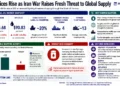
Oil prices eased following news of the agreement, reflecting short-term relief in global supply concerns. Brent crude, the international benchmark, declined by $3.45 to $83.89 per barrel in early trading Monday. U.S. West Texas Intermediate (WTI) fell $4.03 to $80.85 per barrel.

Despite the drop, prices remain significantly elevated compared with pre-conflict levels, when crude traded near $70 per barrel. Market participants continue to assess how quickly disrupted supply chains can normalize and whether geopolitical stability in the region will hold.
Logistics and Shipping Constraints
Analysts highlighted that even after reopening, oil flows through the Strait of Hormuz will not immediately return to full capacity. Tanker movement remains slow, with voyages from the Gulf to major refining centers often taking months to complete, including loading, transit, and delivery cycles.
Evans explained that operators require a sufficient window of perceived safety before reintroducing vessels into the route. This includes ensuring ships can enter, load crude, and exit without disruption, a process complicated by ongoing risk assessments.
Some oil producers in the Middle East also suspended production during the conflict due to storage constraints, a practice known as shut-ins. Restarting these operations is expected to take additional time, particularly in areas where infrastructure has been partially idled.
Regional Production Outlook
Recovery timelines are expected to vary across producing nations. Countries such as Saudi Arabia and the United Arab Emirates, which maintain alternative export routes outside the Strait of Hormuz, may resume production more quickly.
■ Related News

By contrast, Iraq faces a longer recovery period. Alan Gelder, senior vice president of refining, chemicals, and oil markets at Wood Mackenzie, said some fields in Iraq experienced deeper shutdowns and more complex operational constraints, potentially extending recovery timelines to as long as a year.
Gelder also noted that energy investment in the region slowed significantly during the conflict, adding another layer of delay as capital allocation decisions resume cautiously.
Investment and Restart Risks
Beyond physical logistics, uncertainty surrounding the durability of the ceasefire remains a key constraint on investment and production restarts. Energy stakeholders are reportedly hesitant to commit capital until there is greater confidence in long-term stability in the Strait of Hormuz corridor.
Daniel Sternoff, senior fellow at the Center on Global Energy Policy at Columbia University, said producers are unlikely to restart operations without assurances that conditions are stable beyond short-term horizons. He added that uncertainty over how quickly stranded supplies can be evacuated further complicates planning decisions.
Tags: Oil, Oil Markets, Energy Crisis, Global Economy, Brent Crude, Crude Oil, Strait of Hormuz, Supply Chain, Energy Supply, Geopolitics, Energy Markets, Oil Prices