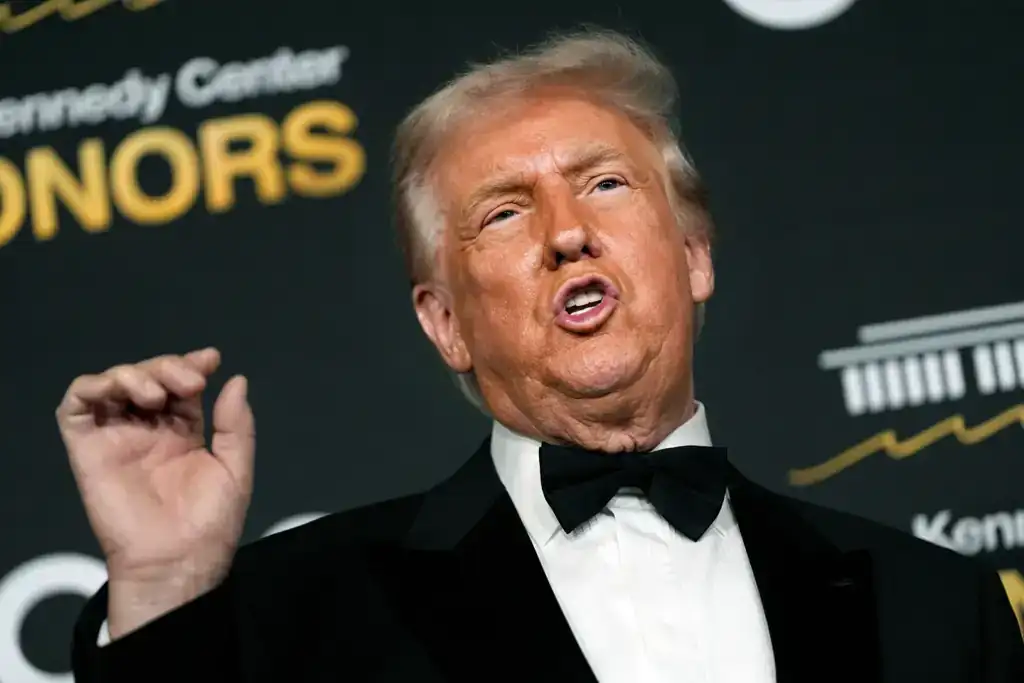
President Donald Trump said Ukrainian President Volodymyr Zelenskyy “isn’t ready” to accept a U.S.-drafted proposal aimed at ending the Russia-Ukraine war, signaling renewed tension between the two leaders as negotiators conclude a fresh round of talks. His comments come after three days of meetings in Florida involving American and Ukrainian delegations working to close differences on Washington’s plan.
Trump, speaking to reporters in Washington late Sunday, suggested that Ukraine’s position was slowing progress. He said Zelenskyy had not yet reviewed the full proposal, though members of Ukraine’s negotiating team had expressed support for aspects of it. The remarks underscored Trump’s longstanding frustration with Kyiv’s reluctance to cede territory and his belief that the war has placed an excessive burden on U.S. taxpayers.
U.S.-drafted proposal faces hesitation in Kyiv
Trump said he expected faster movement from the Ukrainian side and implied that Russia was largely receptive to the document. “His people love it, but he hasn’t,” Trump told reporters. “Russia is, I believe, fine with it, but I’m not sure that Zelenskyy’s fine with it. His people love it. But he isn’t ready.”
Publicly, the Kremlin has not endorsed the U.S. initiative. Russian President Vladimir Putin has criticized elements of the plan as unworkable, even though earlier drafts reportedly included provisions favorable to Moscow’s territorial claims. Kyiv has consistently rejected any settlement that would formalize Russia’s control over occupied areas.
Zelenskyy said on Saturday that he had held a “substantive phone call” with U.S. officials and received updates on the discussions in Florida. He wrote on social media that Ukraine remained committed to working “in good faith” to secure a just peace, reiterating Ukraine’s long-standing position that any agreement must ensure its sovereignty and security.
Moscow sees alignment in new U.S. strategy
While Washington and Kyiv debated the proposal, Moscow gave an unusually positive assessment of the Trump administration’s updated national security strategy. Kremlin spokesman Dmitry Peskov told Russia’s state-run Tass news agency that the document largely echoed Russia’s preference for reducing confrontation with the United States.
He pointed to language emphasizing dialogue and “building good relations,” saying Moscow hoped it would lead to constructive engagement on resolving the conflict in Ukraine. The White House strategy paper, released Friday, says ending the war is central to restoring “strategic stability” between the two nuclear powers.
The comments from Moscow highlight an emerging dynamic: Russia appears cautiously optimistic about Trump’s approach, while Ukraine remains wary of concessions that might jeopardize its territorial integrity. Western governments have also voiced concerns that premature pressure on Kyiv could lock in Russian gains from the invasion.
Key issues remain unresolved
At a defense forum in California on Saturday, outgoing U.S. envoy for Ukraine Keith Kellogg said negotiators were in “the last 10 meters” of talks but acknowledged two major sticking points: control of territory in the Donbas region and the future of the Zaporizhzhia Nuclear Power Plant.
Russia controls much of Ukraine’s Donbas — comprising Donetsk and Luhansk — as well as parts of the Kherson and Zaporizhzhia regions. Moscow claimed to annex all four territories in 2022, a move rejected by most of the international community. Any settlement addressing these regions faces deep political and legal obstacles, particularly for Kyiv, which has vowed not to recognize Russian control.
The Zaporizhzhia plant, Europe’s largest nuclear facility, has been under Russian occupation since the early months of the war. Although the reactors are offline, they still require stable electricity to cool spent fuel and prevent a possible radiation incident. International nuclear experts have repeatedly warned that the site remains vulnerable to power cuts and shelling.
Kellogg, who steps down in January, did not participate in the Florida talks but said the negotiations were approaching a decisive phase. His comments reflect Washington’s desire to broker a framework that could halt fighting while opening the door to longer-term arrangements on security and reconstruction.
European leaders to weigh in
Separately, officials said the leaders of the United Kingdom, France, and Germany plan to meet Zelenskyy in London on Monday. The gathering underscores Europe’s continued central role in supporting Ukraine’s diplomatic and military strategy, even as the United States seeks a new approach under Trump’s second term.
European governments have generally maintained strong backing for Kyiv, though concerns about funding, military stockpiles, and domestic pressure have complicated long-term planning. London, Paris, and Berlin have also warned against any peace deal that rewards aggression or undermines international norms on territorial sovereignty.
Civilian toll mounts as talks progress
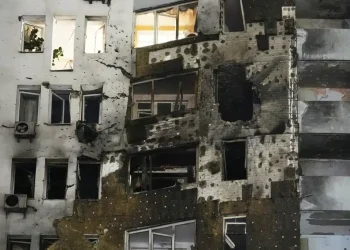
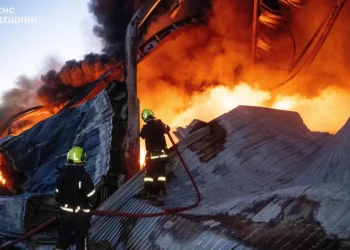
Even as negotiators discuss potential pathways to peace, the conflict continues to exact a deadly toll. Russian missile, drone, and artillery strikes over the weekend killed at least four Ukrainians, according to local officials.
A man died in a drone strike in Chernihiv region late Saturday. In the central city of Kremenchuk, a combined missile-and-drone attack damaged infrastructure and caused power and water outages. The city is a key industrial center and hosts one of Ukraine’s largest oil refineries, which has been repeatedly targeted since the start of the invasion.
On Sunday, Russian shelling in the Kharkiv region killed three people and injured ten, according to the regional prosecutor’s office. Ukrainian authorities say Russia is again intensifying attacks on critical infrastructure as winter approaches, aiming to cripple the electricity grid and deprive civilians of heat, light, and water. Kyiv and Western governments have accused Moscow of using winter as a weapon for the fourth consecutive year.
A complex path ahead
The U.S.-led proposal seeks to bring an increasingly entrenched conflict to an end as it approaches its fourth year. But the political landscape remains fraught. Trump has repeatedly suggested Ukraine should consider territorial concessions, while Zelenskyy insists any settlement must preserve Ukraine’s internationally recognized borders.
For now, the biggest challenge appears to be bridging the gap between Ukrainian concerns about sovereignty and U.S. pressure for a deal that Washington believes could stabilize relations with Moscow. Whether the parties can reconcile those positions in the coming weeks remains uncertain.
This article was rewritten by JournosNews.com based on verified reporting from trusted sources. The content has been independently reviewed, fact-checked, and edited for accuracy, neutrality, tone, and global readability in accordance with Google News and AdSense standards.
All opinions, quotes, or statements from contributors, experts, or sourced organizations do not necessarily reflect the views of JournosNews.com. JournosNews.com maintains full editorial independence from any external funders, sponsors, or organizations.
Stay informed with JournosNews.com — your trusted source for verified global reporting and in-depth analysis. Follow us on Google News, BlueSky, and X for real-time updates.