WASHINGTON – The United States and Iran have signed a new agreement aimed at halting hostilities and restarting negotiations over Tehran’s nuclear program, with U.S. officials describing wide-ranging concessions that include uranium dilution requirements for Iran and significant sanctions relief for Washington’s long-standing adversary.
U.S. President Donald Trump said he signed the agreement on Wednesday while in France following the G7 summit, marking a departure from earlier reports that the document had been digitally signed days earlier. The signing reportedly took place at Versailles during a meeting involving French President Emmanuel Macron.
Pakistani Prime Minister Shehbaz Sharif, who was involved in mediation efforts, said the agreement is already taking effect and confirmed that a formal signing ceremony is scheduled to take place in Switzerland on Friday.

Nuclear Commitments and Sanctions Relief
According to details described by U.S. officials speaking on condition of anonymity, the agreement requires Iran to dilute its stockpile of highly enriched uranium as a minimum step toward limiting its nuclear capabilities.
In return, the United States is expected to begin waiving certain sanctions on Iran, allowing the country to resume oil exports immediately. Officials said the measures would not fully remove sanctions at this stage but would ease key restrictions tied to Iran’s energy sector.
The agreement also outlines a broader pathway for lifting additional sanctions in phases, depending on progress in ongoing negotiations over Iran’s nuclear program.
Strait of Hormuz to Reopen Temporarily
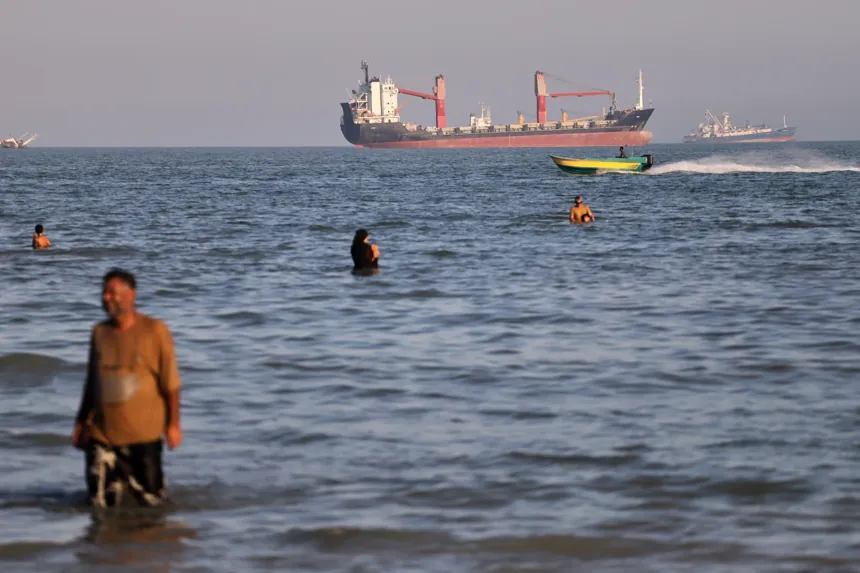
A central component of the agreement is the reopening of the Strait of Hormuz for a limited period of 60 days, restoring passage for commercial shipping through one of the world’s most critical energy routes.
U.S. officials said the accord includes provisions for the eventual removal of mines and the restoration of normal shipping traffic, which had been heavily disrupted during recent hostilities in the region.
■ Related News


The reopening is expected to ease pressure on global energy markets after months of instability that significantly reduced oil and gas flows through the narrow waterway.
Lebanon Ceasefire and Regional Security Terms
The agreement also addresses ongoing violence in Lebanon between Israel and Hezbollah, calling for an immediate halt to hostilities and affirming Lebanon’s territorial integrity.
According to officials involved in the drafting process, the deal requires an end to military operations in Lebanon while supporting efforts to stabilize the border region. However, Israel has previously indicated it would continue operations against Hezbollah, raising questions over implementation.
The accord reflects broader efforts to de-escalate regional conflicts that expanded alongside the Iran-Israel confrontation earlier this year.
Mediation and International Involvement
Pakistani officials played a role in facilitating early negotiations, with Prime Minister Shehbaz Sharif confirming that the agreement follows extended diplomatic discussions involving multiple international stakeholders.
Iranian state media later published text consistent with the U.S.-released version of the draft, although neither government has formally released the full document.
It remains unclear whether Iran’s reported signing triggers the start of a formal negotiation timeline for a permanent agreement.
Political Uncertainty and Strategic Implications
The deal is expected to face scrutiny in Washington and among key U.S. allies, particularly given its scope and the level of sanctions relief included in the initial phase.
Officials noted that Iran would be allowed to resume oil exports immediately, a significant shift from previous policy frameworks that restricted Iranian energy sales under sanctions regimes.
The agreement also marks a departure from the 2015 nuclear accord, from which Trump withdrew during his first term, describing it at the time as insufficient.
While Trump has framed the new deal as a step toward stabilizing the region, he also indicated it remains reversible if negotiations fail to progress.
“If I don’t like it, we’ll go back to shooting at them,” Trump said, underscoring the provisional nature of the arrangement.
Economic and Regional Impact
The reopening of the Strait of Hormuz is expected to have immediate implications for global energy markets, given its role as a key transit route for oil and gas shipments.
Analysts and officials have long warned that disruptions in the strait could significantly affect global prices, supply chains and energy security. The agreement seeks to restore pre-war shipping levels within 30 days, according to U.S. officials.
The broader financial package associated with reconstruction and investment in Iran remains contingent on future negotiations and participation by third countries.
While supporters of the agreement describe it as a step toward de-escalation, its long-term durability will depend on compliance mechanisms and political support among regional powers, many of whom remain divided over the terms.