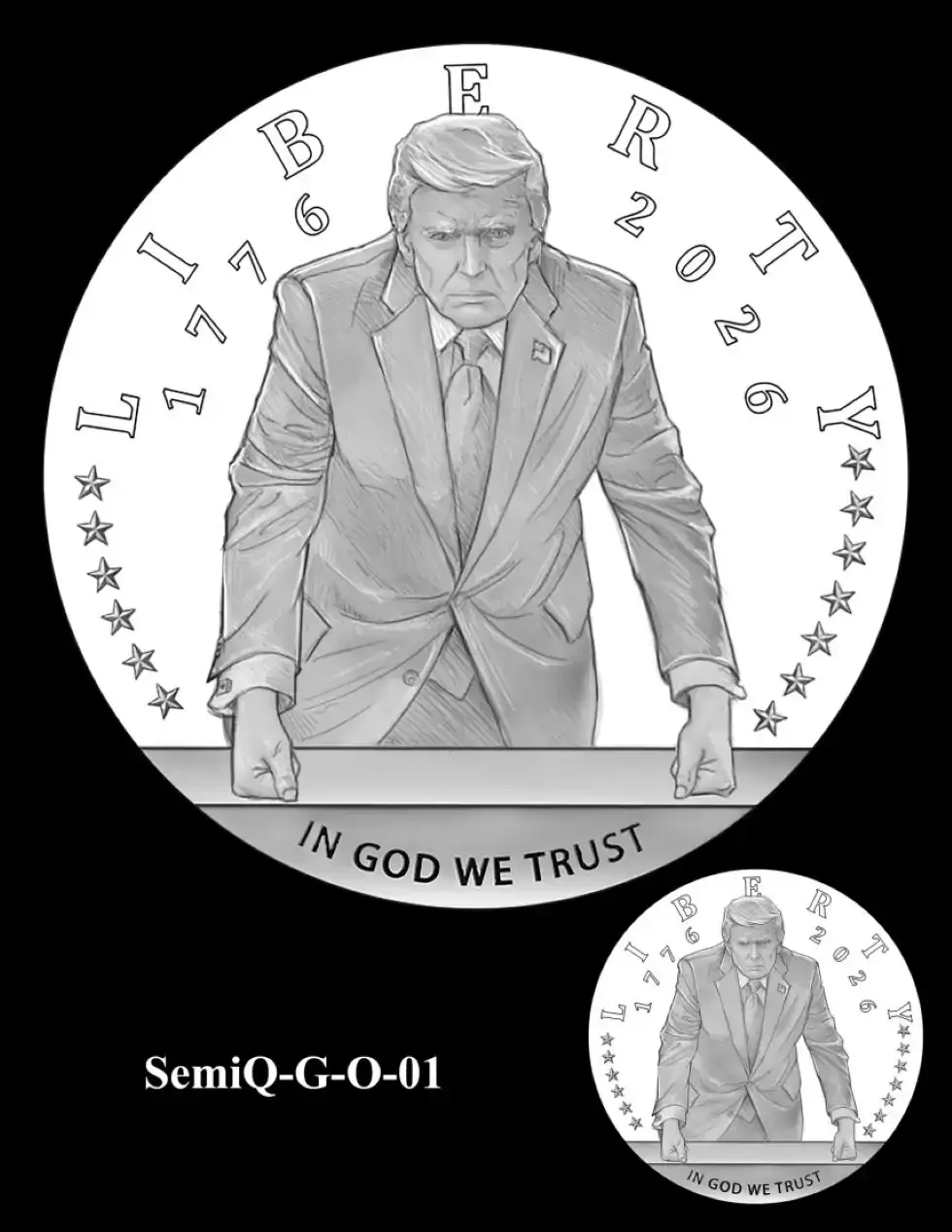
The decision to approve a commemorative coin bearing the likeness of Donald Trump is drawing scrutiny not for its artistic direction alone, but for what it signals about the evolving boundaries of institutional oversight in Washington. The move, finalized Thursday by the Commission of Fine Arts, reflects a broader recalibration of how federal advisory bodies operate under direct political influence.
As first reported by CNN, the commission not only endorsed the design but also encouraged that the coin be produced at an unusually large scale—potentially up to three inches in diameter—underscoring a departure from conventional commemorative standards.
The approval comes after a significant restructuring of the Commission of Fine Arts, a body traditionally tasked with maintaining aesthetic and symbolic consistency across federal monuments, currency, and public works. The reshaping of its membership has introduced new dynamics into what had long been considered a relatively insulated advisory institution.

Command Authority Over Design Signals Internal Realignment
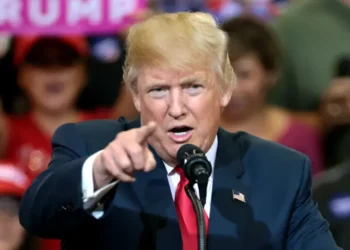
The commission’s deliberations revealed a notable alignment between design preferences and executive influence. Commissioners openly referenced the president’s personal tastes during the approval process, including remarks suggesting that larger formats would better align with his expectations.
Such statements indicate a shift in how institutional independence is exercised. Rather than operating as a buffer between political leadership and symbolic representation, the commission appears to be functioning with closer deference to executive preference.
The approved design features Trump positioned behind a desk with a firm posture, an image reportedly adapted from an official White House portrait now displayed at the Smithsonian National Portrait Gallery. The coin’s inscription marks the United States’ 250th anniversary, pairing the dates 1776 and 2026 beneath the word “Liberty.”
Legal Boundaries Begin to Blur Around Currency Standards
The decision also intersects with ongoing legal ambiguity surrounding the depiction of living presidents on US currency. While commemorative coins are not bound by the same restrictions as circulating currency, the commission is simultaneously reviewing a separate proposal for a $1 coin featuring Trump—an initiative that could challenge established statutory limits.
Under existing US law, the likeness of a living or recently deceased president is prohibited on standard currency. The distinction between commemorative and circulating coinage has historically preserved that boundary. However, the parallel review process now underway suggests those lines may be tested.


Lawmakers have already begun responding. Democratic members of Congress have introduced legislation aimed at closing what they describe as a regulatory gap, seeking to prohibit any living individual from appearing on any form of US currency, including commemorative issues.
Symbolic Power of Currency Enters Political Arena
The reemergence of a sitting president on a commemorative coin—something not seen since Calvin Coolidge appeared on a 1926 issue—adds a layer of historical significance to the current debate. Yet unlike that earlier instance, the present case unfolds in a more polarized political environment, where symbolic gestures are closely tied to broader narratives of authority and governance.
Currency design has traditionally been treated as a reflection of national heritage rather than contemporary political identity. The current development suggests a shift toward more immediate political representation within that space.
Institutional Norms Face Forward-Looking Pressure
The broader implications extend beyond a single coin. The Commission of Fine Arts, once regarded as a stabilizing force in federal design decisions, is now operating under conditions that reflect changing expectations about its role and autonomy.
Whether this represents a temporary recalibration or a lasting transformation remains uncertain. What is clear is that the intersection of political leadership and symbolic state representation is entering a more contested phase—one that could redefine how institutions balance tradition, law, and executive influence in the years ahead.