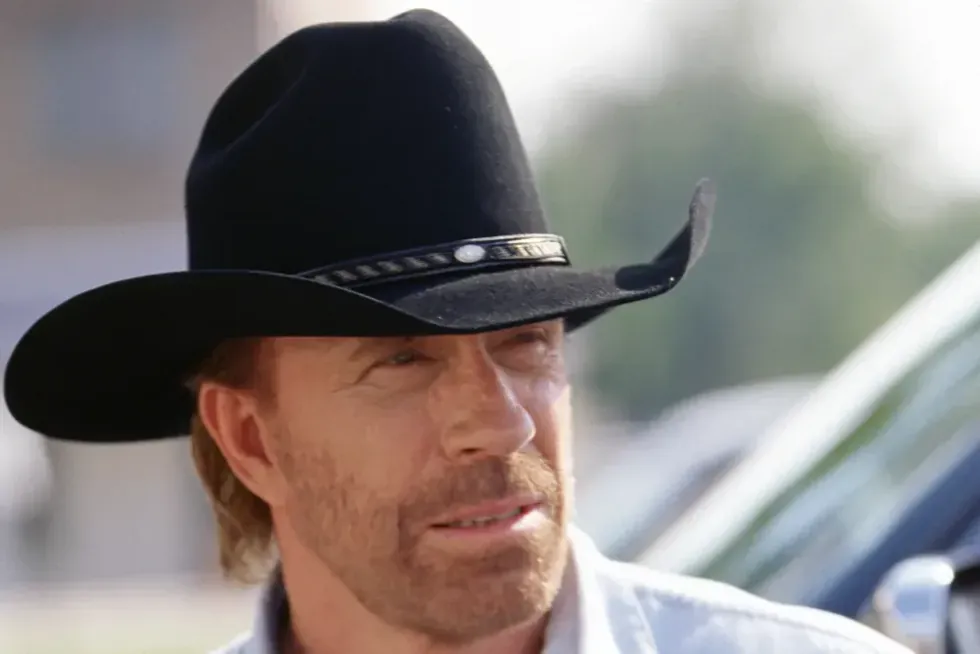
Chuck Norris, the martial artist-turned-actor whose career spanned decades across film and television, has died at the age of 86, according to a statement released by his family. His death marks the end of a career that bridged martial arts authenticity with mainstream entertainment success, particularly through his long-running television role.
The actor was hospitalized in Hawaii and died Friday morning, his family confirmed, adding that he was surrounded by loved ones. Norris’ passing is significant not only for his film legacy but also for his influence on action television, where he became a defining figure in the 1990s.
Television Legacy Anchored by “Walker, Texas Ranger”
Norris achieved sustained mainstream visibility through the CBS series Walker, Texas Ranger, which aired from 1993 to 2001. The show, inspired in part by his earlier film Lone Wolf McQuade, positioned Norris as Cordell Walker, a law enforcement officer blending martial arts discipline with traditional Western heroism.

The series became a staple of network television during its run, reflecting a period when action-driven episodic programming drew consistent primetime audiences. Industry observers note that the show’s longevity underscored Norris’ appeal beyond cinema, helping him transition at a time when many action stars struggled to maintain relevance.
He later reprised the role in television films, extending the franchise’s lifespan into the mid-2000s.
Film Career Built on Martial Arts Credibility
Before his television success, Norris established himself in action cinema during the late 1970s and 1980s, starring in films such as Good Guys Wear Black, The Octagon, and Code of Silence. His collaborations with Cannon Films positioned him as one of the studio’s leading action figures during that era.
A defining early moment in his career came opposite Bruce Lee in the 1972 film The Way of the Dragon, where Norris played the antagonist in what remains one of martial arts cinema’s most recognized fight sequences.
Unlike contemporaries such as Arnold Schwarzenegger or Jackie Chan, Norris’ screen persona leaned heavily on realism and discipline, drawing directly from his extensive martial arts background, which included multiple black belts across disciplines.
■ Related News




Transition and Later Career Appearances
After a gradual decline in his theatrical film output, Norris made a limited return to the big screen in The Expendables 2, directed by Sylvester Stallone. The film brought together veteran action stars, reflecting a broader industry trend of revisiting legacy franchises and performers.
His final leading film role came earlier, with 2005’s The Cutter, marking the end of his primary acting career.
Cultural Impact Beyond Screen Roles
Beyond film and television, Norris maintained a visible cultural presence through martial arts instruction, authorship, and later, widespread internet meme culture. The “Chuck Norris facts” phenomenon introduced his persona to younger audiences, transforming his image into a symbol of exaggerated strength and endurance.
He also remained active in business ventures, including fitness-related endorsements, and was known for his involvement in political and social advocacy.
Career Origins and Industry Entry
Born Carlos Ray Norris in Oklahoma, he began his martial arts journey while serving in the U.S. Air Force in South Korea. After returning to the United States, he opened a chain of karate schools, attracting high-profile clients including Steve McQueen and Bob Barker.
Encouraged by McQueen, Norris pursued acting, eventually transitioning from minor roles to leading parts in action films. His early work reflected a period when martial arts cinema was gaining traction globally, particularly following Bruce Lee’s international success.
Industry Significance
Norris’ career reflects a broader evolution in the action genre, from martial arts-driven cinema of the 1970s to network television dominance in the 1990s. His ability to move between mediums helped sustain his relevance across changing entertainment landscapes.
His death closes a chapter in the history of action entertainment, particularly for a generation of performers who combined physical discipline with screen presence to define the genre.