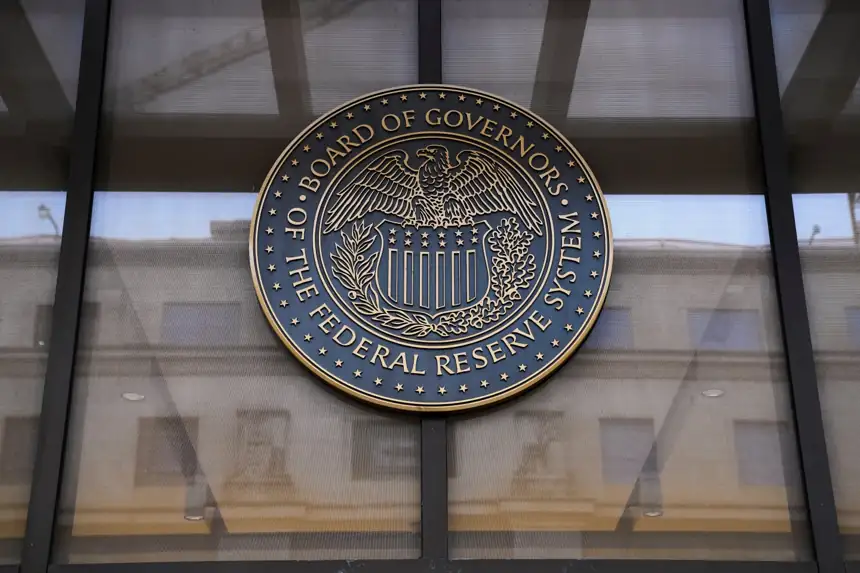
The ruling preserves legal protections for Federal Reserve governors against at-will dismissal, while allowing further court proceedings to determine the limits of presidential authority in the case involving Governor Lisa Cook.
The U.S. Supreme Court ruled Monday that members of the Federal Reserve’s Board of Governors cannot be removed by the president without cause, reinforcing the central bank’s longstanding institutional independence while leaving unresolved questions about the scope of presidential authority in future removal attempts.
The decision comes amid an ongoing legal dispute involving President Donald Trump and Federal Reserve Governor Lisa Cook. According to the court’s ruling, Cook will remain in her position as litigation continues in lower courts over Trump’s effort to remove her from the central bank’s governing board.

The case carries broader implications beyond Cook’s position, addressing the constitutional balance between presidential authority and the Federal Reserve’s independent role in setting monetary policy—a structure widely viewed as central to financial market stability.
Supreme Court Recognizes the Fed’s Unique Constitutional Status
In a 5-4 decision, the Supreme Court concluded that the Federal Reserve occupies a distinct constitutional position compared with other independent federal agencies.
The ruling came alongside a separate 6-3 decision allowing presidents greater authority to dismiss leaders of several independent agencies. However, Chief Justice John Roberts wrote that the Federal Reserve’s historical role justified different legal treatment.
According to the opinion, the Fed shares characteristics with the First and Second Banks of the United States, institutions that historically operated at a distance from direct political influence.
The court stated that allowing presidents to remove Federal Reserve governors without cause would undermine the independence that Congress intended to preserve when establishing the central bank’s governance structure.
■ Related News


The decision therefore maintains legal protections for the Federal Reserve’s seven-member Board of Governors, distinguishing it from other federal agencies whose leaders may now face broader presidential removal authority.
Decision Leaves Lisa Cook Case Active
Although the ruling strengthens institutional protections for the Federal Reserve, it does not fully resolve the legal dispute involving Governor Lisa Cook.
Trump previously sought Cook’s removal after accusing her of mortgage fraud, an allegation she has denied. Cook was appointed to the Federal Reserve Board by former President Joe Biden.
The Supreme Court declined to establish a narrow legal definition limiting “for cause” removals only to inefficiency, neglect of duty, or misconduct committed while serving as a governor. Instead, the justices suggested that serious misconduct could potentially satisfy the constitutional standard, without providing a comprehensive definition.
The court also found that Cook had not received formal notice or an opportunity to respond before the president publicly announced her dismissal attempt last August on Truth Social.
Chief Justice Roberts noted in the opinion that nothing prevents the administration from pursuing another removal effort if proper procedural requirements are followed, leaving additional legal questions to be resolved by lower courts.
Broader Implications for Federal Reserve Independence
The decision is expected to influence future debates over the extent of Federal Reserve independence from the executive branch.
The Federal Reserve plays a central role in U.S. monetary policy by adjusting short-term interest rates to influence inflation, employment, economic growth, and borrowing costs. Because those decisions often require politically unpopular measures, Congress historically designed the institution to operate with a degree of insulation from day-to-day political pressure.
President Trump has repeatedly called for lower interest rates, arguing that reduced borrowing costs would benefit consumers, businesses, and the federal government. The court’s ruling preserves legal protections intended to allow Federal Reserve policymakers to make monetary decisions independently of direct presidential influence.
At the same time, legal experts cited in the source material noted that the broader weakening of independence protections for other federal agencies could affect how courts interpret institutional independence in future cases involving the Federal Reserve.
Historical Importance of Central Bank Independence
Economists have long argued that independent central banks are better positioned to control inflation because they can implement difficult policy decisions without immediate political considerations.
The importance of that independence is often linked to the inflationary period of the 1970s, when former Federal Reserve Chair Arthur Burns faced criticism from many economists for allegedly yielding to political pressure during President Richard Nixon’s administration.
His successor, Paul Volcker, raised interest rates dramatically beginning in 1979 to reduce inflation, despite triggering a severe recession and rising unemployment. Although the policy proved economically painful, many economists regard it as an example of an independent central bank prioritizing long-term price stability over short-term political concerns.
Financial markets also generally favor an independent Federal Reserve because predictable monetary policy can reduce uncertainty for investors and borrowing costs throughout the broader economy.
While Monday’s ruling preserves the Federal Reserve’s distinct legal status for now, additional litigation involving Lisa Cook may further define how constitutional protections apply to the central bank and the limits of presidential authority over its leadership.
Tags: Federal Reserve, Supreme Court, Lisa Cook, Constitutional Law, Judicial Review, Executive Branch, Monetary Policy, Presidential Authority, Federal Reserve Board, Interest Rates,