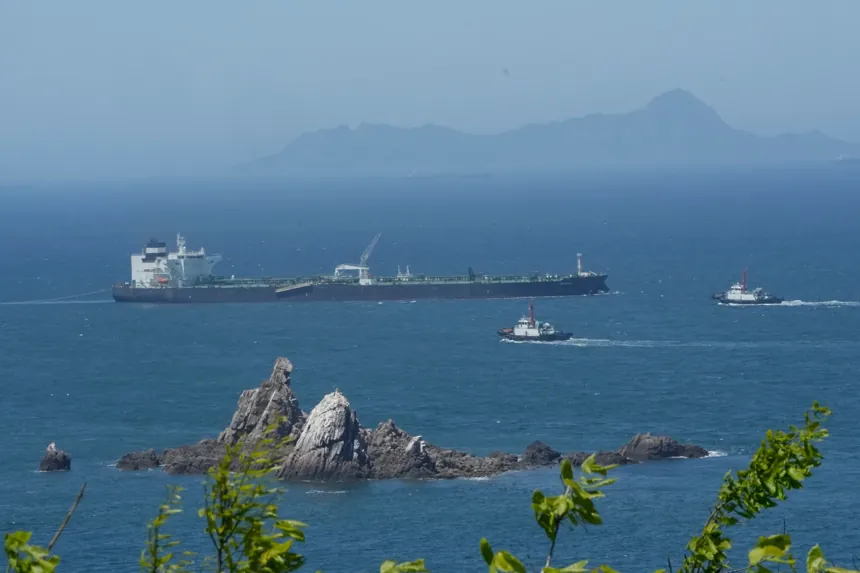
An oil tanker linked to South Korea has arrived safely after transiting the Strait of Hormuz in mid-April, easing immediate concerns over disruptions to commercial shipping through a waterway central to global energy markets.
The vessel’s arrival comes as governments and shipping companies remain focused on rising maritime security risks in the Gulf region, where escalating tensions involving Iran and Western-aligned states have heightened concerns over the movement of crude oil and refined fuel exports.
According to reporting by The Associated Press, the tanker had traveled through the Strait of Hormuz during a period of intensified regional scrutiny surrounding commercial shipping routes. The passage drew attention because the narrow maritime corridor handles a substantial share of the world’s oil exports and remains vulnerable to geopolitical instability.

Energy analysts say the safe arrival of the vessel may temporarily calm market concerns, though broader risks tied to regional security dynamics continue to influence shipping costs, insurance rates, and strategic planning among major importers in Asia.
Strategic Shipping Route Remains Under Pressure
The Strait of Hormuz remains one of the most closely monitored waterways in international trade, connecting Gulf energy producers to major global markets across Asia, Europe, and beyond. Any disruption in the corridor has the potential to affect oil prices, supply chains, and regional naval deployments.
Maritime security concerns have intensified in recent years as regional confrontations, sanctions disputes, and military incidents have increased pressure on commercial shipping operators. International shipping firms have continued adjusting navigation protocols and security procedures in response to evolving risks.
Officials and industry observers cited by international media organizations have warned that even isolated maritime incidents can trigger broader market reactions because of the strategic importance of Gulf energy exports.
Asian Importers Closely Watch Gulf Stability
South Korea, one of Asia’s largest energy importers, remains heavily dependent on crude supplies transported through the Gulf region. Stability along maritime routes through the Strait of Hormuz is therefore considered a critical economic and strategic concern for Seoul.
■ Related News

Regional governments including Japan, China, and India have also monitored developments closely, given their significant reliance on Middle Eastern oil shipments. Analysts interviewed by Financial Times have previously noted that sustained instability in Gulf shipping lanes could complicate energy security planning across Asia.
The latest tanker movement comes amid broader efforts by shipping operators and governments to avoid disruptions while maintaining steady energy flows. Insurance costs and freight rates linked to Gulf transit routes have remained sensitive to regional geopolitical developments.
International Maritime Security Efforts Continue
Western governments and regional allies have expanded maritime coordination efforts in recent years to safeguard commercial navigation in the Gulf. Naval patrols and surveillance operations have been strengthened following a series of incidents involving commercial vessels near strategic waterways.
International observers say the continued movement of commercial tankers through the Strait of Hormuz reflects the resilience of global energy logistics despite recurring geopolitical tensions. However, analysts caution that the situation remains vulnerable to sudden escalation.
Reuters and other international news organizations have reported that global energy markets continue reacting quickly to developments involving Gulf maritime security, particularly when incidents raise concerns about possible supply disruptions.
Global Energy Markets Remain Sensitive
The safe arrival of the South Korean-linked tanker may help reassure markets in the short term, but broader uncertainty surrounding Gulf security remains unresolved. Traders and policymakers continue assessing how regional tensions could influence oil supply stability during a period of fragile global economic recovery.
Energy market specialists say any prolonged disruption in the Strait of Hormuz could carry significant consequences for inflation, transportation costs, and industrial production worldwide. The corridor remains essential not only for crude exports but also for broader international shipping activity tied to global trade.
Diplomatic efforts aimed at reducing tensions in the Gulf are expected to remain a priority for regional governments and major international powers seeking to avoid disruptions to energy markets and maritime commerce.