The United States has intensified its economic pressure campaign against Cuba by imposing new sanctions on GAESA, the military-controlled conglomerate that dominates large sectors of the island’s economy, in a move that further escalates tensions between Washington and Havana.
U.S. Secretary of State Marco Rubio defended the sanctions on Friday, arguing that the measures are aimed at weakening Cuba’s ruling elite rather than worsening conditions for ordinary citizens already struggling through severe shortages and recurring power outages.
The sanctions target Grupo de Administración Empresarial S.A. (GAESA), which controls key sectors including tourism, retail, finance, shipping and infrastructure. U.S. officials say the conglomerate plays a central role in sustaining Cuba’s political leadership and military establishment.

The measures form part of a broader Trump administration strategy to tighten economic restrictions on Cuba following recent executive orders expanding U.S. sanctions authorities. Reporting from Reuters and The Associated Press indicates the administration is attempting to increase pressure on Havana amid worsening economic instability on the island.
Washington Expands Financial Pressure on Cuba
The sanctions also target Moa Nickel S.A., a mining venture partly operated with Canada-based Sherritt International. Following the announcement, Sherritt confirmed it would suspend operations linked to the venture after more than three decades in Cuba.
Under authorities expanded through a May 1 executive order, the United States can now impose penalties on third-country companies and individuals connected to GAESA, potentially freezing U.S.-linked assets and restricting international business activity.
Rubio described GAESA as a system designed to benefit “corrupt elites” rather than the Cuban public, according to statements reported by multiple U.S. media outlets. Analysts say the sanctions could significantly increase risks for foreign investors operating in Cuba’s tourism and mining sectors.
Economic specialists interviewed by Reuters warned that the broader reach of the sanctions may discourage additional international investment at a time when Cuba is already experiencing one of its deepest economic crises in decades.

Havana Warns of Humanitarian Consequences
Cuban officials condemned the sanctions as “collective punishment” and accused Washington of deliberately worsening the island’s humanitarian situation.
Foreign Minister Bruno Rodríguez Parrilla argued that the new restrictions are intended to inflict maximum economic harm on Cuban families while intensifying shortages of fuel, food and medicine. Cuban state media also linked the sanctions to what officials describe as an ongoing U.S.-led “energy blockade.”
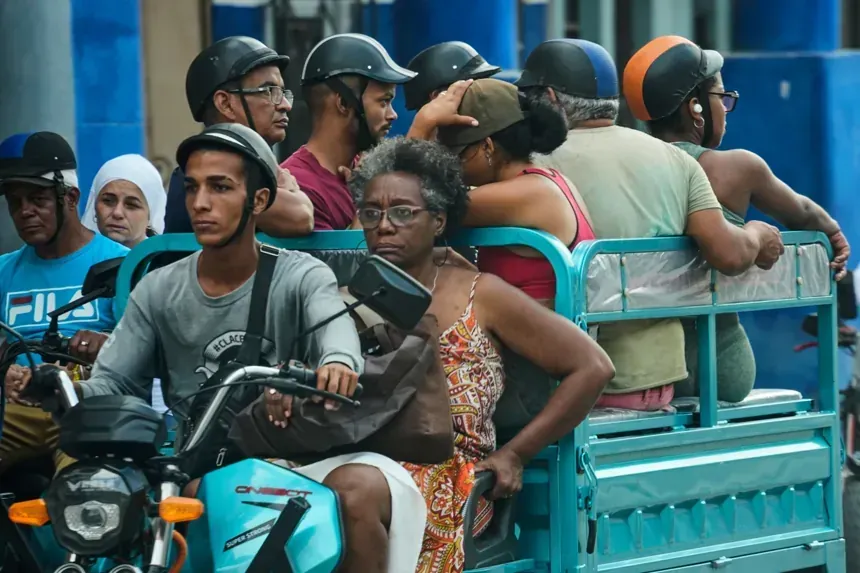
The latest measures come as Cuba faces widespread electricity outages and severe fuel shortages following disruptions in oil imports from Venezuela and increasing U.S. restrictions on energy shipments reaching the island. International observers, including some United Nations experts, have previously warned that tighter sanctions risk worsening humanitarian conditions.
The Cuban government has additionally expressed alarm over increasingly aggressive rhetoric from Washington after President Donald Trump suggested earlier this week that “Cuba is next” following military tensions elsewhere in the region. However, Associated Press reporting citing U.S. officials said there are currently no imminent plans for direct military action against Havana.
Regional and International Concerns Grow
The sanctions campaign has raised wider concerns across Latin America and among international diplomatic observers, particularly because of the potential impact on regional migration and economic stability.
Analysts say Cuba’s worsening economic conditions could accelerate outward migration flows toward the United States and neighboring countries, further complicating regional security and humanitarian management. The island has already experienced a major migration wave in recent years driven by inflation, blackouts and shortages of essential goods.
The measures also reflect the growing influence of Rubio, a longtime Cuba hardliner, within the Trump administration’s Latin America strategy. Reuters reporting earlier this week indicated Washington may introduce additional sanctions targeting Cuban state-linked businesses and overseas revenue streams in coming weeks.
While U.S. officials insist the sanctions are intended to pressure Cuba’s leadership into political and economic reforms, critics argue that broader economic isolation risks deepening hardship for civilians without producing meaningful political change. The escalating standoff now threatens to further strain already fragile relations between Havana and Washington at a moment of heightened geopolitical tension across the Americas.