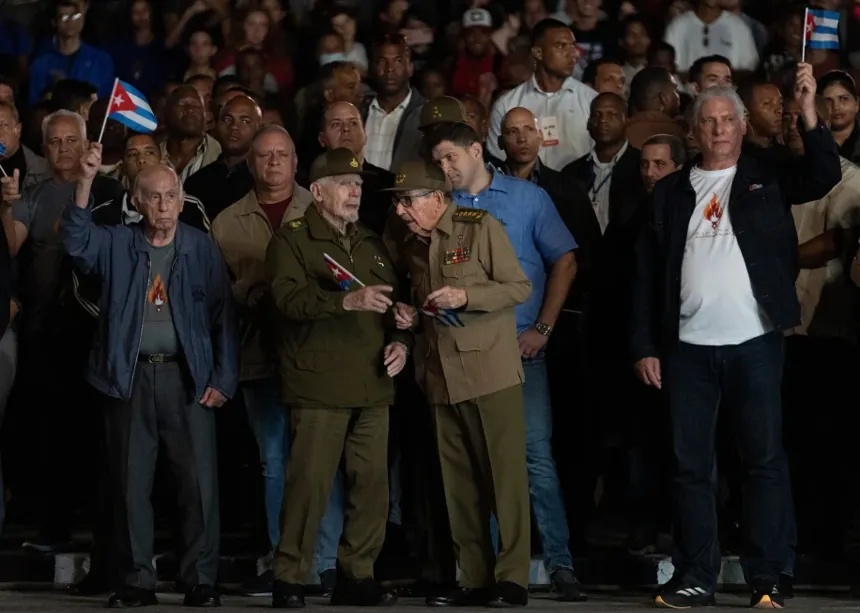
HAVANA, Cuba — Ramiro Valdés Menéndez, one of the most prominent figures of the Cuban Revolution and a longtime ally of Fidel Castro, has died at the age of 94, according to a joint statement issued by Cuba’s government and the Communist Party.
Officials announced that Valdés died on Sunday but did not disclose a cause of death. The veteran revolutionary was among the small group of leaders who participated in the movement that ultimately brought Fidel Castro to power and shaped Cuba’s political system for decades.
In a statement published by the official news portal Cubadebate, Cuban authorities praised Valdés for what they described as his dedication and loyalty to the revolutionary cause.

Cuban President Miguel Díaz-Canel also paid tribute, describing the loss as deeply personal and highlighting Valdés’ longstanding commitment to Fidel Castro and former President Raúl Castro.
Revolutionary Veteran
Born on April 28, 1932, in Artemisa, western Cuba, Valdés became involved in the revolutionary movement at an early age. At 21, he joined Fidel Castro’s 1953 assault on the Moncada Barracks, an event widely regarded as the beginning of the Cuban Revolution.
After the failed attack, Valdés continued to participate in the armed struggle that eventually led to the overthrow of Cuban leader Fulgencio Batista in 1959.
During the revolutionary campaign, he also fought under the command of Ernesto ‘Che’ Guevara and later became one of the few individuals granted the title Commander of the Revolution. He was also recognized as a Hero of the Republic of Cuba.
Decades of Influence
Following the revolution, Valdés held several senior positions within Cuba’s government and security apparatus. He served as interior minister and remained a significant figure within the ruling Communist Party.
■ Related News

His political influence diminished after a reported disagreement with Fidel Castro while serving as interior minister in 1986. Following the dispute, Valdés largely disappeared from public life and was no longer considered part of the country’s central leadership circle.
However, his political standing recovered in the following years. In 2003, he returned to the Council of State, marking a significant comeback within Cuba’s leadership structure.
Return to Power Under Raúl Castro
Valdés regained prominence after Raúl Castro assumed presidential responsibilities from his ailing brother in 2006.
One of Raúl Castro’s first major decisions was appointing Valdés to lead the telecommunications ministry. His influence continued to grow, and in 2009 he was elevated to the position of vice president.
Two years later, he was elected as the Communist Party’s third-ranking leader, behind only Raúl Castro and veteran revolutionary José Ramón Machado Ventura.
Despite his senior status, Valdés rarely appeared in public and was known for avoiding media interviews throughout much of his political career.
Legacy Linked to Cuba’s Revolutionary Generation
Valdés briefly re-emerged on the international stage in 1997 when he led a Cuban mission to Bolivia tasked with locating and repatriating the remains of Guevara, who had been killed there three decades earlier while attempting to promote revolutionary movements in South America.
His death marks the passing of another member of the generation that led Cuba’s revolution and shaped the country’s political direction throughout the second half of the twentieth century and into the modern era.
Tags: Cuba, Ramiro Valdés, Fidel Castro, Raúl Castro, Miguel Díaz-Canel, Cuban Revolution, Communist Party of Cuba, Che Guevara