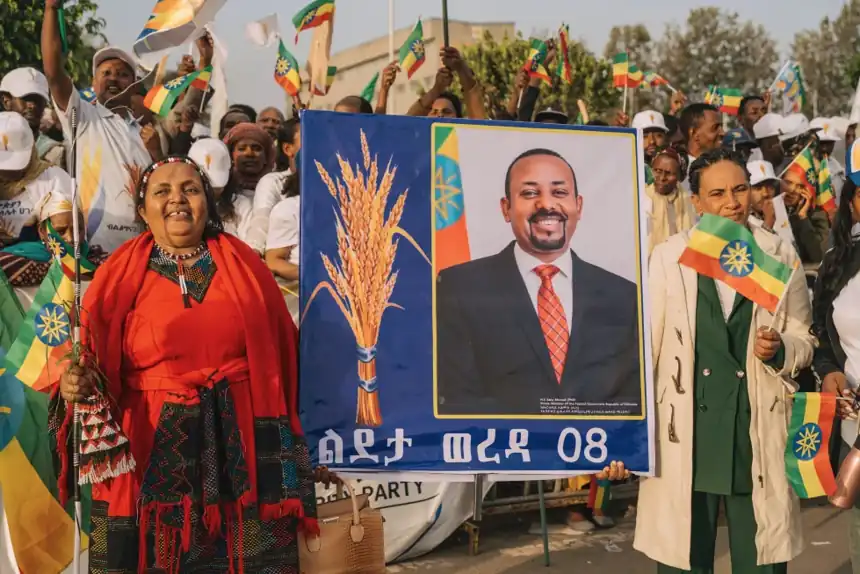
ADDIS ABABA, Ethiopia – The ruling Prosperity Party in Ethiopia has secured a dominant parliamentary majority following the June 1 national election, according to final results announced by the National Election Board of Ethiopia in Addis Ababa. The outcome, which gives Prime Minister Abiy Ahmed’s party 438 of 501 seats in the House of Representatives, sets the stage for a new five-year term but comes amid allegations of intimidation, restricted participation, and ongoing regional insecurity. The vote has drawn scrutiny over its credibility and inclusiveness, particularly as large parts of the country remained affected by conflict and political tension.
Dominant Victory for Ruling Party Amid Fragmented Political Landscape
Election officials from the National Election Board of Ethiopia confirmed that the Prosperity Party secured an overwhelming parliamentary majority, consolidating its control over the legislature. The new parliament is expected to convene in October, where Abiy Ahmed is anticipated to be re-elected as prime minister for another term.
The result reinforces the ruling party’s political dominance, though the electoral process took place in a highly uneven environment marked by restricted opposition participation and security challenges across multiple regions.

Security Crisis and Regional Exclusions Shape Election Environment
Insecurity in the Oromia and Amhara regions significantly disrupted voting, with 143 polling stations failing to open due to ongoing violence and instability. Fighting between the Fano armed group and federal forces in Amhara, as well as clashes involving the Oromo Liberation Army in Oromia, contributed to the breakdown of normal electoral conditions.
The conflict-affected regions of Amhara Region and Oromia Region remained central to the instability surrounding the election process, reflecting broader challenges facing national security efforts.
Tigray Exclusion Continues After Years of Conflict
The election once again excluded the northern Tigray Region, which has remained without federal representation for six years following the devastating war between federal forces and regional groups. The absence of voting in the region underscores ongoing political fragmentation and unresolved post-conflict tensions.
The exclusion of Tigray further limited the national scope of the election, raising concerns about representation in a country still grappling with the aftermath of prolonged internal conflict.
Allegations of Political Suppression and Limited Opposition Space
Opposition figures and candidates criticized the electoral environment, alleging intimidation and restrictions on political participation. Several opposition leaders were reportedly imprisoned, in exile, or otherwise unable to take part in the election process.
■ Related News


One opposition candidate, Yitayal Assefa of the All Ethiopia Unity Party, described the political environment as heavily skewed in favor of the ruling party, while academic and opposition figure Merara Gudina called the vote a “sham,” arguing it would further weaken national stability.
International Observation and Limited Monitoring Presence
Observers from regional organizations, including the African Union and the Intergovernmental Authority on Development, were present during the election but were largely based in Addis Ababa, limiting their geographic reach across the country.
Their presence was cited by election authorities as contributing to international legitimacy, though critics questioned the depth of monitoring in areas affected by insecurity.
Background: Governance, Conflict, and Regional Tensions
Abiy Ahmed, who received the Nobel Peace Prize in 2019 following a peace agreement with neighboring Eritrea, has since faced renewed tensions in the region. Relations between Eritrea and Ethiopia remain strained, with mutual accusations of supporting destabilizing activities.
The election outcome comes as Ethiopia continues to navigate internal armed conflicts, regional fragmentation, and questions over the durability of its democratic institutions.
Tags: Ethiopia, Abiy Ahmed, Prosperity Party, Oromia, Amhara, Tigray Region, African Union, Elections