IRBIL, Iraq (Journos News) – The expanding conflict surrounding Iran may soon open a new front along its western frontier as Kurdish Iranian opposition groups signal readiness to launch cross-border operations from northern Iraq.
Officials from several Kurdish factions say fighters have begun moving toward positions near the Iranian border, raising the prospect that a new ground element could enter the confrontation if conditions permit. The development, reported by The Associated Press, reflects mounting pressure on Tehran as the war triggered by strikes from United States and Israel begins to reshape regional dynamics.
Kurdish armed groups based in Iraq’s semi-autonomous Kurdish region are among the most organized segments of Iran’s fragmented opposition. Their possible involvement introduces the prospect of sustained insurgent activity along a border already sensitive to security tensions.

According to Kurdish officials, contacts have taken place between American representatives and leaders of Iranian Kurdish groups regarding potential operational support. While the details remain unclear, the discussions suggest growing coordination between anti-government Kurdish factions and external actors seeking to expand pressure on Iran.
Border Mobilization Signals New Pressure Point
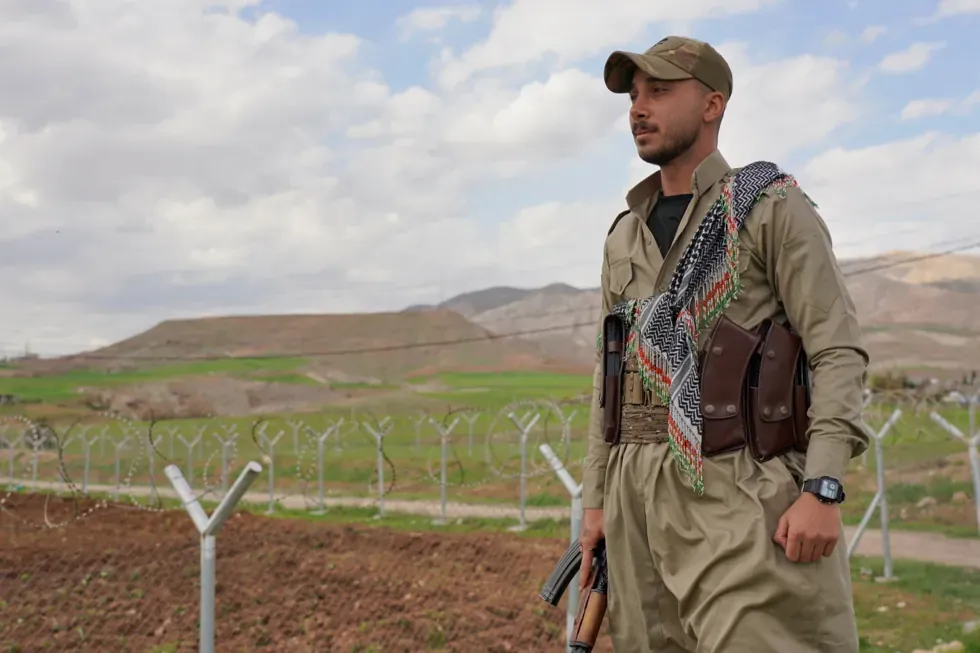
Leaders of the Kurdistan Freedom Party, commonly known as PAK, say units have repositioned closer to the Iranian frontier in Iraq’s Sulaymaniyah province.
Khalil Nadiri, a party official, said some fighters are currently on standby in areas near the border while commanders monitor developments in the wider conflict. The group has previously claimed attacks on Iran’s powerful Islamic Revolutionary Guard Corps in retaliation for Tehran’s crackdown on protests.
So far, however, Kurdish forces based in Iraq have not confirmed any cross-border deployment.
Another Kurdish Iranian group, Komala Party of Iranian Kurdistan, indicated its fighters could be ready to enter Iran within days if conditions become favorable. A senior official from the organization said preparations are underway but stressed that any move would depend on the evolving security situation.
If Kurdish forces do cross the border, it would represent the first significant ground component entering the war, potentially transforming the conflict from primarily aerial and missile exchanges into a broader regional confrontation.
Many Kurdish fighters gained battlefield experience during operations against the militant network Islamic State, giving them operational capability that analysts say could complicate Tehran’s security environment.
Iraqi Kurdish Leadership Faces Strategic Dilemma
The potential escalation is placing leaders in Iraq’s Kurdish region in a delicate position as they weigh political alliances against the risk of Iranian retaliation.
Officials in the region confirmed that Donald Trump recently held a phone conversation with Kurdish political leaders Masoud Barzani and Bafel Talabani, who head the two dominant Kurdish parties in Iraq.
The discussion reportedly addressed the evolving war with Iran and the possible role Kurdish actors could play.
One Kurdish official said Washington asked Iraqi Kurdish authorities to assist Iranian Kurdish factions and allow them to move across the frontier if operations begin. However, the White House has avoided confirming any formal plan.
White House press secretary Karoline Leavitt acknowledged that the conversation took place but denied that a specific agreement had been reached.
Defense Secretary Pete Hegseth also downplayed the notion of direct American backing for Kurdish militias, telling reporters that U.S. objectives in the conflict are not based on arming a particular group.
Still, the discussions underscore the growing strategic importance of Kurdish territory as a potential staging ground in the wider confrontation with Tehran.
Regional Retaliation Risk Intensifies
Kurdish leaders in Iraq remain wary of being drawn directly into the conflict, particularly given Iran’s demonstrated willingness to strike targets inside Iraqi territory.
In recent days, drone and missile attacks have targeted locations in the Kurdish region, including American military installations and the U.S. consulate in Irbil. Many of the projectiles were intercepted, but the incidents damaged civilian homes and disrupted energy infrastructure.
A key gas field in the region temporarily halted operations after security concerns forced workers to evacuate, contributing to electricity shortages.
Iran-aligned Iraqi militias have also claimed responsibility for some strikes, signaling that any Kurdish involvement in cross-border operations could trigger broader retaliation across Iraq.
Officials within the Patriotic Union of Kurdistan confirmed that Talabani’s conversation with Trump included discussions about American war objectives. The party said it believes diplomacy remains the preferred path forward and urged a return to negotiations.
Baghdad Moves to Contain the Fallout
The Iraqi federal government is attempting to prevent the northern region from becoming a launch point for attacks against Iran.
The presence of armed Iranian Kurdish groups inside Iraq has long been a source of tension between Baghdad and Tehran. In 2023, Iraq reached an agreement with Iran to relocate the groups from border areas and limit their military activities.
While their bases were closed and movement restricted, many fighters retained their weapons.
Qassim al-Araji, Iraq’s national security adviser, said in a social media statement that Iranian officials had requested stronger measures to prevent cross-border infiltration.
Araji said Iraqi security forces had deployed reinforcements along the frontier to ensure that armed groups do not launch attacks into Iranian territory.
The move reflects Baghdad’s effort to maintain neutrality while preventing escalation that could drag Iraq deeper into the regional conflict.
Internal Fault Lines Within Iran’s Opposition
Even as Kurdish factions prepare for potential military involvement, divisions remain within Iran’s broader opposition movement.
Kurdish groups share the objective of removing the current government in Tehran but have clashed politically with other opposition figures, including supporters of Reza Pahlavi, son of Iran’s last monarch.
Pahlavi has accused Kurdish organizations of pursuing separatist ambitions, a claim Kurdish leaders reject.
The disagreements highlight a long-standing challenge facing Iran’s opposition: competing visions for the country’s future political structure.
Strategic Stakes for Tehran
Iran’s Kurdish regions have historically been centers of unrest, and insurgent activity there could open a new internal security challenge for the government.
If Kurdish fighters launch operations from Iraq while the country remains engaged in a wider regional conflict, Tehran could face simultaneous pressure along its borders and within its domestic political landscape.
For now, Kurdish forces appear to be waiting for the right moment. But their mobilization along the frontier suggests that the war’s next phase may not be confined to missiles and airstrikes — and that Iran’s western flank could soon become a critical arena in the broader struggle reshaping the Middle East.