A sharp diplomatic disagreement between the United States and Spain has intensified amid the expanding conflict involving Iran, raising questions about how far Western allies remain aligned as military operations in the Middle East evolve.
Spanish officials on Wednesday rejected claims from the White House that Madrid had agreed to assist American military operations in the region by allowing access to bases on Spanish territory. The denial followed public remarks suggesting that cooperation had already been secured.
According to a report by The Associated Press, the disagreement erupted after U.S. officials indicated that military coordination with Spain had resumed following pressure from Washington. Spanish authorities, however, insisted their position had not changed.

Alliance Coordination Faces New Friction
Spain’s foreign minister, José Manuel Albares, publicly contradicted statements from Washington, insisting that Madrid had not authorized the use of Spanish bases for operations related to strikes on Iran.
“The position of the Spanish government regarding the war in the Middle East, the bombing of Iran and the use of our bases has not changed one iota,” Albares said in remarks broadcast on the Spanish radio network Cadena SER.
His comments directly challenged statements from Karoline Leavitt, a spokesperson for the White House, who said American officials believed Spain had agreed to cooperate with U.S. forces after discussions earlier in the day.
The conflicting messages have highlighted growing friction inside the transatlantic security relationship at a time when military operations tied to Iran are expanding.
Strategic Bases Become Diplomatic Flashpoint
At the center of the dispute are two joint installations in southern Spain — Naval Station Rota and Morón Air Base — which are operated jointly by the U.S. military and Spanish authorities.


Although American forces maintain a significant presence at both sites, the bases remain under Spanish command, meaning operational use for combat missions requires Madrid’s approval under bilateral agreements.
Spain’s government has said it would not permit the bases to be used for military actions that fall outside the framework of the United Nations charter.
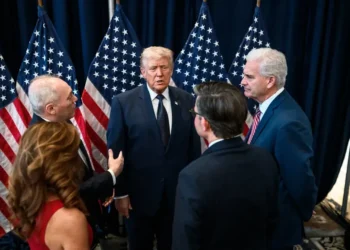
The disagreement intensified after Donald Trump warned that Washington could retaliate economically if Spain continued to block access.
Trump also suggested that American forces could potentially operate from the facilities regardless of Spain’s objections, though he added that doing so might not be necessary.
Political Leadership Hardens Position
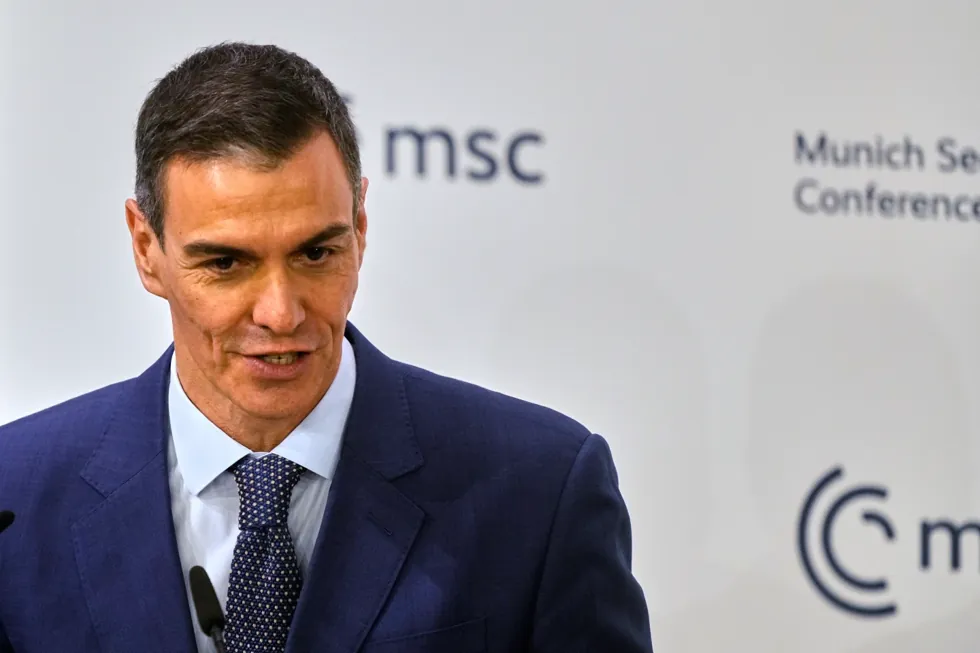
Spanish Prime Minister Pedro Sánchez has taken a firm stance against the military campaign targeting Iran, describing the strikes by the United States and Israel as a dangerous escalation.
In a nationally televised address, Sánchez warned that the conflict risked expanding into a broader regional war.
“We are not going to be complicit in something that is bad for the world and contrary to our values and interests,” he said, adding that governments should not act out of fear of economic retaliation.
The Spanish leader also compared the potential trajectory of the conflict to previous U.S. military interventions in the Middle East, referencing the long wars in Iraq and Afghanistan.
Trade Pressure Raises Economic Stakes
Washington has suggested that economic measures could follow Spain’s refusal to cooperate militarily.
In an interview with CNBC, U.S. Treasury Secretary Scott Bessent said delays or restrictions affecting military operations could endanger American forces involved in the conflict.
“Anything that slows down our ability to prosecute this war in the fastest, most effective manner puts American lives at risk,” he said.
However, the feasibility of cutting off trade with Spain remains unclear because Madrid is part of the European Union, which negotiates trade policy collectively for its 27 member states.
European officials have indicated the bloc would seek to protect its economic interests while attempting to stabilize its broader relationship with Washington.
Economic Exposure Relatively Limited
Spanish business groups have expressed concern about the possibility of trade retaliation but suggested the country may be less exposed than some European partners.
Data from the Bank of Spain shows that total trade between Spain and the United States represents roughly 4.4% of Spain’s gross domestic product.
Exports of Spanish goods to the U.S. account for about €16 billion annually, or roughly 1% of Spain’s GDP, making the United States Spain’s sixth-largest export destination.
Major exports include pharmaceutical products, olive oil, refined gas, and electrical transformers, according to trade data compiled by the Observatory of Economic Complexity.
Strategic Relationship Under Growing Strain
The dispute adds to a series of tensions between the Sánchez government and the Trump administration over security and foreign policy.
Madrid has previously criticized Israeli military actions in Gaza and declined to support a proposed increase in defense spending targets within NATO.
Those disagreements have periodically placed Spain at odds with Washington during a period when the alliance faces mounting geopolitical pressure.
As military operations tied to Iran continue, the disagreement over access to Spanish bases highlights the broader challenge facing Western allies: maintaining strategic coordination while navigating diverging political and security priorities.