The conflict involving Iran, the United States, and Israel has evolved into a strategic contest over endurance rather than quick battlefield victory. Military strikes, economic pressure, and energy market disruption are shaping how each side measures success. The war’s outcome may depend less on immediate military gains than on which actors can absorb sustained political and economic costs.
The confrontation involving Iran, the United States, and Israel has intensified into one of the most consequential geopolitical crises affecting the Middle East in decades. Although the conflict involves complex military operations and regional alliances, analysts frequently frame it as a struggle over resilience — a test of which side can sustain pressure, absorb economic damage, and maintain political control the longest.
This dynamic reflects the asymmetry between the actors involved. The United States and Israel possess overwhelming military capabilities compared with Iran. Yet Iran retains tools that can create widespread disruption beyond the battlefield, particularly through energy markets and regional instability.

Reporting from Reuters, the Associated Press, and other international outlets has highlighted how the conflict increasingly revolves around economic disruption, political endurance, and control over strategic infrastructure rather than conventional military victory.
Understanding the broader systems involved — including global energy supply, domestic political stability, and regional alliances — is essential to explaining why the conflict appears structured as a prolonged contest of endurance.
Historical Roots of the U.S.–Iran Confrontation
The antagonism between Iran and the United States dates back more than four decades. The relationship deteriorated sharply following Iran’s 1979 Islamic Revolution, which overthrew the Western-backed monarchy of Shah Mohammad Reza Pahlavi and established the Islamic Republic under Ayatollah Ruhollah Khomeini.
Later that year, Iranian students seized the U.S. Embassy in Tehran, holding American diplomats hostage for 444 days. The crisis cemented hostility between the two countries and shaped U.S. policy toward Iran for decades.
Since then, tensions have periodically escalated around Iran’s nuclear program, regional influence, and support for allied armed groups across the Middle East. According to reporting by the BBC and Reuters, disputes over nuclear enrichment and regional security have repeatedly triggered sanctions, diplomatic standoffs, and military confrontations.
■ Related News



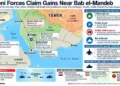
The current conflict builds on these longstanding disputes, combining the nuclear issue with broader regional power competition.
Asymmetry in Military Capabilities
Militarily, the United States and Israel possess far greater conventional capabilities than Iran. Advanced air forces, precision strike systems, and intelligence networks allow them to target military facilities, missile infrastructure, and nuclear sites with significant accuracy.
However, analysts often describe Iran’s strategy as one of asymmetric resistance. Rather than matching Western military power directly, Iran relies on tactics designed to impose costs over time.
These strategies include missile and drone attacks, support for regional proxy forces, and the ability to threaten key maritime routes. According to reporting from the Associated Press and Financial Times, such tactics allow Iran to maintain pressure even while absorbing significant military losses.
This asymmetry contributes to the endurance dynamic: one side attempts to degrade military infrastructure quickly, while the other aims to raise the cost of continued conflict.
The Central Role of Global Energy Markets
Energy markets have emerged as one of the most significant arenas of impact during the conflict. The Persian Gulf remains one of the world’s most critical energy corridors, supplying large volumes of oil and natural gas to global markets.
The Strait of Hormuz, a narrow passage connecting the Persian Gulf to international shipping routes, is particularly important. According to data cited by the U.S. Energy Information Administration and widely referenced in reporting by Reuters and Bloomberg, roughly one-fifth of globally traded oil typically passes through the strait.
Even limited disruption in this region can rapidly affect global prices. During periods of heightened tension, oil prices have historically surged due to fears that shipments could be halted or infrastructure damaged.
Energy disruptions affect not only Middle Eastern economies but also major importing countries across Asia, Europe, and North America. This global impact gives Iran leverage despite its comparatively weaker conventional military position.
Regional Vulnerabilities and Infrastructure Targets
Another defining feature of the conflict is the vulnerability of critical infrastructure across the Gulf region. Oil fields, export terminals, desalination plants, and urban centers represent potential targets that could significantly disrupt regional economies.
Gulf Arab states such as Saudi Arabia, Qatar, and Bahrain play central roles in global energy supply chains. Attacks or threats targeting these facilities can have ripple effects across global markets.
Previous incidents in the region, including drone and missile attacks on energy facilities, demonstrated how infrastructure strikes can temporarily reduce production and raise international oil prices.
According to reporting from Reuters and the Financial Times, even the perception of risk to these facilities can cause market volatility and alter shipping patterns.
Maritime Chokepoints and Shipping Disruptions
Shipping routes in the Persian Gulf are another critical element shaping the conflict’s economic impact.
The Strait of Hormuz functions as a maritime chokepoint, meaning its narrow geography concentrates global energy shipments into a vulnerable corridor. Commercial shipping companies and insurers closely monitor security conditions in the region.
If attacks on vessels increase or naval escorts become necessary, shipping costs rise dramatically. Insurance premiums for tankers traveling through the region can surge, and some companies may temporarily reroute or suspend operations.
Reuters reporting has highlighted that such disruptions can extend beyond oil markets. Fertilizers, petrochemicals, and liquefied natural gas also transit through Gulf shipping routes, meaning disruptions can affect agricultural and industrial supply chains worldwide.
Domestic Pressures Within Iran
While Iran’s strategy includes economic disruption abroad, the country also faces significant internal pressures.
Iran’s economy has been constrained for years by international sanctions related to its nuclear program and regional activities. These sanctions have restricted access to global financial systems, limited oil exports, and contributed to inflation and unemployment.
The BBC and Associated Press have reported on periodic domestic protests within Iran, reflecting economic grievances and political dissatisfaction among segments of the population.
However, during external conflict, governments often prioritize internal security measures and attempt to prevent unrest. Maintaining domestic stability can therefore become a central challenge for Iranian leadership as military pressure intensifies.
Political Calculations in Washington and Jerusalem
Political considerations also shape how the conflict unfolds for the United States and Israel.
For Washington, prolonged conflict carries economic and political risks, particularly if global energy prices surge or financial markets react negatively. Rising fuel prices historically influence public sentiment and can affect domestic political debates.
Israel faces a different set of pressures, including the need to defend cities from missile attacks while sustaining military operations abroad. Frequent air raid warnings and disruptions to daily life can place strain on civilian populations and economic activity.
Analysts cited in reporting by the Financial Times and Reuters note that democratic governments often face greater domestic scrutiny during prolonged conflicts, which can influence strategic decision-making.
Nuclear Concerns and Strategic Uncertainty
Iran’s nuclear program remains a central concern underlying the conflict. Iran has long maintained that its nuclear activities are intended for civilian purposes, while Western governments and Israel argue that enrichment capabilities could potentially enable weapons development.
According to reports from the International Atomic Energy Agency referenced in coverage by Reuters and the BBC, Iran has enriched uranium to levels approaching weapons-grade thresholds, though the country denies pursuing nuclear weapons.
Military strikes targeting nuclear facilities raise additional uncertainties. Damage to enrichment sites can limit operations but may also complicate international monitoring if inspection access becomes restricted.
The nuclear issue therefore remains a key driver of strategic calculations for both sides.
Why the Conflict Is Often Framed as a Test of Endurance
The combination of military asymmetry, economic disruption, and domestic political pressures contributes to the perception that the conflict is fundamentally a contest of endurance.
For Iran, remaining in power while sustaining military pressure can be framed as a form of victory. For the United States and Israel, success may depend on degrading military and nuclear capabilities while limiting economic fallout and regional escalation.
Because each side measures success differently, the conflict’s trajectory may hinge on which actors can maintain political cohesion and absorb economic shocks for longer periods.
Conclusion
The conflict involving Iran, the United States, and Israel illustrates how modern warfare often extends far beyond battlefield engagements. Energy markets, maritime trade routes, domestic politics, and nuclear concerns all interact to shape the strategic environment.
Available reporting indicates that neither side expects a rapid resolution. Instead, the dynamics of endurance — economic resilience, political stability, and military persistence — appear central to how the confrontation unfolds.
While the ultimate outcome remains uncertain, the conflict’s broader significance lies in its potential to affect global energy supply, regional stability, and international security systems. These structural factors explain why analysts frequently interpret the crisis not as a short-term military campaign but as a prolonged contest over who can withstand the greatest pressure.