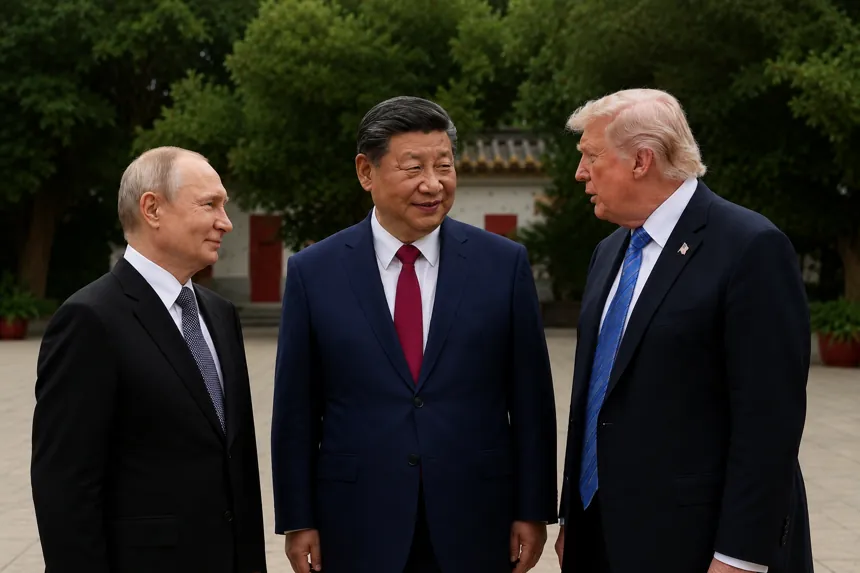
The visits by former U.S. President Donald Trump and Russian President Vladimir Putin to China took place under very different geopolitical circumstances, but both underscored China’s growing centrality in global power politics. Each trip reflected broader shifts in international relations, trade, security, and strategic competition.
While Trump’s state visit in 2017 emphasized economic negotiations and symbolic diplomacy between the world’s two largest economies, Putin’s repeated engagements with Chinese leader Xi Jinping have increasingly focused on geopolitical coordination, energy ties, and opposition to Western-led alliances. Together, the visits illustrate how China has positioned itself as both an economic superpower and a strategic balancing force in a changing international system.
The differences between the two leaders’ visits also reveal the contrasting nature of China’s relationships with the United States and Russia. Washington and Beijing remain deeply interconnected economically despite ongoing rivalry, while Moscow and Beijing have developed closer political and strategic alignment amid deteriorating relations with the West.

At the same time, the visits share important similarities. Both were carefully choreographed displays of diplomacy designed to project stability, leadership, and international influence. Both also highlighted China’s preference for long-term statecraft built around symbolism, hierarchy, and strategic signaling.
Historical Context Behind U.S.-China Relations
Trump’s 2017 state visit to China occurred during a period of growing tension between Washington and Beijing over trade imbalances, intellectual property concerns, and industrial policy. However, the relationship at the time still operated within an established framework of engagement developed over decades.
Since the normalization of diplomatic relations in 1979, economic interdependence between the United States and China had expanded rapidly. According to World Bank and IMF data, China’s rise as a manufacturing and export powerhouse became deeply tied to global markets, including American consumers and corporations.
Trump entered office criticizing existing trade arrangements and arguing that China had benefited disproportionately from globalization. Reuters and AP reporting at the time noted that the administration sought to reduce the U.S. trade deficit and pressure Beijing on market access and technology practices.
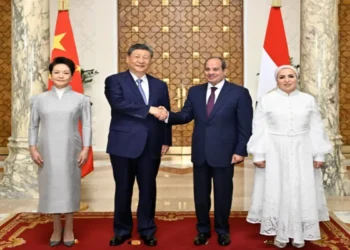
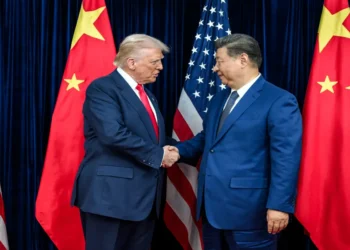
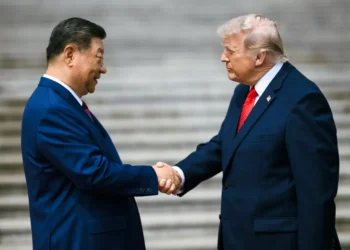
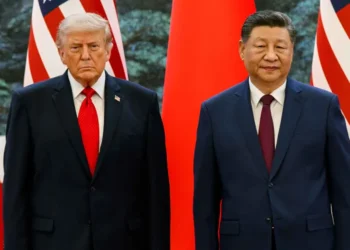
Despite the confrontational rhetoric, Trump’s visit retained many elements of traditional state diplomacy. Chinese officials organized an elaborate state reception in Beijing’s Forbidden City, emphasizing ceremony and personal engagement between Trump and Xi.
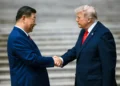

The symbolism reflected Beijing’s long-standing preference for relationship-based diplomacy. Chinese leadership has often used large-scale state visits to demonstrate political respect and reinforce the importance of bilateral stability, even amid disagreements.
Putin’s Visits Reflect Strategic Alignment
Putin’s visits to China have unfolded in a markedly different context. Russia’s relations with Western countries deteriorated significantly after the 2014 annexation of Crimea and deepened further following the 2022 war in Ukraine.
As Western sanctions expanded, Moscow increasingly turned toward China for economic, diplomatic, and strategic support. Bloomberg and Financial Times reporting have highlighted how China became a critical trading partner for Russia, particularly in energy exports, technology imports, and financial transactions.
Unlike Trump’s visit, which centered heavily on trade negotiations and bilateral disputes, Putin’s engagements with Xi have frequently emphasized shared geopolitical narratives. The two governments have criticized what they describe as Western unilateralism and advocated for a more multipolar international order.
Joint statements issued during Putin’s visits often stress sovereignty, non-interference, and opposition to U.S.-led security structures. Analysts cited by Reuters and BBC News have noted that these themes align closely with both countries’ broader strategic messaging.
The Russia-China relationship, however, is not a formal military alliance. While cooperation has deepened, both governments maintain independent foreign policy priorities. China has also sought to avoid direct violations of major Western sanctions regimes that could threaten its access to global financial markets.
Economic Ties Define the U.S.-China Relationship
One of the clearest distinctions between the Trump and Putin visits lies in the structure of each country’s relationship with China.
The United States and China remain economically intertwined on a scale unmatched by Russia-China trade relations. Even during periods of political tension, bilateral commerce between Washington and Beijing has involved hundreds of billions of dollars annually.
Trump’s visit featured major business announcements involving aviation, agriculture, and energy. Chinese state media and U.S. officials highlighted large commercial agreements, although economists later debated how much of the announced investment translated into binding commitments.
The economic dimension of the visit reflected the reality that both countries depend heavily on each other despite strategic competition. U.S. companies rely on Chinese manufacturing networks and consumer markets, while China remains connected to global demand, dollar-based finance, and advanced technology systems dominated by Western economies.
By contrast, Russia’s economic relationship with China is narrower and more concentrated in commodities and energy. Russia supplies oil, natural gas, and raw materials, while China exports manufactured goods, electronics, and industrial products.
According to data cited by the International Energy Agency and Reuters, China became one of the largest buyers of Russian energy following Western sanctions on Moscow. This helped Russia offset some lost European markets while allowing China to secure discounted energy supplies.
Diplomacy and Political Theater
Both Trump and Putin experienced highly choreographed diplomatic receptions in China, but the political messaging differed significantly.
Trump’s visit was designed in part to manage tensions while showcasing personal diplomacy between two powerful leaders. Chinese officials used ceremonial events, cultural performances, and state banquets to cultivate rapport with the U.S. president.
The emphasis on spectacle reflected Beijing’s understanding of Trump’s political style and media-focused leadership approach. Analysts at the time noted that China sought to reduce immediate friction by emphasizing respect and symbolic partnership.
Putin’s visits, meanwhile, have often conveyed ideological and strategic solidarity. State media coverage in both countries has highlighted friendship narratives, military cooperation, and resistance to Western pressure.
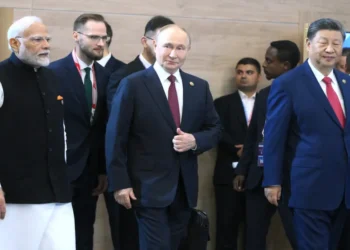
Images of Xi and Putin together have become central symbols of an emerging partnership between authoritarian major powers. AP News reporting has noted that both leaders frequently emphasize their personal relationship as a stabilizing factor in bilateral ties.
China’s diplomatic approach in both cases demonstrates a broader pattern: tailoring statecraft to the political priorities of visiting leaders while reinforcing Beijing’s image as a major global power center.
Military and Security Dimensions
Security concerns also distinguish the two relationships.
The United States and China are strategic competitors in the Indo-Pacific region. Disputes over Taiwan, the South China Sea, technology restrictions, cybersecurity, and military positioning have intensified over the past decade.
Trump’s presidency saw the beginning of a sharper strategic shift in Washington toward long-term competition with China. Although the 2017 visit itself emphasized diplomacy and economic dialogue, it occurred against the backdrop of growing U.S. concerns about Chinese military expansion and technological ambitions.
Russia and China, by comparison, increasingly cooperate on defense issues. Joint military exercises, strategic bomber patrols, and security consultations have expanded in recent years.
Still, analysts cited by the BBC and Financial Times have argued that limits remain in the partnership. Historical mistrust, demographic imbalances along the shared border, and differing long-term interests continue to shape the relationship.
China has also remained cautious about becoming directly entangled in Russia’s military conflicts. Beijing has attempted to balance its partnership with Moscow against its broader economic interests and international reputation.
Global Implications of the Two Relationships
The Trump and Putin visits reflected two different challenges facing China’s foreign policy.
With the United States, China faces competition with another global superpower possessing comparable economic influence, military reach, and technological capabilities. The relationship combines rivalry with deep mutual dependence.
With Russia, China occupies a comparatively stronger economic position. Moscow increasingly depends on Chinese markets and financial networks, giving Beijing greater leverage within the partnership.
These dynamics have broader implications for the international system. The U.S.-China relationship shapes global trade, finance, technology standards, and geopolitical stability. The Russia-China partnership influences energy markets, security alignments, and debates over the future structure of international institutions.
International organizations including the IMF and World Bank have repeatedly warned that fragmentation between major powers could disrupt global economic growth and increase instability across supply chains and financial systems.
Why the Comparisons Continue to Matter
Comparisons between Trump’s and Putin’s visits to China continue because they reveal how Beijing manages relationships with competing global powers. The visits also illustrate China’s broader diplomatic strategy of balancing economic pragmatism with geopolitical ambition.
The contrast between the two relationships highlights how China adapts its diplomacy according to shifting global circumstances. Engagement with the United States has centered on managing competition without complete economic rupture, while relations with Russia increasingly involve strategic coordination amid broader confrontation with the West.
At the same time, both visits demonstrated China’s growing confidence on the world stage. Beijing positioned itself not simply as a regional power, but as a central actor capable of shaping major international relationships across economics, diplomacy, and security.
As geopolitical competition continues to evolve, the significance of these diplomatic encounters extends beyond ceremonial symbolism. They offer insight into the changing balance of power and the increasingly complex relationships defining the international order.