Journos News - Breaking News, World News, Top Stories, Todays Headlines and Flash Reports
Wednesday, September 2, 2026
  • Login
  • Home
  • World
    • Africa
    • Americas
    • Asia
    • Europe
    • Middle East
    • Oceania
  • Politics
  • Business
  • Technology
  • Health
  • Science
  • Sports
  • Entertainment
  • Culture
No Result
View All Result
  • Home
  • World
    • Africa
    • Americas
    • Asia
    • Europe
    • Middle East
    • Oceania
  • Politics
  • Business
  • Technology
  • Health
  • Science
  • Sports
  • Entertainment
  • Culture
No Result
View All Result
Journos News - Breaking News, World News, Top Stories, Todays Headlines and Flash Reports
No Result
View All Result
Home Health

Incoming Class Social Media Trends Drive New Wave of Student Anxiety

Digital pre-college networking reshapes social dynamics and mental health risks

The Daily Desk by The Daily Desk
June 15, 2026
in Health, Public Health & Safety
0
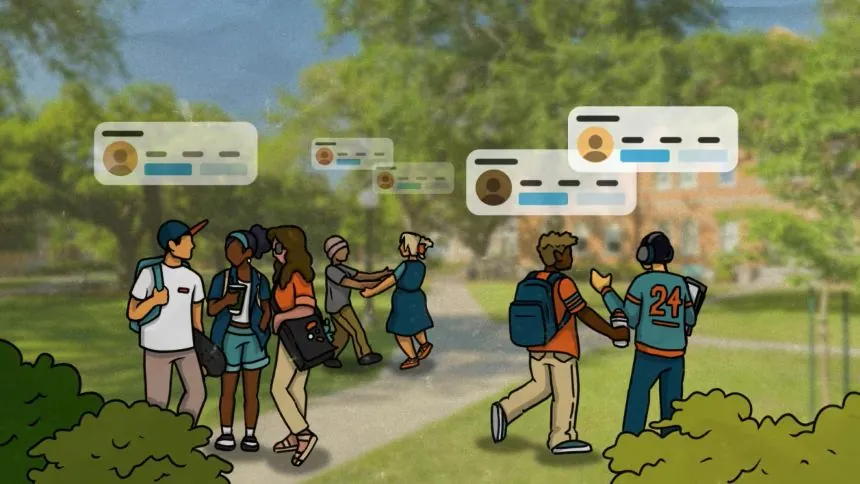
Students browsing social media before college causing anxiety - Illustration by Leah Abucayan/CNN/Adobe

Pre-college social media use is reshaping student mental health risks - Illustration by Leah Abucayan/CNN/Adobe

High school seniors are increasingly experiencing incoming class social media anxiety as universities’ unofficial Instagram networks reshape how students connect before arriving on campus. What was once an in-person transition is now unfolding online, raising concerns among mental health experts about early social pressure and exclusion dynamics. The trend is prompting educators and health professionals to examine how digital behaviors may affect student well-being before college even begins.

According to reporting by CNN, incoming college students are using Instagram pages dedicated to their graduating class to introduce themselves, find roommates, and establish social circles months ahead of matriculation. While these platforms offer connection opportunities, emerging evidence suggests they may also amplify stress, comparison, and social anxiety during a critical developmental period.

Digital Networking Expands—but Social Pressure Intensifies

Students are now forming first impressions through curated online profiles, often emphasizing appearance, lifestyle, and social status. Mental health researchers note that this early exposure to peer comparison can heighten self-consciousness and perceived social ranking.

Data from adolescent psychology studies indicate that social media environments tend to reinforce social comparison behaviors, which are associated with increased anxiety symptoms. Early findings suggest that pre-college online interactions may extend these effects into transitional life stages, where identity formation is particularly sensitive.

An analytical review of youth digital behavior published in journals such as The Lancet Digital Health has previously highlighted correlations between heavy social media use and elevated anxiety, though causation remains complex and influenced by multiple factors.

Pre-Arrival Social Sorting Alters Campus Integration

Unlike traditional college transitions, where relationships develop organically after arrival, students are now entering campus environments with pre-formed social groups. This shift may affect inclusion dynamics and intensify feelings of isolation for those who are less active or visible online.

Health experts point to the concept of “anticipatory social stress,” where individuals experience anxiety about future social environments based on perceived expectations. In this case, students may feel pressure to secure friendships or social validation before physically joining campus communities.

University counseling services in several countries have reported anecdotal increases in pre-arrival anxiety inquiries, reflecting growing awareness of the phenomenon. However, systematic global data remains limited, and further research is required to quantify the scale of impact.

■ Related News

Army medic checks patients' temperatures during Ebola treatment training at a simulated treatment center near York, England.

US citizen tests positive for Ebola as Congo outbreak continues to spread

August 10, 2026
Personal protective equipment is arranged for medical staff during an Ebola response training exercise at an Army health clinic.

Congo Quarantines Nearly 200 River Passengers After Suspected Ebola Death Near Kinshasa

August 7, 2026
People cool off in the fountain at Berlin's Lustgarten during a summer heatwave in Germany.

Europe Heat Wave Triggers Highest Alerts Across Italy as Extreme Temperatures Grip Continent

August 7, 2026
A nurse wearing protective gloves administers a vaccine injection into an adult patient's upper arm during an immunization appointment.

Experimental Vaccines Show Early Promise in Preventing Colon Cancer for People With Lynch Syndrome

August 6, 2026

Mental Health Services Prepare for Early Intervention Needs

Healthcare systems within universities are beginning to adapt by expanding mental health outreach to incoming students before the academic year begins. Preventive strategies include digital literacy programs, online counseling access, and guidance on managing social media use.

Public health specialists emphasize that early intervention is critical. Adolescence and early adulthood represent periods of heightened vulnerability to anxiety disorders, with the World Health Organization identifying these age groups as key targets for mental health prevention strategies.

An original analysis suggests that institutions may need to redefine the “start” of student mental health support, extending services into the pre-enrollment phase as digital environments increasingly shape student experiences.

Policy and Education Responses Remain Limited

Despite growing awareness, formal policy responses addressing pre-college digital socialization remain underdeveloped. Educational institutions largely rely on informal guidance rather than structured frameworks to manage the psychological effects of these platforms.

Experts argue that clearer guidelines on responsible social media engagement, combined with institutional moderation of official student pages, could help reduce harmful comparison and exclusion patterns. However, balancing regulation with student autonomy remains a challenge.

Further interdisciplinary research—combining public health, psychology, and digital behavior analysis—is needed to determine effective interventions and inform policy development.

Global Health Context: Digital Behavior and Youth Anxiety Trends

The rise of incoming class social media anxiety aligns with broader global concerns about youth mental health and digital environments. The World Health Organization and other public health bodies have repeatedly highlighted the need to address the psychological impact of online platforms on young populations.

While social media can facilitate connection and community-building, its role in shaping expectations and self-perception continues to draw scrutiny. Early findings suggest that transitions such as entering college may represent particularly sensitive periods where digital influences carry amplified effects.

A broader analytical perspective indicates that this trend reflects a shift in how major life transitions are experienced—moving from physical environments to hybrid digital-physical spaces with distinct mental health implications.


Tags: #CollegeLife#DigitalWellbeing#EducationTrends#GenZ#GlobalHealth#HealthPolicy#MentalHealthAwareness#OnlineBehavior#PublicHealth#SocialMediaImpact#StudentMentalHealth#YouthAnxiety
The Daily Desk

The Daily Desk

The Daily Desk is a contributor at JournosNews.com covering politics, media, governance, and the evolving dynamics of public discourse. Stories published under this byline are produced in accordance with JournosNews' editorial standards, with an emphasis on verified reporting, accuracy, context, and impartiality.

Related Posts

Fresh iceberg lettuce displayed for sale at a grocery store during the CDC investigation into a multistate Cyclospora outbreak linked to recalled lettuce.

CDC Links Multistate Cyclospora Outbreak to Recalled Iceberg Lettuce from Taylor Farms de Mexico

August 6, 2026
Dr. Tedros Adhanom Ghebreyesus, Director-General of the World Health Organization, attends the European Union–African High-Level Event on Health in Brussels, Belgium.

DR Congos Bundibugyo Ebola Outbreak Becomes Countries Largest as Cases Surge Across Five Provinces

August 6, 2026
Colorized scanning electron micrograph showing Ebola virus particles budding from an infected African green monkey kidney cell at 20,000× magnification.

Ebola Deaths Surpass 1,700 in Eastern Congo as Outbreak Outpaces Containment Efforts

August 5, 2026
Close-up photograph of pink heather flowers blooming on dense green shrubs, highlighting delicate blossoms and evergreen foliage.

Ebola Outbreak Drives Rise in Maternal Deaths as Pregnant Women Avoid Hospitals in Eastern Congo

August 4, 2026
Disease outbreak map showing Ebola transmission zones, affected health areas, treatment centers, and response activities in Ituri Province, Democratic Republic of the Congo.

Congo Ebola Death Toll Surpasses 1,500 as Outbreak Outpaces Response Efforts

July 31, 2026
Dr. Anthony Fauci speaks during a White House coronavirus briefing in the James S. Brady Press Briefing Room in Washington, D.C.

Fauci Invokes Fifth Amendment During Contentious Senate COVID-19 Hearing

July 30, 2026
Anthony Fauci speaks during an Alliance for Health Reform briefing on the Zika virus in Washington, D.C., addressing public health policy and infectious diseases.

Fauci Invokes Fifth Amendment at Republican-Led Senate COVID-19 Hearing

July 29, 2026
Dr. Anthony Fauci speaks during the Fogarty International Center's 50th anniversary symposium at the National Institutes of Health in Bethesda, Maryland.

Fauci Journals Reveal Early COVID-19 Doubts Ahead of Senate Origins Hearing

July 28, 2026
Load More
Next Post
Different types of pancakes from around the world on plates - asab974/Adobe Stock via CNN

Global Pancake Traditions Reflect Cultural Identity and Changing Food Habits

Accessible guided tour with participants using mobility aids in museum - AP Photo/Markus Schreiber

Barrier-Free Tours Gain Ground as Accessible Travel Reshapes Global Tourism

JournosNews logo

Journos News delivers globally neutral, fact-based journalism that meets international media standards — clear, credible, and made for a connected world.

  • Categories
  • World News
  • Politics
  • Business & Markets
  • Technology
  • Health
  • Science
  • Sports
  • Arts & Culture
  • Resources
  • Editorial Standards
  • Submit a Story
  • Advertise with Us
  • Syndication & Partnerships
  • Site Map
  • Press & Media Kit
  • Editorial Team
  • Careers

Join thousands of readers receiving the latest updates, tips, and exclusive insights straight to their inbox. Never miss an important story again.

  • About Us
  • Editorial & Trust Center
  • Contact Us
  • Privacy Policy
  • Terms of Use & Copyright Notice

© JournosNews.com All rights reserved.

Welcome Back!

Login to your account below

Forgotten Password?

Retrieve your password

Please enter your username or email address to reset your password.

Log In
JournosNews

Independent Journalism.
Verified Facts.

You're about to read a professionally edited article from JournosNews.com.

Every article is produced in accordance with our editorial standards, emphasizing factual accuracy, transparent attribution, fairness, editorial independence, and meaningful context.

Editorial Standards
No Result
View All Result
  • Home
  • World
    • Africa
    • Americas
    • Asia
    • Europe
    • Middle East
    • Oceania
  • Politics
  • Business
  • Technology
  • Health
  • Science
  • Sports
  • Entertainment
  • Culture

© JournosNews.com All rights reserved.

This website uses cookies. By continuing to use this website you are giving consent to cookies being used. Visit our Privacy and Cookie Policy.