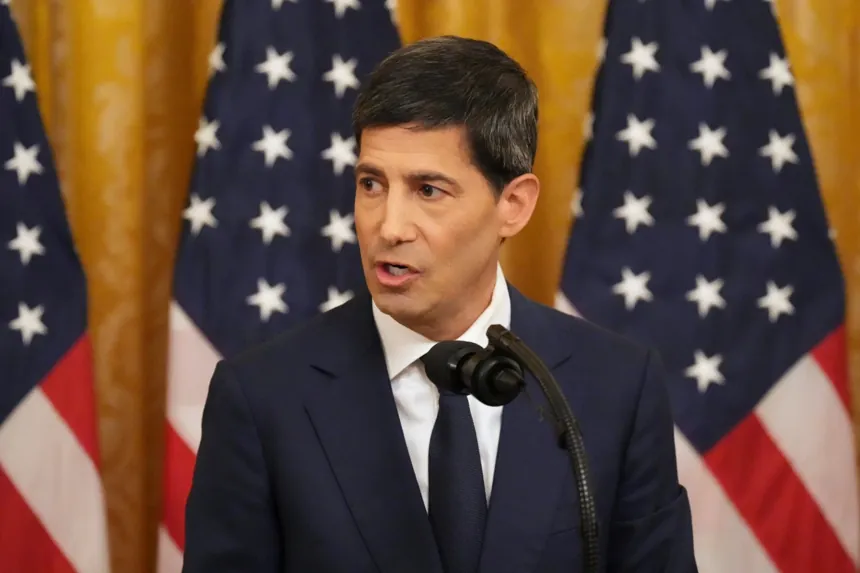
WASHINGTON – The Federal Reserve is widely expected to keep its benchmark interest rate unchanged at about 3.6% as new Chair Kevin Warsh leads his first policy meeting and prepares for a closely watched press conference, according to expectations outlined in Associated Press reporting.
The meeting marks the start of Warsh’s tenure at the central bank. Policymakers are likely to maintain current rates while signaling possible changes in how the Fed communicates future policy decisions.
Markets, economists, and political stakeholders are closely watching the outcome. They are looking for signals on both interest rates and the Fed’s broader communication strategy.

According to the Associated Press, the central bank is expected to hold rates steady for a fourth straight meeting. Officials may also adjust their post-meeting statement. One possible change would be removing language that suggests rate cuts are the next step. Such a move could signal a longer period of stability or even openness to future rate increases if inflation stays high.
Warsh, a former Federal Reserve Board governor and investment banker who served from 2006 to 2011, will also hold his first post-meeting news conference in the afternoon. Financial markets and the White House are expected to closely follow his remarks, especially his tone and policy outlook.
The meeting comes at a time of mixed economic signals and persistent inflation, creating a complex environment for the new chair.
Inflation and Jobs Data Shape Policy Debate
Inflation has risen to a three-year high of 4.2%, according to figures cited in Associated Press reporting. Rising energy prices, linked in part to the Iran war that began earlier this year, have added pressure.
The Federal Reserve typically responds to high inflation by raising interest rates to slow spending and economic growth.
■ Related News
At the same time, the labor market has shown strength. A government report cited by the AP found that employers added 172,000 jobs in May. This marked the third straight month of solid job growth.
Stronger hiring reduces pressure on the Fed to cut rates. However, inflation has remained above the central bank’s 2% target for more than five years. Together, these trends leave policymakers with limited clarity on the next policy move.
Debate Over Fed Communication Strategy
Beyond interest rates, Warsh’s leadership is expected to draw attention for possible changes in how the Federal Reserve communicates with the public.
According to the Associated Press, Warsh has previously supported reducing the Fed’s public messaging footprint. One idea under discussion would cut the number of scheduled press conferences from eight per year to four. This would return to a model used during former Chair Ben Bernanke’s tenure.
Supporters say fewer public appearances could give policymakers more flexibility in decision-making. However, critics warn that reduced transparency could unsettle financial markets and make the Fed’s policy direction harder to understand during uncertain economic conditions.
Warsh’s first press conference will be closely watched for signals on whether he intends to reshape the Fed’s communication approach or maintain its current framework.
Economic Uncertainty and Policy Pressure
Global and domestic factors are adding further complexity to the Fed’s outlook. Inflationary pressure has been amplified by energy market disruptions tied to the Iran conflict. Uncertainty remains over whether a recently announced peace agreement will hold and stabilize oil prices.
Even if energy markets recover, economists cited by the Associated Press say price relief for goods such as groceries, airfare, and fuel may take months to appear.
Earlier Federal Reserve projections had suggested possible rate cuts this year. Those expectations were based on concerns about weakening employment. However, stronger-than-expected job growth has reduced the urgency for easing monetary policy.
Political pressure also continues. President Trump has repeatedly called for lower interest rates but has also said Warsh should act independently. This reflects ongoing debate over the Fed’s autonomy in managing inflation and economic stability.
Former Fed Chair Jerome Powell, who remains on the Board of Governors, is expected to vote in Wednesday’s decision, adding continuity during the leadership transition.
Tags: Federal Reserve, Kevin Warsh, Interest Rates, Monetary Policy, Inflation, Labor Market, Central Bank Policy, US Economy, Financial Markets, Fed Communication