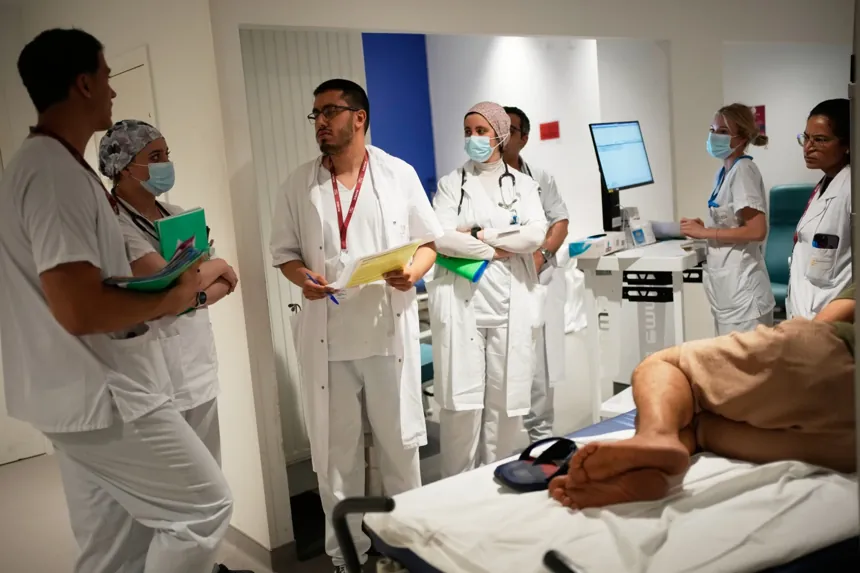
ORSAY, France – Hospitals across Europe are expanding their preparations for future heat waves after record-breaking temperatures exposed vulnerabilities in healthcare systems, prompting emergency upgrades to cooling infrastructure and renewed government investment in climate resilience.
The Associated Press reported that hospitals in France, among the countries hardest hit by last week’s extreme heat, are implementing lessons learned from the recent crisis as health officials warn that prolonged periods of high temperatures are becoming increasingly frequent because of climate change.
At the Paris-Saclay Hospital near Paris, medical teams faced unexpected shortages while treating patients suffering from severe heat-related illnesses. Emergency staff urgently required large quantities of ice to rapidly cool critically ill patients through cold-water immersion but initially lacked an industrial ice-making machine. A nearby fast-food restaurant supplied ice, while hospital staff also purchased additional supplies from supermarkets. The hospital has since ordered its own ice machine to improve readiness for future emergencies.

Hospital director Cédric Lussiez said the recent heat wave demonstrated that existing preparations were insufficient despite previous planning.
“We thought we were ready. We were not actually,” Lussiez said, describing the week as “horrible.” He said the hospital had to develop new solutions around the clock and had already begun applying lessons from the experience.
Governments expand heat resilience measures
France is also strengthening its national response after the heat wave placed significant pressure on healthcare services.
During the country’s hottest days last week, French Prime Minister Sébastien Lecornu announced a €100 million ($114 million) investment beginning this summer to improve hospital cooling systems and help medical facilities remain operational during future periods of extreme heat.
Following a series of government crisis meetings, Lecornu also said authorities are purchasing 30,000 air-conditioning units for healthcare facilities, with initial deliveries expected within days. He said reducing pressure on hospitals during future heat waves had become an immediate priority.



WHO warns extreme heat is becoming the norm
The World Health Organization described the recent European heat wave as “a dress rehearsal” for increasingly difficult summers driven by climate change.
The organization said Europe is warming at more than twice the global average rate and warned that extreme heat can no longer be viewed as an isolated event. It urged governments to improve preparedness, warning that insufficient planning would continue to cost lives.
Hospitals report sharp increase in heat-related emergencies
At Paris-Saclay Hospital, emergency physician Dr. Nicolas Gonzales said patients suffering from heat exposure began arriving in large numbers on June 20, creating sustained pressure on emergency services for an entire week.
The hospital treated patients experiencing dehydration, heart attacks, kidney complications and other conditions linked to prolonged heat exposure. Cases involved people across all age groups, including children and older adults living alone.
Gonzales said one of the first patients was a 50-year-old man who fell into a coma at home after his body temperature reached about 40 degrees Celsius (104 degrees Fahrenheit). He required immediate transport for intensive medical treatment.
He said hospitals are increasingly preparing for climate-related emergencies in much the same way they prepare for annual influenza and COVID-19 outbreaks.
Infrastructure upgrades accelerate
Although Paris-Saclay Hospital’s newer buildings are equipped with air conditioning, several older hospitals within the same hospital group struggled to maintain safe indoor temperatures during the heat wave.
To protect temperature-sensitive medicines, staff relied on temporary cooling measures using electric fans and blocks of ice. Student nurses were recruited to help ensure patients remained hydrated, while temperatures inside an upper-floor psychiatric ward reached approximately 33 degrees Celsius (91 degrees Fahrenheit), according to hospital officials.
Lussiez said renovation work is now being accelerated, including the creation of dedicated cooling rooms on every floor of the psychiatric unit and plans to relocate a department serving elderly patients into newer hospital facilities that offer better protection against extreme heat.
He said the improvements are intended to ensure hospitals are better equipped should another heat wave arrive in the coming days or later this summer, as forecasters have indicated remains possible.
Tags: France, Europe, Heat Wave, Climate Change, Hospitals, Healthcare, World Health Organization, Public Health, Emergency Medicine, Extreme Weather, Paris-Saclay Hospital, Sébastien Lecornu