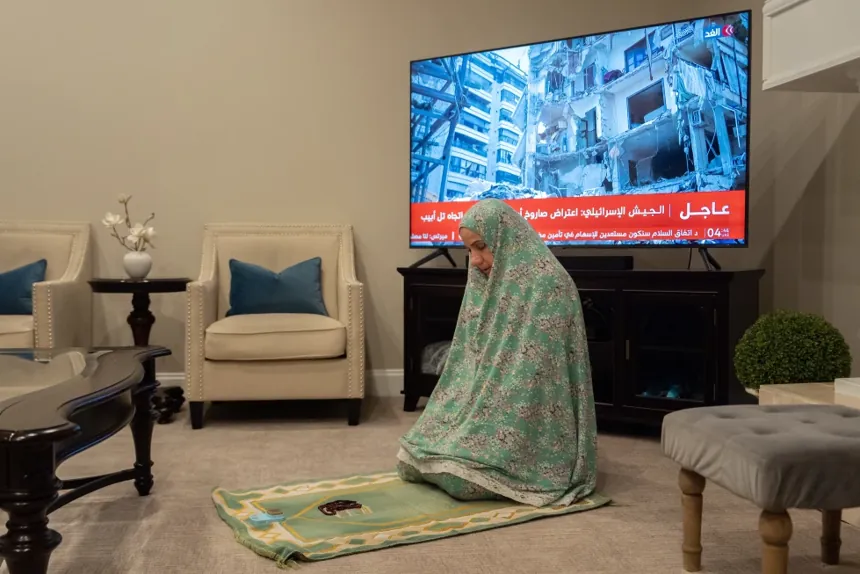
The widening Middle East conflict is intensifying political and humanitarian anxiety far beyond the region itself, with Dearborn, Michigan’s large Lebanese American and Arab American communities increasingly feeling the consequences of a war that has expanded from Gaza into Lebanon and now Iran-linked hostilities. For a city whose voters once placed hopes in promises of regional de-escalation, the current moment underscores how strategic instability in the Middle East continues to reverberate through diaspora communities in the United States. Reporting from The Associated Press indicates that concern over relatives abroad, combined with frustration over U.S. policy direction, is reshaping political sentiment inside one of America’s most internationally connected communities.
The dominant international angle is regional instability, with Dearborn serving as a reflection of how conflict spillover affects global diaspora networks, domestic political alignments, and Washington’s foreign policy credibility. What began as grief over Gaza has evolved into a broader reckoning as violence in Lebanon deepens fears among families with direct ties to the country, where displacement has surged and civilian casualties continue to mount.
Regional Instability Reverberates Beyond the Battlefield
In mosques, vigils, and community gatherings across Dearborn and neighboring Dearborn Heights, the emotional consequences of the conflict have become deeply embedded in daily life. Families are awaiting word from relatives in Lebanon, while community leaders describe a persistent atmosphere of mourning and uncertainty.

Associated Press reporting shows that Lebanese American residents increasingly see the crisis not as a distant geopolitical dispute but as an immediate humanitarian emergency affecting family members, businesses, and community institutions. This has turned places of worship and public memorial spaces into centers of collective political reflection as much as spiritual support.
The conflict’s expansion has also sharpened scrutiny of U.S. diplomatic strategy. Residents who once believed Washington might exert stabilizing influence now view recent developments as evidence of a widening regional security breakdown, especially after the conflict’s extension into Iran-linked confrontation and broader Lebanese displacement patterns.
Diplomatic Credibility Faces Renewed Pressure
The political significance extends beyond Michigan. Dearborn’s Arab American electorate has long been watched internationally as a bellwether for how U.S. Middle East policy affects diaspora trust in Washington’s global leadership.
Community leaders speaking with AP said there is little sense that either major U.S. political camp successfully offered a viable path toward de-escalation, a perception that now feeds broader skepticism toward diplomatic assurances made during election cycles. That erosion of confidence matters internationally because diaspora communities often shape transnational advocacy, remittance flows, humanitarian mobilization, and political messaging across borders.
The strategic implication is clear: when conflict zones overlap with large diaspora populations in Western democracies, domestic politics and foreign affairs become increasingly inseparable. Dearborn’s response illustrates how regional wars can alter political behavior thousands of miles away, influencing debates on sanctions, military posture, and mediation efforts.



Humanitarian Fallout Strengthens Calls for Restraint
Public vigils marked by Lebanese flags, photographs of child victims, and calls for peace have amplified demands for renewed diplomatic restraint. The humanitarian framing is becoming central, particularly as Lebanese displacement figures rise and fears of broader regional escalation persist.
This shift may place additional pressure on U.S. policymakers and international partners to demonstrate a clearer off-ramp from escalation. For allies in Europe and the Gulf, the longer-term concern is that unresolved instability risks creating new refugee pressures, economic disruptions, and cross-border sectarian tensions. Dearborn’s visible mourning culture now mirrors the wider global concern that the conflict’s social costs are spreading faster than diplomatic solutions.
The broader geopolitical takeaway is that regional instability in the Middle East is no longer confined to state actors and battlefronts. Its consequences are unfolding across diaspora capitals, electoral constituencies, and humanitarian networks worldwide, raising the stakes for any future mediation effort.