A foundational figure of the American labor movement is now at the center of an unfolding institutional crisis, as new allegations of sexual abuse against César Chávez prompt a reassessment of how his legacy is honored across the United States.
The claims, including testimony from longtime collaborator Dolores Huerta, have triggered immediate responses from political leaders, advocacy organizations, and municipalities—raising questions not only about historical accountability but also about the durability of institutions built around Chávez’s legacy.
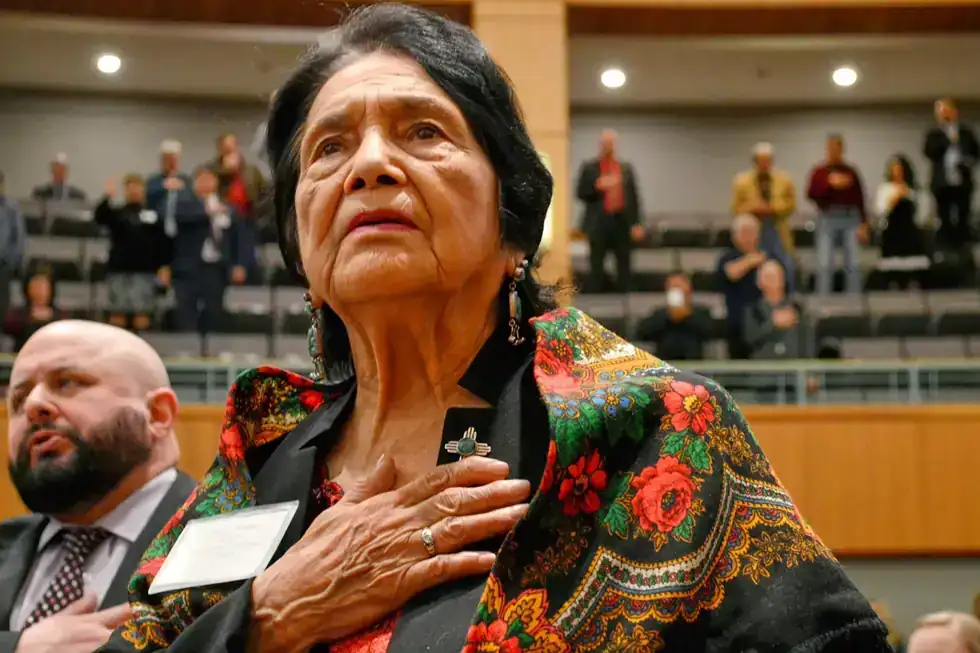
According to reporting first published by The New York Times, Chávez is accused of grooming and sexually abusing young women and girls involved in the farmworker movement. Huerta, in a public statement, confirmed she was among those affected, describing encounters she said involved coercion and force.

The developments have rapidly shifted the conversation from commemoration to institutional recalibration.
Public Honors Enter a Period of Uncertainty
Across multiple states and cities, officials are reconsidering whether Chávez’s name should remain attached to public spaces, holidays, and civic recognition. The speed of these responses suggests a broader institutional sensitivity to reputational risk tied to historical figures.
In Texas, Governor Greg Abbott announced plans to push for the removal of César Chávez Day from the state calendar. In Arizona, Governor Katie Hobbs has already declined to observe the holiday this year, while local officials in Phoenix are preparing to vote on renaming it entirely.
Meanwhile, in California—where Chávez’s legacy has been most prominently institutionalized—Governor Gavin Newsom signaled a more cautious approach, emphasizing the broader contributions of the farmworker movement while stopping short of endorsing immediate changes.
This divergence reflects a growing fragmentation in how institutions respond to historical controversies, with some opting for rapid symbolic action and others adopting a more measured review process.




Movement Identity Tested Beyond Its Founding Figure
At the organizational level, groups closely tied to Chávez are confronting questions about identity and continuity. The César Chávez Foundation acknowledged the gravity of the allegations and indicated it would reassess its direction in consultation with stakeholders.
Similarly, the United Farm Workers—which Chávez co-founded—has begun distancing its current activities from traditional celebrations centered on its founder. The union has encouraged supporters to redirect attention toward broader immigration and labor justice initiatives.
This shift underscores an emerging effort to decouple institutional missions from individual legacies, a strategy increasingly adopted in response to reputational crises involving historical figures.
Political and Civic Leaders Signal Broader Accountability Shift
Reactions from elected officials and civil society groups suggest the controversy is extending beyond symbolic gestures into a wider debate over accountability standards for public figures.
U.S. Senator Ben Ray Luján called for Chávez’s name to be removed from public landmarks and institutions, while Albuquerque Mayor Tim Keller has ordered a formal review of how the city recognizes him.
Advocacy organizations including the League of United Latin American Citizens and Voto Latino issued statements condemning abuse while emphasizing that the farmworker movement’s achievements extend beyond any single individual.
Their responses reflect a broader recalibration within civil society—one that seeks to preserve collective accomplishments while addressing individual misconduct.
Historical Legacy Confronts Modern Standards
Chávez, who died in 1993, has long been regarded as a central architect of labor rights advancements for farmworkers, particularly through organizing efforts in the 1960s and 1970s. His work led to improved wages and conditions and earned national recognition, including a federally observed day of commemoration established during the presidency of Barack Obama.
However, the current allegations are forcing institutions to reconcile that legacy with evolving societal expectations regarding accountability and transparency.
Huerta, in her statement, underscored this tension, noting that while Chávez’s actions were harmful, they do not negate the broader achievements of the movement. Her remarks point to a central dilemma now facing institutions: whether it is possible to preserve historical contributions while re-evaluating the figures associated with them.
Forward Outlook: Institutional Realignment Likely to Continue
As more cities, states, and organizations initiate reviews, the trajectory suggests a prolonged period of institutional reassessment rather than a singular moment of reckoning.
The outcome will likely vary across jurisdictions, shaped by political leadership, public sentiment, and the degree to which institutions are intertwined with Chávez’s legacy. What remains clear is that the response is no longer confined to historical debate—it is actively reshaping present-day policy, commemoration, and organizational identity.
In that sense, the controversy marks not just a reassessment of one individual, but a broader test of how institutions adapt when legacy and accountability come into conflict.