Brazil’s government announced a $75 million investment to expand and improve a highway running through the Amazon rainforest, a project environmental organizations warn could accelerate deforestation in one of the world’s most environmentally sensitive regions.
President Luiz Inácio Lula da Silva’s administration said the funding will support work on the BR-319 highway, which links the northern states of Amazonas and Rondônia and connects the city of Manaus to the rest of Brazil’s road network. Officials simultaneously unveiled a new environmental protection strategy intended to reduce ecological damage linked to the project.
Speaking during a ceremony in Amazonas state, Lula defended the project and said the government intended to combine infrastructure expansion with environmental safeguards. “From an environmental standpoint, it will be the most modern road in the world,” Lula said, according to Associated Press reporting.

Environmental Concerns Intensify
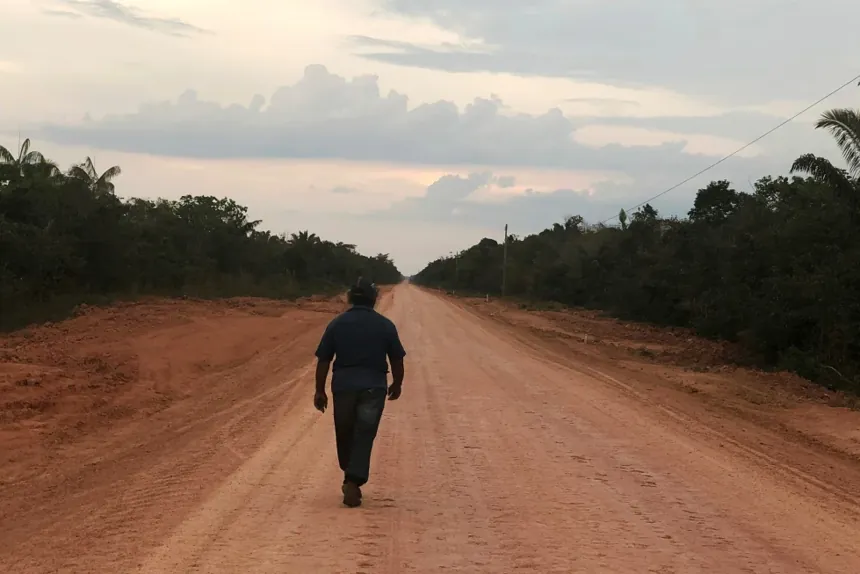
The BR-319 highway was originally inaugurated in 1976 but remains only partially paved. It cuts through a large stretch of relatively preserved Amazon rainforest and runs alongside the Madeira River, a major Amazon tributary that has faced severe drought conditions affecting transportation and trade.
Environmental researchers and advocacy groups have long warned that expanding roads in the Amazon typically drives illegal logging, land grabbing, fires, and settlement growth deeper into forested areas. Scientific studies cited in reporting found that most deforestation in the Amazon occurs close to roads and that unofficial side roads often expand rapidly once paving projects begin.
A 2014 study published in the journal Biological Conservation found that 95% of forest clearing in the Amazon occurs within roughly 5.5 kilometers of roads. Researchers also estimated that unofficial roads can expand several times beyond the length of official highways.
Additional academic research has suggested reconstruction of BR-319 could significantly increase long-term deforestation across protected areas and Indigenous territories if enforcement measures fail.
Government Promises Environmental Safeguards
Brazilian officials said the new protection plan would establish environmental monitoring zones extending approximately 50 kilometers on each side of the highway. The government also pledged to create additional conservation areas, install checkpoints, expand enforcement agency operations, and hire a private company by 2028 to support monitoring efforts.
■ Related News




Officials argued the region requires a stronger state presence because the highway passes through one of the Amazon’s most vulnerable ecological corridors.
The administration also announced related investment projects in Amazonas involving Brazil’s state-run oil company Petrobras and its logistics subsidiary Transpetro. Lula appeared at construction sites during a visit earlier this week as work continued along sections of the road.
Legal Challenges Continue
Environmental organizations, including Climate Observatory, have challenged the project in court. The group filed legal action in 2024 seeking to overturn preliminary environmental approval granted in 2022, arguing authorities failed to complete sufficient climate impact assessments and Indigenous consultations before advancing the project.
Court disputes temporarily halted part of the bidding process earlier this year before a higher court reversed the suspension, according to AP reporting.
Critics have also pointed to tensions between Lula’s international environmental commitments and domestic infrastructure expansion plans ahead of Brazil hosting the COP30 climate summit.
The Amazon rainforest plays a central role in regulating global climate systems and absorbing carbon emissions. Scientists and environmental organizations have repeatedly warned that large-scale forest loss could push parts of the Amazon toward irreversible ecological degradation. Details about the full long-term environmental impact of the BR-319 expansion remain disputed.