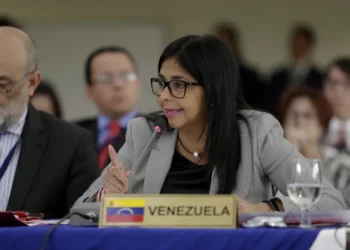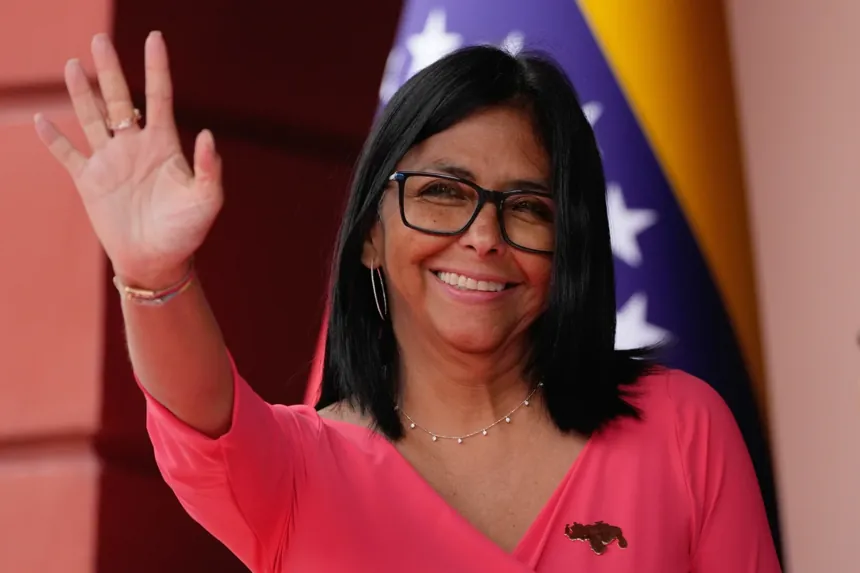
The Trump administration has instructed federal prosecutors in Miami to avoid pursuing criminal investigations involving Venezuela’s acting President Delcy Rodríguez, according to current and former U.S. law enforcement officials cited by the Associated Press, marking another significant shift in Washington’s approach toward Caracas.
The directive reportedly came as the White House seeks to stabilize Venezuela following the capture and removal of former President Nicolás Maduro earlier this year during a U.S. military-backed operation that dramatically reshaped the country’s political landscape.
According to AP reporting, Rodríguez had long appeared in Drug Enforcement Administration records related to alleged drug trafficking and money laundering investigations dating back to at least 2018, although she has never been formally charged in the United States.

A spokesperson for the U.S. Justice Department denied that any active investigation existed, stating in an email to AP that “there was never an investigation into her to shut down.”
Washington Warms Relations With Caracas
The reported move comes amid a broader thaw in relations between Washington and Venezuela’s interim government after the Trump administration recognized Rodríguez as the country’s acting leader following Maduro’s capture.
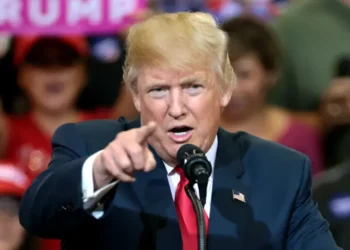
President Donald Trump previously described Rodríguez as a “terrific person” shortly after Maduro and his wife, Cilia Flores, were transported to New York to face federal narcotics charges. Maduro and Flores have pleaded not guilty in U.S. court proceedings.
The AP report said pausing scrutiny of Rodríguez was intended in part to avoid undermining efforts to reopen Venezuela to U.S. investment and stabilize governance in the oil-producing nation.
Sanctions targeting Rodríguez have also reportedly been eased as the administration attempts to rebuild diplomatic and economic ties with Caracas.

Critics Raise Concerns Over Justice Department Independence
The development has prompted criticism from legal experts and some U.S. lawmakers, who questioned whether criminal investigations are being influenced by diplomatic priorities.
Former federal prosecutor Duncan Levin told AP it would be “deeply troubling” if investigators were instructed to halt legitimate inquiries for political reasons.
AP also reported that the administration recently slowed or eased scrutiny involving Colombian President Gustavo Petro, another Latin American leader who had reportedly appeared in DEA investigations.
Justice Department policy generally requires approval from the U.S. attorney general before charges can be brought against foreign heads of state, who are typically protected under international legal norms.
Venezuela’s Political Future Remains Uncertain
The policy shift unfolds as Venezuela continues navigating political uncertainty after Maduro’s removal from power. The United States has expanded its engagement with Rodríguez’s interim administration while opposition groups continue demanding broader democratic reforms and future elections.
Opposition leader María Corina Machado recently stated she intends to return from exile and contest future presidential elections, arguing Venezuela still requires internationally recognized democratic guarantees.
Details surrounding any remaining federal inquiries involving Venezuelan officials remain unclear, and authorities have not publicly disclosed whether the reported directive applies beyond Miami-based prosecutors.