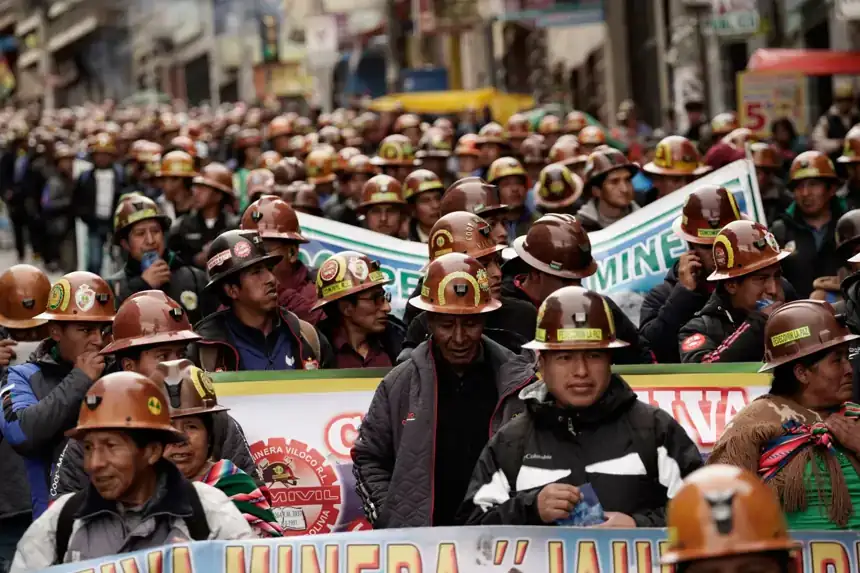
Bolivia’s first major labor mobilization against President Rodrigo Paz’s economic overhaul is now centering on the removal of fuel subsidies, a policy shift the government says is essential to ease severe dollar shortages and restore market confidence. But as workers tied to the country’s most influential labor federation rally in La Paz and other regions, the confrontation is rapidly evolving into a broader measure of how much social strain Bolivia can absorb in exchange for fiscal repair.
As first reported by The Associated Press, the strike was organized by Bolivia’s Central Union of Workers, though participation has been uneven, with transport unions and some trade blocs holding back after separate negotiations. That split matters strategically: the protests are less about immediate paralysis and more about whether organized labor can still convert economic anger into sustained national leverage.
Price Shock Pushes Economic Pain Into the Streets
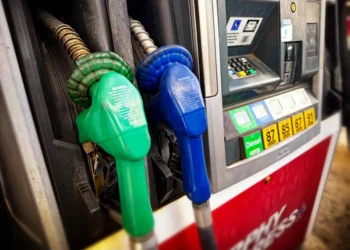
The government’s decree effectively doubled gasoline prices from roughly $0.53 to $1 per liter, ending a subsidy regime that had been politically untouchable for two decades. Paz argues the state had been spending about $10 million a day to support an increasingly unsustainable system that also encouraged smuggling across borders.

That fiscal logic may be economically defensible, but the social transmission mechanism is immediate: higher transport fares, rising food costs, and mounting pressure on wage negotiations. For miners, factory workers, and public-sector unions, the subsidy cut is being felt less as macroeconomic stabilization and more as a direct compression of household purchasing power.
Union Fragmentation Limits but Does Not Remove the Risk
A notable feature of the unrest is that Bolivia’s labor response is not fully unified.
While the Central Union of Workers called the strike, major transport groups did not join after securing side concessions, including duty-free imports for spare parts and tariff adjustments. This weakens the immediate disruptive capacity of the protests, but it also introduces a more volatile political variable: fragmented labor fronts can quickly recombine if inflation accelerates.
The risk for Paz is that partial protests today can become a wider anti-austerity coalition if food prices continue to rise faster than wages.
Dollar Relief Strategy Now Depends on Political Endurance
The administration’s economic rationale is rooted in foreign currency scarcity.



Business groups have largely backed the reform, arguing that ending subsidies could free dollars for imports and capital inflows while reducing distortions that have weakened reserves. That support gives Paz short-term elite backing, but it does little to cushion the political cost among workers facing real-time price increases.
This makes the subsidy battle a test of endurance rather than a single protest cycle. If the government can stabilize dollar access quickly, public resistance may soften. If shortages persist despite the sacrifice, the legitimacy of the reform could erode rapidly.
The Real Threat Is Whether Economic Reform Outruns Social Patience
The forward-looking pressure point is now timing.
Bolivia’s leadership is effectively asking the public to accept immediate hardship in exchange for delayed macroeconomic gains. The protests suggest that many unions are not yet convinced the trade-off is credible.
That leaves the government facing a narrow political corridor: deliver visible currency stabilization and supply relief before inflationary spillovers deepen, or risk transforming a fiscal correction into a broader legitimacy crisis for its economic program.