The release of abducted pupils and teachers offers a symbolic relief for authorities, but it also sharpens scrutiny over whether the state can protect classrooms in conflict-hit regions from recurring mass kidnappings.
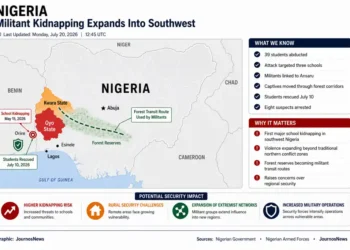
Nigerian authorities on Monday publicly received dozens of schoolchildren and teachers freed after spending nearly a month in captivity, turning the moment into both a humanitarian reprieve and a political test of state credibility. The children, some appearing visibly shaken and malnourished, were brought to the Niger state capital after gunmen stormed their Catholic boarding school in Papiri in one of the country’s largest recent school abductions.
As first reported by The Associated Press, the latest group formed the remaining batch of captives seized during the November raid on St. Mary’s Catholic School, where more than 300 pupils and staff were initially taken before several waves of releases and escapes reduced the number still missing. The official reception by state authorities was designed to project recovery and control, but it also underlined how institutional response now matters as much as the rescue itself.

Relief in Minna Cannot Mask the Security Failure
The arrival of the freed children in Minna delivered a powerful visual of state intervention, yet it also revived the central question that has haunted Nigeria’s northern regions for years: why do schools remain such vulnerable targets?
Armed gangs operating from forest corridors across Niger and neighboring states continue to treat schools as high-value kidnapping sites, using the abductions to pressure authorities and extract ransom leverage. The scale of the Papiri attack—hundreds of pupils and teachers taken in a predawn raid—reinforces how security gaps around rural boarding schools remain largely unresolved.
Repeated Abductions Are Testing Public Confidence
The state’s challenge is no longer limited to securing releases.
Each successful rescue or negotiated return is quickly overshadowed by the next kidnapping, creating a cycle in which institutional resilience is judged less by recovery efforts and more by prevention capacity. Nigeria has recorded repeated school mass abductions since the 2014 Chibok kidnappings, and the recurrence continues to erode public confidence in official assurances.
For families in conflict-hit communities, the symbolic welcome ceremonies offer relief, but they do little to restore confidence if schools reopen under the same security vulnerabilities.
■ Related News



Education Systems in Conflict Zones Face Renewed Pressure
The broader consequence extends beyond the immediate victims.
Persistent fears over school raids have repeatedly forced closures, reduced enrollment, and driven parents to withdraw children from boarding institutions across northern Nigeria. That long-term educational damage is becoming one of the most significant institutional costs of the country’s wider insecurity crisis.
The return of these children may allow some families to reunite before the holidays, but it also places new pressure on regional authorities to demonstrate that classrooms can remain open without becoming strategic targets.
The Next Measure of Success Is Prevention, Not Recovery
The forward-looking risk is clear: the state’s legitimacy will now be measured by whether it can prevent the next school kidnapping, not by how effectively it stages the aftermath of this one.
Nigeria’s authorities can point to the safe return of the remaining children as proof of operational capacity. Yet unless that is matched by stronger rural protection, intelligence-led patrols, and permanent school security reforms, the Papiri case may be remembered less as a rescue success than as another warning that institutional resilience remains reactive rather than preventive.