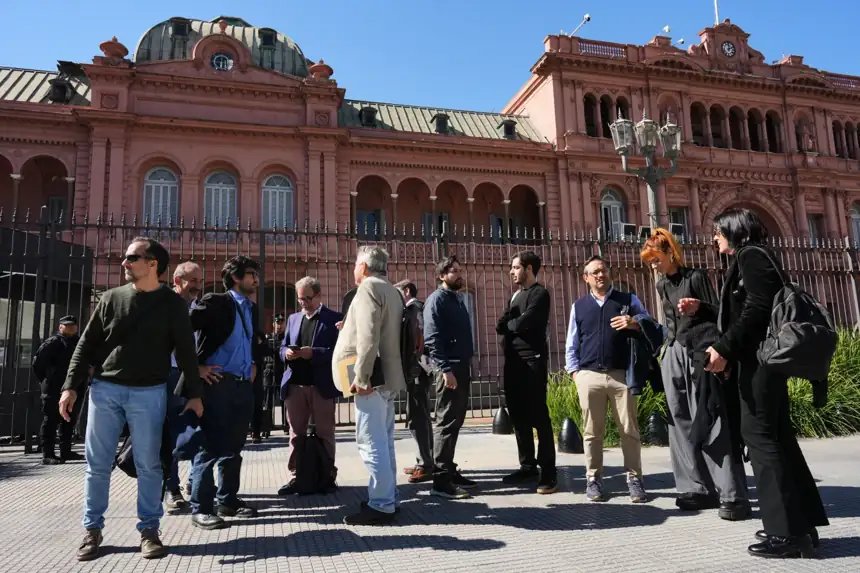
Argentina’s President Javier Milei has reinstated journalists’ access to the presidential headquarters in Buenos Aires, reversing a controversial ban that drew widespread criticism and raised concerns about press freedom in the country.
The decision restores entry to the Casa Rosada more than a week after accredited reporters were barred, a move that sparked backlash from lawmakers, civil society groups and media organizations. Reporting from The Associated Press indicates the reversal follows mounting domestic pressure and scrutiny over democratic norms.
Governance Concerns Intensify Over Media Restrictions
The initial decision to expel journalists from the presidential palace marked a significant escalation in tensions between the Milei administration and Argentina’s media sector. Authorities cited security concerns linked to unauthorized filming inside the building, though journalists disputed the claims.

Despite restoring access, the government has imposed new restrictions, including tighter controls on movement within the building and continued exclusion of certain television networks without public explanation.
Analysts say these measures suggest a partial rollback rather than a full return to previous levels of press access, raising questions about the durability of media freedoms under the current administration.
Political Backlash Drives Policy Reversal
The ban prompted criticism across Argentina’s political spectrum, with opposition lawmakers, business groups and religious leaders expressing concern over its implications for democratic accountability. The move was widely viewed as an unprecedented restriction in the post-dictatorship era, intensifying scrutiny of the government’s stance toward independent media.
The backlash appears to have played a decisive role in the government’s decision to reverse course. However, officials have maintained that the measures were administrative rather than censorial, framing the episode as a response to security considerations rather than an attack on press freedom.
International Attention on Press Freedom Standards
The episode has drawn attention from international observers monitoring democratic governance and media independence in Latin America. Advocacy groups have pointed to a broader pattern of confrontational rhetoric and legal actions targeting journalists during Milei’s presidency.




Argentina’s standing in global press freedom rankings has declined in recent years, reflecting concerns over the relationship between the government and the media.
The developments also echo trends seen in other countries where tensions between political leaders and the press have intensified, contributing to debates over the role of independent journalism in democratic systems.
Strategic Implications for Democratic Governance
The restoration of press access may ease immediate tensions, but the episode underscores ongoing challenges in balancing government control and media independence. Observers say the introduction of new restrictions signals that friction between authorities and journalists is likely to persist.
As Argentina navigates broader political and economic reforms, the handling of press relations is expected to remain a key indicator of institutional stability and democratic resilience.
The situation highlights how rapidly evolving policies toward the media can shape both domestic political dynamics and international perceptions of governance standards.