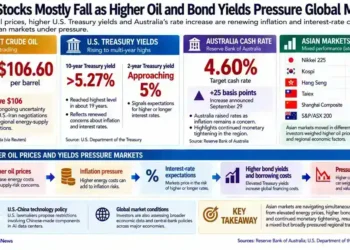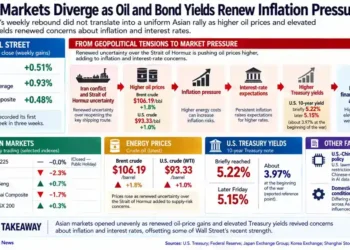
NEW YORK — U.S. equities moved lower from recent record levels while oil prices climbed after renewed fighting in the Middle East raised concerns over global energy supply, according to market data compiled by major financial outlets.
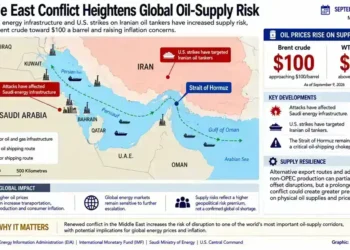
The pullback in stocks comes after a sustained rally that had pushed key indexes to historic highs, with investors reassessing risk exposure as geopolitical uncertainty increases. Oil prices rose in response to fears that escalating tensions involving Iran could disrupt supply routes critical to global energy markets.
Market data compiled by Bloomberg and Reuters indicate that benchmark U.S. indexes declined modestly, while energy commodities saw upward price movement. The shift reflects a broader market recalibration as investors weigh geopolitical developments against economic fundamentals.

Energy Market Reaction
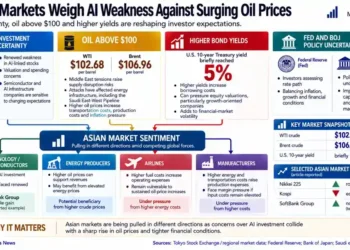
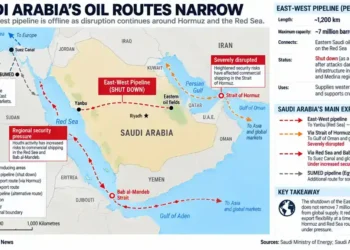
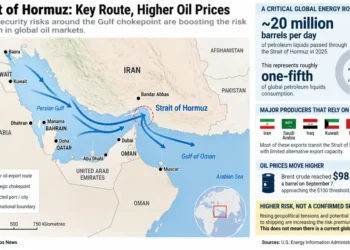
Crude oil prices advanced as traders responded to heightened uncertainty in the Middle East, a region that accounts for a significant share of global oil production. Analysts cited concerns about potential disruptions to shipping lanes and production infrastructure as key drivers of the price increase.
Industry figures indicate that even limited conflict escalation can have outsized effects on energy markets due to the region’s strategic importance. According to analysts interviewed by Financial Times, oil markets tend to price in risk premiums quickly when geopolitical tensions involve major producers.
Equity Market Response
On Wall Street, major indexes edged lower as rising oil prices and geopolitical risks weighed on investor sentiment. Sectors sensitive to energy costs, including transportation and manufacturing, faced pressure, while energy stocks showed relative resilience.
Data cited by The Wall Street Journal suggest that market participants are rotating cautiously, balancing exposure between defensive sectors and areas that may benefit from higher commodity prices.
Interest Rate and Macro Context
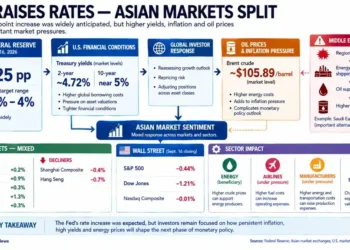
The market movement also comes amid ongoing uncertainty surrounding interest rate policy. Investors continue to monitor signals from the Federal Reserve regarding the trajectory of borrowing costs, which remain a key factor influencing equity valuations.



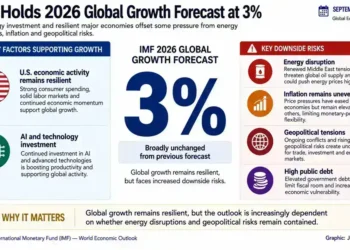
Higher oil prices could complicate inflation trends, potentially affecting central bank policy decisions. Analysts noted that sustained increases in energy costs may feed into broader price pressures, adding another layer of complexity to the economic outlook.
Strategic Outlook
While the decline in equities remains measured, market participants are closely watching developments in the Middle East for further signals. The duration and scale of the conflict will likely determine whether current market reactions remain contained or evolve into broader volatility.
Analysts across major financial institutions emphasize that geopolitical risks, while often short-lived in market impact, can trigger significant short-term adjustments in asset pricing. The interplay between energy markets, inflation expectations, and monetary policy is expected to remain a central focus for investors in the coming weeks.