Journos News - Breaking News, World News, Top Stories, Todays Headlines and Flash Reports
Tuesday, July 14, 2026
  • Login
  • Home
  • World
    • Africa
    • Americas
    • Asia
    • Europe
    • Middle East
    • Oceania
  • Politics
  • Business
  • Technology
  • Health
  • Science
  • Sports
  • Entertainment
  • Culture
No Result
View All Result
  • Home
  • World
    • Africa
    • Americas
    • Asia
    • Europe
    • Middle East
    • Oceania
  • Politics
  • Business
  • Technology
  • Health
  • Science
  • Sports
  • Entertainment
  • Culture
No Result
View All Result
Journos News - Breaking News, World News, Top Stories, Todays Headlines and Flash Reports
No Result
View All Result
Home Environment

Saving Arctic Foxes: How Norway, Sweden, and Finland Are Helping the Species Thrive Again

The Arctic Fox Comeback: Breeding and Feeding Efforts in the Nordic Countries

The Daily Desk by The Daily Desk
June 24, 2026
in Environment, General Environment
0
Can Arctic Foxes Survive Climate Change? Conservation Projects in Norway, Sweden, and Finland

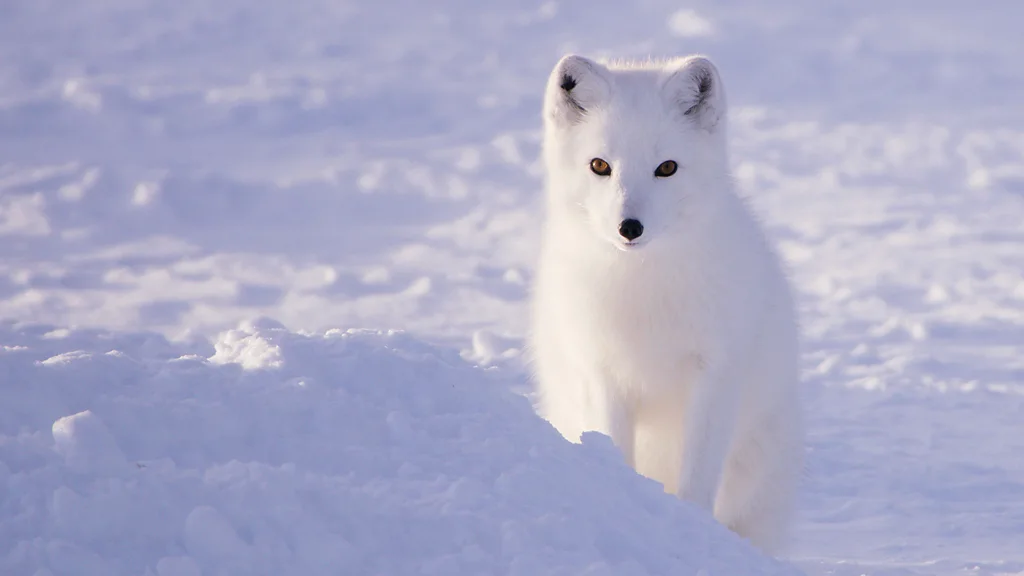
The Arctic Fox's Second Chance: A Success Story of Cross-Border Conservation - Craig Jackson/ Kristine Ulvund/ Nina

“If We Stop Now, They’re Gone Forever”: The Fight to Save Arctic Foxes in the Nordic Countries

Arctic foxes were nearly driven to extinction in Sweden, Norway, and Finland, but dedicated conservation efforts are giving this native species a second chance. Can breeding and feeding projects help these foxes survive for good?

As summer fades into autumn on the Norwegian alpine tundra, the wind howls over the fells, and Arctic foxes remain in their dens. “They’re not stupid,” says biologist Craig Jackson, as he cuts up frozen dog food with a butcher’s knife. Alongside his colleague, Kristine Ulvund, Jackson feeds the foxes—carefully placing chunks of meat into buckets and delivering them to the enclosures. The young foxes frolic across the tundra, blissfully unaware that their survival depends on the fragile efforts to save their population.

Since 2005, the Norwegian Institute for Nature Research (NINA) has been breeding Arctic foxes in captivity as part of a government-funded conservation program. Located near Oppdal, 300km north of Oslo, the program is crucial to saving the species in Fennoscandia—the northern European peninsula that includes Finland, Norway, Sweden, and parts of Russia. This year, 34 pups have been born at the breeding station, and by January, Jackson and Ulvund will release them back into the wild, joining the 465 captive-bred foxes already set free across Norway since the program’s inception.

The Arctic Fox’s Struggle for Survival

Arctic foxes are built for the harshest climates, with short muzzles, warm fur, and foot pads that function as heat exchangers to survive temperatures below -40°C (-40°F). Historically, they roamed across the circumpolar tundra of the Arctic, thriving in regions like Greenland, Canada, Russia, and the Nordic countries. While the species remains abundant in most of its range, the Arctic fox nearly disappeared from Fennoscandia by the early 20th century due to overhunting for their prized pelts. Legal protections in the 1920s came too late to restore their populations, and by 2000, only 40-60 Arctic foxes remained in Sweden and Norway, while Finland had seen none since 1996.

Though the Arctic fox is not threatened in other regions, conservationists emphasize the importance of restoring Fennoscandian populations for ecological and cultural reasons. The Arctic fox plays a vital role in its ecosystem as a keystone species, and its survival is closely linked to the identity of the region’s people.

RELATED POSTS

How to Stay Safe During a Heat Wave Without Air Conditioning

Global Talks on Fossil Fuel Transition Open in Santa Marta

Oil Shock Accelerates Clean Energy Shift, Strengthening China’s Manufacturing Edge

Global E-Waste Recycling Rates Lag as Electronic Waste Reaches 62 Million Tons

U.S. Heat Dome Expands After Record March Temperatures Across 14 States

US March Heat Records Break Across Multiple States, Data Shows

The Impact of Climate Change and Red Foxes

In recent years, climate change has made things worse for Arctic foxes. Disruptions to lemming populations—critical prey for the foxes—have worsened the situation. Additionally, warmer temperatures have allowed the more aggressive red fox to encroach upon Arctic fox territory, competing for food and resources. “Fennoscandian Arctic foxes heavily depend on lemmings,” explains Dorothée Ehrich, a researcher at the Climate-Ecological Observatory for Arctic Tundra in Tromsø, Norway. The warmer winters caused by climate change make it difficult for lemmings to survive, which, in turn, affects the foxes’ ability to reproduce.

To help the foxes survive, more than 250 feeding stations have been established across Norway, Sweden, and Finland. In Kilpisjärvi, Finland, Tuomo Ollila, a retired wildlife expert, oversees one of these stations. “We give them premium-quality dog food,” he says with a laugh. “In poor rodent years, it helps Arctic foxes survive in optimal breeding habitats.” While lemmings are still the preferred food, supplemental feeding has proven crucial for breeding pairs and their young.

However, the rise of red foxes remains a significant challenge. Larger, stronger, and more aggressive than their Arctic cousins, red foxes often prey on Arctic foxes and spread diseases. To combat this, hunters—both local and government-paid—are tasked with culling red foxes, especially near Arctic fox dens. But this measure is controversial, as red foxes are native to the region.

A Balancing Act: Challenges and Successes

Some see ecological alternatives to red fox culling, such as the return of larger predators like wolves and wolverines. However, the support for sheep grazing in the mountains has made it difficult to reintroduce large predators. “Sheep grazing has strong political support in Norway,” says Ulvund, making it unlikely for large predators to make a significant return.

Without human intervention, experts agree that the Arctic fox may already be extinct in Fennoscandia. However, thanks to concerted conservation efforts, the wild populations of Arctic foxes in Norway, Sweden, and Finland have grown to over 550 individuals. “Our data shows that captive-bred foxes have the same survival and reproduction rates as wild-born foxes,” says Ulvund.

In Finland, the first Arctic fox litter in 26 years was born in 2022, just 19km from a release site in Norway. “The coffee tasted great that morning,” recalls Ollila.

Researchers like Johan Fredrik Wallén, who has studied Arctic foxes in Sweden for nearly 20 years, now often sees them in the wild, a stark contrast to his earlier experiences. But his work is tough, involving long days of fieldwork in harsh conditions—walking 15-20km daily and enduring snow, wind, and cold. “I remember waking up in a tent covered in snow,” he recalls.

The research is vital for understanding the effectiveness of conservation measures. Initially, captive-bred foxes were released in October or November, but now they stay in their enclosures longer to build up fat reserves before being released into the wild.

In northern Norway’s Varanger Peninsula, where red fox culling had been the only conservation measure, the population of Arctic foxes fluctuated drastically. After releasing 67 captive-bred foxes in 2017, the population has rebounded. “Last year alone, over 90 pups were born in Varanger,” says Ehrich.

However, there are risks involved in releasing captive-bred foxes. Introducing foxes from the same breeding pairs can reduce genetic diversity, leading to inbreeding. The focus has now shifted to releasing animals in a way that promotes genetic diversity.

A Collective Success Story

The success of the Arctic fox conservation program is a testament to international cooperation. Norway, Sweden, and Finland have worked together, setting common goals, sharing information, and compiling joint annual reports. “Animals don’t see country borders,” says Wallén. It also helps that the Arctic fox is not a controversial species—many locals view it as a symbol of the pristine Arctic wilderness.

Still, scientists are cautious about relying too heavily on captive breeding. “We can’t rely on captive breeding to save a species,” says Ulvund. “It should only be a last resort.” While the fox population is growing, it remains on life support, and the goal is to reach a sustainable population of at least 2,000 foxes in Fennoscandia. Whether this number will be enough remains uncertain.

Experts like Dominique Berteaux, an ecologist in Canada, warn that continued support may be necessary for the Arctic fox to thrive in Fennoscandia. Without intervention, the population could decline again.

As climate change accelerates, the future of Arctic foxes in Fennoscandia remains uncertain. However, Wallén argues that giving up now would be a mistake. “Arctic foxes have been here since the last ice age,” he says. “If we stop now, they’re gone forever.”

Source

Tags: #AnimalSurvival#ArcticBiodiversity#ArcticEcosystem#ArcticEcosystemRecovery#ArcticFox#ArcticFoxConservation#ArcticNature#ArcticTundra#ArcticWildlife#BreedingPrograms#Lemmings#WildlifeRestorationProjects
The Daily Desk

The Daily Desk

The Daily Desk is a contributor at JournosNews.com covering politics, media, governance, and the evolving dynamics of public discourse. Stories published under this byline are produced in accordance with JournosNews' editorial standards, with an emphasis on verified reporting, accuracy, context, and impartiality.

Related Posts

How to Stay Safe During a Heat Wave Without Air Conditioning

by The Daily Desk
July 2, 2026
0
Person cooling off during an extreme heat wave without air conditioning - AP Photo/Adam Gray, File

Extreme heat can pose serious health risks, particularly for older adults, children, outdoor workers, and people with underlying medical conditions....

Read moreDetails

Global Talks on Fossil Fuel Transition Open in Santa Marta

by The Daily Desk
June 24, 2026
0
Delegates gather at Colombia conference discussing fossil fuel transition policies - AP Photo/Ivan Valencia

Global talks on a fossil fuel transition opened in Santa Marta, Colombia, bringing together government officials, policymakers, and climate experts...

Read moreDetails

Oil Shock Accelerates Clean Energy Shift, Strengthening China’s Manufacturing Edge

by The Daily Desk
June 24, 2026
0
Chinese EV and solar industries gain from global oil disruption - AP Photo/Ng Han Guan, File

The global energy disruption triggered by the Iran war is accelerating demand for renewable power systems and electrified transport, sharpening...

Read moreDetails

Global E-Waste Recycling Rates Lag as Electronic Waste Reaches 62 Million Tons

by The Daily Desk
June 24, 2026
0
Discarded electronics and devices in e-waste recycling facility processing area - AP Photo/Jae C. Hong, File

The volume of global e-waste recycling remains limited despite rising electronic consumption, with data from the United Nations showing that...

Read moreDetails

U.S. Heat Dome Expands After Record March Temperatures Across 14 States

by The Daily Desk
June 24, 2026
0
Large heat dome affecting United States with widespread high temperatures - AP Photo/Caitlin O’Hara

Record-breaking March heat across the United States is expanding eastward, with meteorologists warning that a large portion of the country...

Read moreDetails

US March Heat Records Break Across Multiple States, Data Shows

by The Daily Desk
June 24, 2026
0
Extreme March heat temperatures across US states exceed historical averages - National Weather Service Graphic: M.K. Wildeman

A surge of extreme heat across the United States is breaking March temperature records by wide margins, according to an...

Read moreDetails

Severe Flooding in Hawaii Triggers Evacuations Amid Dam Safety Fears

by The Daily Desk
June 24, 2026
0
Flooded streets in Hawaii prompting evacuations and emergency response - AP Photo/Mengshin Lin

Authorities in Hawaii ordered the evacuation of over 5,500 people on Oahu’s North Shore after severe rainfall caused flooding and...

Read moreDetails

Dachshund Surge Signals Shifting Demand as French Bulldog Popularity Eases in U.S. Market

by The Daily Desk
June 24, 2026
0
Dachshund popularity rises amid shifting dog breed rankings - AP Photo/Natacha Pisarenko, file

A quiet but notable shift is emerging in the U.S. purebred dog market, where dachshunds are climbing into the top...

Read moreDetails

Kilauea Lava Fountains Reach 1,000 Feet, Prompting Park and Highway Closures

by The Daily Desk
June 24, 2026
0
Lava fountains rising from Kilauea crater during eruption in Hawaii - USGS via AP

The latest Kilauea lava fountains surged to roughly 1,000 feet (300 meters) on Tuesday, according to officials monitoring the eruption...

Read moreDetails
Load More
Next Post
Israel’s Military Operations Extend Into Syrian Territory

Israel’s Military Operations Extend Into Syrian Territory

From Myth to Reality: Exploring the World\u2019s Most Elusive Whale

Unveiling the World's Rarest Whale: Inside the Spade-Toothed Discovery

Black Beauty Meteorite: Evidence of Habitable Mars Uncovered

Black Beauty Meteorite: Unlocking Mars' Ancient Secrets

JournosNews logo

Journos News delivers globally neutral, fact-based journalism that meets international media standards — clear, credible, and made for a connected world.

  • Categories
  • World News
  • Politics
  • Business & Markets
  • Technology
  • Health
  • Science
  • Sports
  • Arts & Culture
  • Resources
  • Editorial Standards
  • Submit a Story
  • Advertise with Us
  • Syndication & Partnerships
  • Site Map
  • Press & Media Kit
  • Editorial Team
  • Careers

Join thousands of readers receiving the latest updates, tips, and exclusive insights straight to their inbox. Never miss an important story again.

  • About Us
  • Editorial & Trust Center
  • Contact Us
  • Privacy Policy
  • Terms of Use & Copyright Notice

© JournosNews.com All rights reserved.

Welcome Back!

Login to your account below

Forgotten Password?

Retrieve your password

Please enter your username or email address to reset your password.

Log In
JournosNews

Independent Journalism.
Verified Facts.

You're about to read a professionally edited article from JournosNews.com.

Every article is produced in accordance with our editorial standards, emphasizing factual accuracy, transparent attribution, fairness, editorial independence, and meaningful context.

Editorial Standards
No Result
View All Result
  • Home
  • World
    • Africa
    • Americas
    • Asia
    • Europe
    • Middle East
    • Oceania
  • Politics
  • Business
  • Technology
  • Health
  • Science
  • Sports
  • Entertainment
  • Culture

© JournosNews.com All rights reserved.

This website uses cookies. By continuing to use this website you are giving consent to cookies being used. Visit our Privacy and Cookie Policy.