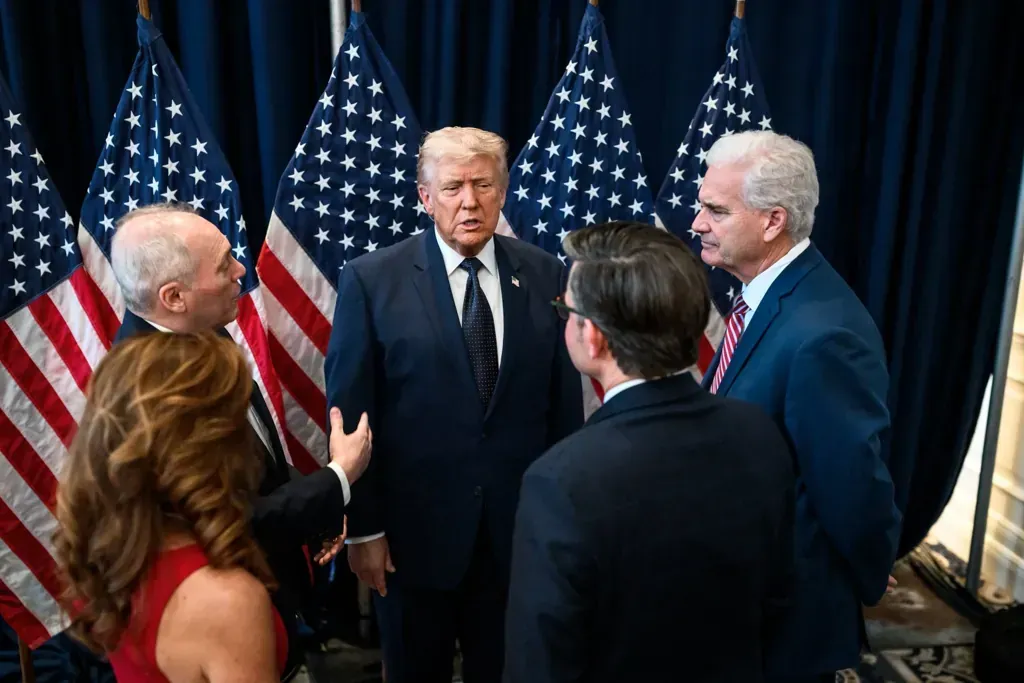
WASHINGTON, United States – President Donald Trump has rejected an Iranian proposal that would reopen the Strait of Hormuz within seven days and restart negotiations aimed at ending the wider U.S.-Iran war.
Trump told reporters Saturday that he had rejected the proposal, saying Iran wanted an agreement to reopen the strategic waterway because of the pressure it was facing. He also said the United States had control of the strait.
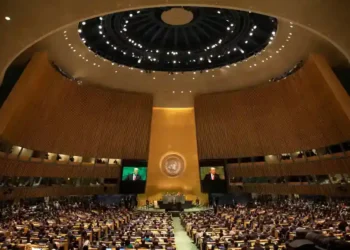
Iranian Foreign Minister Abbas Araghchi presented the proposal at the United Nations in New York on Friday. He said Tehran had conveyed a seven-day plan to Washington through Qatar and that the timetable would begin once the United States accepted the proposal.

The rejection leaves the diplomatic track uncertain while shipping through one of the world’s most important energy corridors remains severely disrupted.
Iran’s seven-day proposal
Under Iran’s proposal, the United States would first have to take several measures, including lifting its naval blockade of Iranian ports, waiving sanctions on Iranian oil sales and observing a ceasefire that would include Lebanon.
Araghchi said those steps could be completed within four or five days. The strait would then reopen on the sixth day, followed by the resumption of U.S.-Iran talks on the seventh day over issues agreed by both sides.
Iran has presented the plan as a route toward negotiations rather than an unconditional reopening of the waterway.
Araghchi said the measures requested from Washington were not new demands and were tied to commitments Tehran says had already been discussed between the two sides. He said the necessary arrangements to reopen the strait were already prepared if Washington accepted the plan.


The Iranian government has also maintained that it would not accept pressure or surrender what it describes as its sovereign rights.
Trump rejects the proposal
Trump rejected the proposal publicly on Saturday before leaving Washington.
He characterized Iran’s offer as an attempt to secure an immediate reopening of the strait because of the economic pressure created by the conflict.
The White House had previously described U.S. discussions with mediators as positive and constructive, but no agreement had emerged from those contacts.
Trump’s rejection therefore represents a setback for the latest diplomatic initiative, although it does not necessarily establish that all indirect communication between the two sides has ended.
Iranian officials have continued to signal that they want negotiations under conditions acceptable to Tehran.
Tehran says formal U.S. response is still pending
On Sunday, Araghchi said Iran had seen Trump’s public reaction but had not yet received Washington’s definitive response through the mediators handling the discussions.
He said Tehran was waiting for that formal position before deciding how to proceed.
That distinction leaves an unusual gap between Trump’s public rejection and the diplomatic process conducted through intermediaries.
The proposal was transmitted indirectly rather than through direct negotiations between Trump and Iranian leaders.
It also means that the exact terms under discussion remain partly dependent on what the mediators conveyed between the two governments.
Hormuz remains central to the conflict
The Strait of Hormuz has become one of the main pressure points in the war because of its importance to global energy shipments.
The International Energy Agency said oil flows through the strait averaged about 7.6 million barrels a day in August, roughly 13.1 million barrels a day below pre-war levels. The agency said bypass routes, increased production outside the Gulf, emergency stock releases and weaker demand have partially offset the disruption, but global inventories have continued to fall.
The IEA estimated that observed global oil inventories were 507 million barrels below their level at the start of the war by September 2026. It said the urgency of restoring full flows through the strait and alternative routes was increasing as inventory buffers were depleted.
Shipping data also show how sharply traffic has fallen.
The IEA cautions that vessel-tracking data are incomplete because some tankers have switched off their automatic identification systems and GPS interference has complicated monitoring.
That makes the exact volume of traffic difficult to establish, but the available data show that shipping remains well below normal levels.
Oil markets remain exposed
The disruption has continued to affect crude prices and energy security.
Brent crude moved above $100 a barrel again in September as uncertainty over the conflict and the future of Gulf exports persisted. The IEA has warned that further disruptions could produce additional upward pressure if production and exports cannot recover.
The market has received some relief from oil moving through alternative routes and from additional production outside the Gulf.
The IEA said Saudi Arabia and the United Arab Emirates had increased exports through routes bypassing Hormuz earlier in the conflict, while producers outside the region also increased output. Those measures have prevented the full loss of Hormuz volumes from appearing as an equivalent global supply deficit.
But the agency also said those buffers are being depleted.
That leaves the future of the strait closely tied to the diplomatic and military trajectory of the conflict.
The next move remains uncertain
Iran’s proposal was presented as a seven-day sequence leading from U.S. concessions to the reopening of Hormuz and renewed nuclear negotiations.
Trump’s rejection has halted that specific proposal for now.
But Tehran’s statement that it is awaiting a formal response through mediators indicates that the diplomatic channel has not necessarily disappeared.
The two sides remain far apart over the conditions for ending the conflict, the future of Iran’s nuclear program and the status of the strait.
For the global economy, the immediate issue is more concrete.
Until shipping through Hormuz returns toward normal levels, oil and gas markets will remain exposed to further disruption, while governments and energy companies continue relying on alternative routes, inventories and additional production to compensate.
The rejected proposal therefore leaves two separate questions unresolved: whether Washington and Tehran can find a basis for renewed negotiations, and how long the global energy system can absorb restricted traffic through the Strait of Hormuz.
Reporting Credit: United Nations — Iranian Foreign Minister Abbas Araghchi’s September 25 Security Council media stakeout and proposal for reopening the Strait of Hormuz; White House — U.S. policy and presidential statements concerning Iran and the conflict; International Energy Agency — oil-flow, inventory and supply-disruption assessments; U.S. Central Command — U.S. military operations and maritime-security information concerning the Strait of Hormuz.