WARSAW, Poland – Polish Prime Minister Donald Tusk has warned that Russia could carry out drone or missile strikes against NATO countries supporting Ukraine and then describe the incidents as accidents to weaken the alliance’s response.
Tusk made the warning Thursday in an address to Poland’s parliament, saying intelligence assessments indicated that possible Russian plans included “hybrid” strikes against countries supporting Ukraine, including Poland. He said there was a real risk that drones or other projectiles could enter NATO territory and cause damage.
Tusk said Moscow could then portray such an incident as accidental, creating uncertainty over whether NATO should respond collectively.

The Polish government has not publicly released the intelligence underlying the assessment, and Tusk did not identify the specific intelligence agencies that provided the information. The warning therefore remains an assessment attributed to Polish authorities rather than a publicly verified Russian operational plan.
Poland says the threat is becoming more specific
Tusk said Polish authorities had been receiving warnings about possible Russian hybrid actions for months, but that the intelligence picture had become more consistent in recent weeks.
He said NATO, Ukrainian and U.S. intelligence services, including the CIA, had contributed information to Poland’s assessment. The Polish prime minister did not provide details that could independently establish the existence or timing of a planned attack.
Tusk also highlighted the growing use of jet-powered drones by Russia. He said the aircraft can fly faster and at higher altitudes than some earlier drone types, creating additional challenges for air-defense systems.
Recent attacks have moved closer to Poland
The warning comes as Russian attacks on western Ukraine have occurred close to Poland’s border.
■ Related News



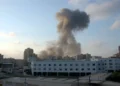
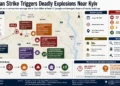
Polish authorities said on Sept. 13 that an attack struck a fuel station or nearby area and a freight-train staging area about two kilometers from the Polish-Ukrainian border. The Polish government subsequently increased the readiness of relevant security services and said it was examining ways to coordinate a response with allies.
On Thursday, Poland also scrambled military aircraft as Russia launched attacks in western Ukraine. Airports in Rzeszow and Lublin were temporarily affected, while Polish authorities activated air-defense measures.
The incidents did not amount to a confirmed Russian attack on Polish territory.
That distinction is important because Tusk’s latest warning concerns a possible future scenario rather than an announced or independently verified Russian operation against NATO.
NATO has strengthened its eastern defenses
The concerns come after previous incidents involving Russian drones and NATO airspace.
NATO said in August that allied countries had discussed recent airspace violations in Poland and Romania and other drone incidents. The alliance said Russia bore responsibility for the violations and described them as dangerous, while reaffirming that NATO was strengthening integrated air and missile defenses along its eastern flank.
Poland is one of NATO’s eastern-flank members and has been among the countries most directly exposed to the spillover risks from Russia’s war against Ukraine.
The alliance’s collective-defense commitment is contained in Article 5 of the North Atlantic Treaty. An armed attack against one NATO member is treated as an attack against all, although the treaty does not prescribe a single automatic military response.
Tusk said a deliberately ambiguous strike could be intended to test whether NATO members would act together.
Border crossings are another concern
Tusk also said Russia was increasingly targeting infrastructure near Ukraine’s borders with European countries.
According to the Polish prime minister, attacks on border crossings could disrupt the movement of supplies into Ukraine and make it harder for Poland and other European countries to provide assistance.
He said Polish authorities had recorded four incidents affecting the border area during the previous week, while other incidents had occurred near Ukraine’s border with Moldova.
The Polish government has said border security services are operating at heightened readiness because of the increasing proximity of Russian attacks.
Poland prepares for a more difficult winter
Tusk said Polish intelligence assessments indicate that Russia could intensify attacks on Ukraine’s infrastructure during the coming autumn and winter.
He specifically warned of attacks on major Ukrainian cities, transportation networks and logistics infrastructure. He also said Poland expected the winter period to place additional pressure on Ukraine’s ability to maintain its energy and supply systems.
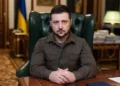
Tusk announced that he would travel to Kyiv to meet Ukrainian President Volodymyr Zelenskyy and discuss defenses against newer drone threats and additional measures involving Ukraine and its European partners.
For Poland, the immediate concern is not that a Russian attack on NATO territory has been confirmed, but that incidents involving drones or missiles could occur close to the alliance’s borders and create a more difficult security environment.
The Polish government’s warning puts renewed attention on NATO’s eastern defenses and on how the alliance would respond if an incident crossed from Ukraine into member-state territory.
Reporting Credit: Office of the Prime Minister of Poland — statements on Russian attacks near the Polish border and strengthened security measures; Sejm of the Republic of Poland — Donald Tusk’s Sept. 17 parliamentary address; NATO — allied response to recent airspace violations and eastern-flank defense measures.