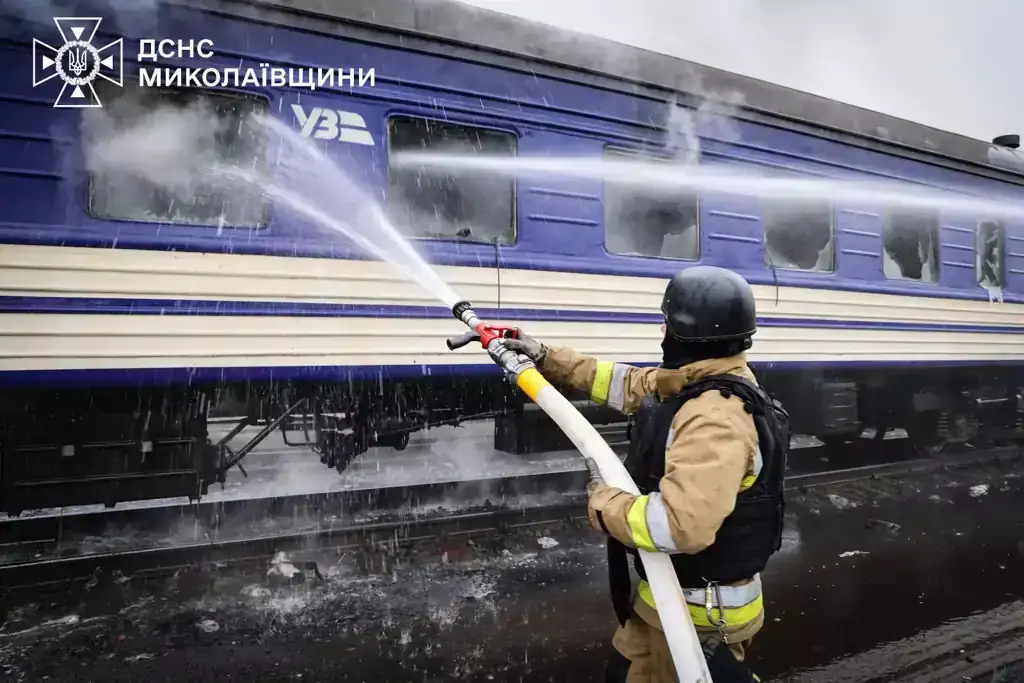
KYIV, Ukraine – A Russian drone struck a passenger train near Ukraine’s border with Poland on Sunday, damaging a locomotive shortly after a train carrying European officials had passed through the same area, according to Ukraine’s state railway operator.
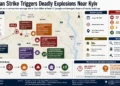
The strike occurred near Yahodyn station in Volyn region, roughly 2 kilometers from the Polish border. No casualties were reported. Ukrainian railway officials said the affected train had been evacuated after an incoming drone was detected.
The incident occurred during a large Russian aerial attack across Ukraine and brought the fighting particularly close to NATO territory.

European delegation had passed through shortly before
A special train carrying former British Prime Minister Boris Johnson, former Swedish Prime Minister Carl Bildt and other European officials had traveled along the railway line shortly before the strike.
The delegation was returning from the Yalta European Strategy conference in Kyiv. Ukraine’s railway operator said the diplomatic train had departed earlier than planned because of security concerns.
Former CIA Director David Petraeus was also traveling on a separate train in the area, according to reports. That train was evacuated during the drone alert.
The available evidence does not establish whether the Russian drone was deliberately targeting the European delegation. Ukrainian railway officials said the timing raised concerns that the diplomatic train may have been the intended target, but that remains unconfirmed.
The strike instead hit a locomotive belonging to a passenger service after the diplomatic train had already moved away from the area.
■ Related News



Strike occurred close to Poland
The location of the attack has heightened concern in Poland because of its proximity to the NATO member’s territory.
The Polish Armed Forces’ Operational Command said Russian drones were operating and striking targets very close to the Polish border. Polish authorities increased monitoring of the area as attacks continued in western Ukraine.
The railway crossing at Yahodyn connects Ukraine with Poland and is an important route for passengers and international traffic.
The attack did not, according to available reports, cross into Polish territory.
Russia and Ukraine give different accounts
Ukrainian authorities described the strike as part of Russia’s wider attacks on Ukrainian infrastructure.
Russian authorities have said their strikes in Ukraine target military and logistical infrastructure. Russian officials have not independently established that the passenger train itself was the intended target.
Ukraine’s Foreign Minister Andrii Sybiha condemned the attack and said strikes near the country’s western border represented a wider security concern for Europe and NATO.
Former British Prime Minister Boris Johnson also condemned the incident after learning that the train carrying the delegation had passed through the area shortly before the strike.
Rail network remains critical to Ukraine
Ukraine’s railway system has remained essential to civilian transportation, evacuation and the movement of people and supplies during the war.
Rail services have repeatedly continued operating despite Russian attacks on stations, tracks and other infrastructure. The system is also used extensively by foreign officials and international delegations traveling to Kyiv.
The latest strike demonstrates the security risks facing those routes, particularly as Russian forces continue long-range drone and missile attacks across Ukraine.
For now, Ukrainian authorities have reported no deaths or injuries from the strike near Yahodyn.
The immediate concern is whether further Russian attacks will target railway infrastructure in western Ukraine and whether the fighting will continue to move closer to Poland’s border.
Reporting Credit: Ukrainian Railways (Ukrzaliznytsia) — information on the passenger train strike, evacuation and railway operations; Polish Armed Forces Operational Command — security information concerning Russian drone activity near the Polish border; Ukrainian Foreign Ministry — official response to the attack.