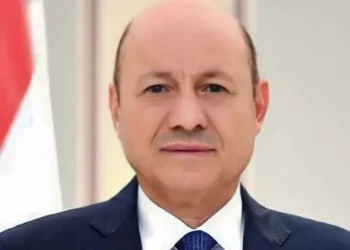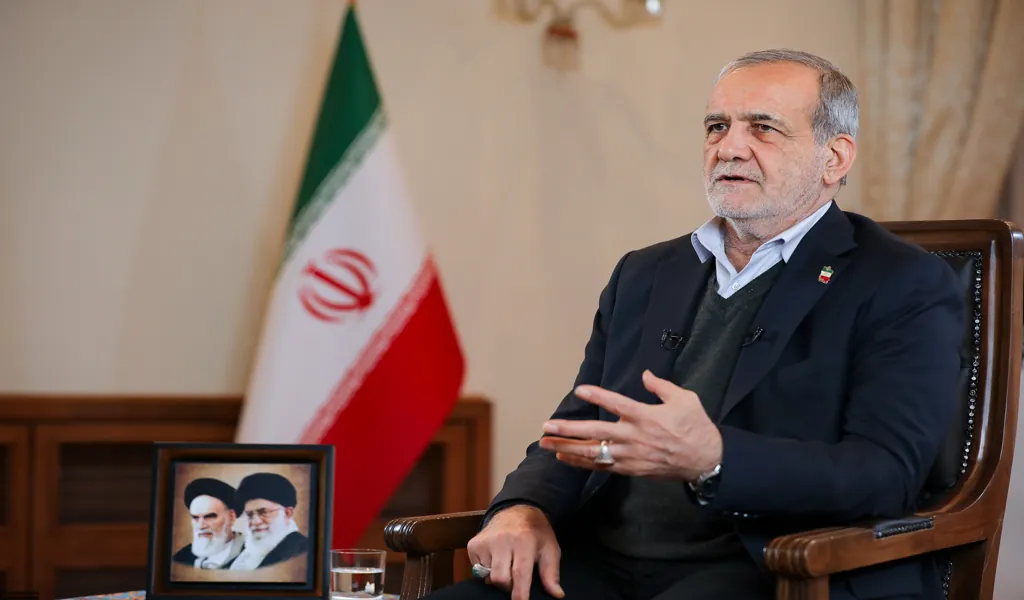
BISHKEK, Kyrgyzstan — Iranian President Masoud Pezeshkian said Tuesday that Iran is prepared to return to the terms of a June ceasefire agreement with the United States if Washington also resumes its commitments, offering a potential opening for diplomacy after the two countries exchanged direct attacks for the first time in more than a month.
Pezeshkian made the statement on the sidelines of the Shanghai Cooperation Organization summit in Bishkek, saying Iran would immediately reciprocate if the United States returned to its obligations under the memorandum of understanding reached in June.
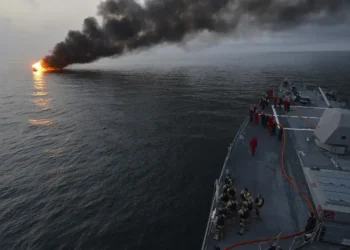
The proposal comes after U.S. forces struck Iranian minelaying forces on Larak Island in the Strait of Hormuz on Sunday. Iran responded by launching missiles at two U.S. military bases in Jordan. President Donald Trump has warned that the United States will respond, although he has said the latest exchange does not necessarily mean a return to full-scale war.

What the June agreement required
The June memorandum was intended to stop the fighting and create a 60-day negotiating period for a broader agreement.
Under the arrangement, Iran agreed to clear mines from the Strait of Hormuz and permit shipping to resume. The United States agreed to end its naval blockade, lift sanctions, issue waivers allowing Iranian oil exports and begin work toward a reconstruction package for Iran.
The agreement quickly deteriorated.
Washington and Tehran accused each other of violating its terms, and the memorandum eventually lapsed.
Iran has since maintained that unrestricted navigation through the Strait of Hormuz depends on the United States honoring the agreement.


Hormuz remains the central flashpoint
The Strait of Hormuz remains at the center of the confrontation because roughly one-fifth of global oil and liquefied natural gas shipments normally pass through the waterway.
Shipping has fallen sharply during the war, and renewed attacks have increased concerns that the disruption could persist.
Two Saudi-linked oil tankers were struck by projectiles while traveling through the strait on Monday, according to maritime authorities and shipping reports. No casualties were immediately reported.
Brent crude rose more than 2% Tuesday to about $92.66 a barrel, reflecting renewed fears about Middle Eastern supply disruptions.
Iran and Oman seek a shipping arrangement
Iran has also been working with Oman on a framework for managing commercial traffic through the Strait of Hormuz.
The talks are aimed at establishing conditions under which shipping could resume, although it remains unclear whether Washington would accept an arrangement giving Iran a major role in controlling the waterway.
Qatar and other regional governments have also called for a peaceful solution and the reopening of the strait.
Qatar’s Foreign Ministry said Tuesday that escalation was in no one’s interest and that Doha was working with partners toward a peaceful resolution.
U.S. and Iran remain far apart
Despite Pezeshkian’s statement, a new ceasefire agreement is far from certain.
The Trump administration had previously indicated that it was not interested in simply returning to the June memorandum and has instead emphasized economic pressure, sanctions and the naval blockade.
Iran, meanwhile, wants the U.S. blockade lifted and sanctions eased, while Tehran has also demanded compensation and greater recognition of its position regarding the Strait of Hormuz.
Those conditions leave substantial differences between the two sides.
Russia backs Iran
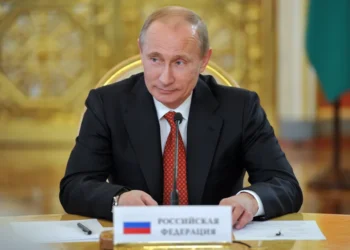
Pezeshkian’s comments came during the SCO summit, where he also met with Russian President Vladimir Putin.
Putin said Russia supports Iran and described the previous ceasefire as unstable and fragile. The two countries have maintained economic and political ties despite Western sanctions.
Iran’s participation in the summit also gives Tehran an opportunity to strengthen diplomatic support from China, Russia and other countries while negotiations with Washington remain uncertain.
Gaza remains volatile
Elsewhere in the region, Israeli forces conducted an operation in Gaza City aimed at detaining a Hamas operative, according to Palestinian hospital officials and Israeli authorities.
At least four people, including two children, were killed in the operation, according to hospital officials. Six others were wounded.
Israel’s military said it had struck targets to remove threats to its forces and later said it had apprehended a senior Hamas operative.
Separately, Palestinian medical officials reported that an Israeli soldier shot and killed a child in central Gaza, while several others were wounded. The Israeli military had not immediately commented on that incident.
Islamic State leader killed in Yemen
Yemeni security authorities said Abu Huzayfah al-Ansari, identified as an Islamic State spokesperson, was killed Tuesday during a joint operation in Hadramout province.
Officials said he was killed while hiding in a house in Seiyun. Eight civilians, including women and children, were found at the location and were unharmed, authorities said.
The operation reflects the continued security challenges facing Yemen even as the broader region remains focused on the U.S.-Iran conflict.
Iraq processes thousands of suspected militants
Iraq’s Supreme Judicial Council said it had completed investigations into approximately 5,704 suspected Islamic State members transferred from Syria earlier this year.
The detainees come from 67 nationalities, including thousands of Syrians and hundreds of Iraqis.
Some detainees will be released because investigators said there was insufficient evidence against them, while others will face trial.
Yemen’s hunger crisis deepens
The United Nations World Food Programme warned that further escalation in Yemen could worsen an already severe humanitarian crisis.
WFP Acting Executive Director Carl Skau said higher global food prices were adding pressure to displaced families who depend heavily on food assistance and cash support.
Some families, he said, are already surviving on one meal a day, while children are beginning to show signs of malnutrition.
What Happens Next
The immediate focus will be whether Washington responds positively to Pezeshkian’s offer or maintains its current strategy of military and economic pressure.
The safety of commercial shipping through the Strait of Hormuz will also remain critical. Continued attacks could push oil prices higher and further complicate diplomatic efforts.
For now, Iran’s proposal represents a potential diplomatic opening, but the conditions demanded by Tehran and Washington remain substantially different.
Key Facts
- Iranian president: Masoud Pezeshkian
- Proposal: Return to June ceasefire commitments if the U.S. does the same
- June agreement: Ceasefire and 60-day negotiations
- Recent U.S. action: Strike on Iranian minelaying forces on Larak Island
- Iranian response: Missile attacks on U.S. bases in Jordan
- Key flashpoint: Strait of Hormuz
- Brent crude: About $92.66 per barrel Tuesday
- Other developments: Gaza operation, Islamic State leader killed in Yemen, Iraq’s IS investigations, worsening Yemen hunger crisis
- Status: DEVELOPING — DIPLOMATIC AND MILITARY ESCALATION
Reporting Credit: Iranian Presidency and Foreign Ministry — ceasefire proposal and official statements; U.S. government — military and diplomatic policy; Qatar and Oman — regional mediation and Strait of Hormuz efforts; United Kingdom Maritime Trade Operations — maritime security incidents; Israeli military and Palestinian health authorities — Gaza developments; Iraqi Supreme Judicial Council — Islamic State investigations; United Nations World Food Programme — Yemen humanitarian situation.