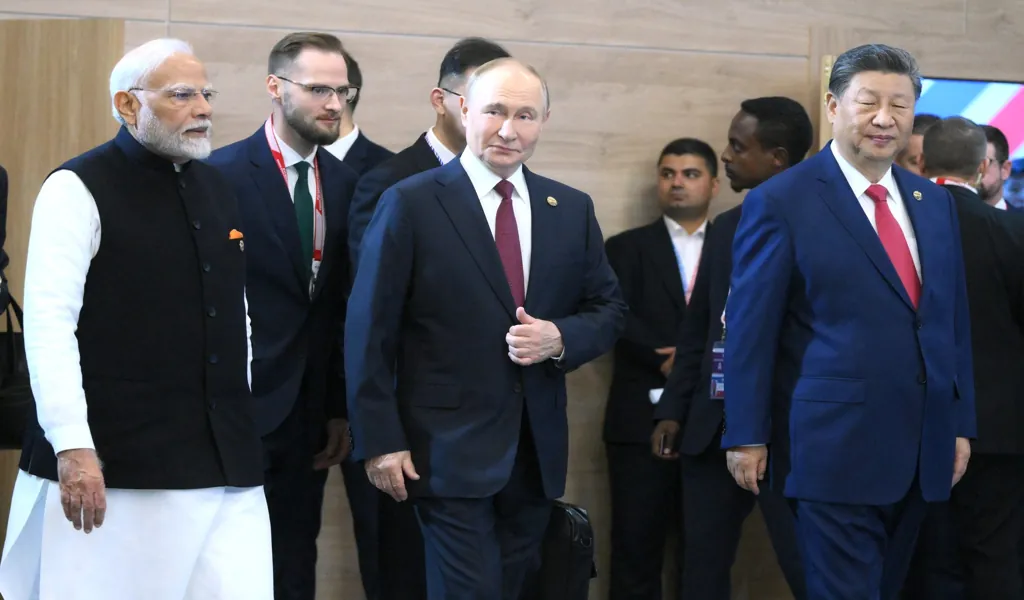
BISHKEK, Kyrgyzstan — Leaders from China, Russia and India are gathering in Kyrgyzstan for a summit of the Shanghai Cooperation Organization (SCO), a regional grouping that Beijing and Moscow have increasingly promoted as an alternative center of global influence to Western-led institutions.
Chinese President Xi Jinping, Russian President Vladimir Putin and Indian Prime Minister Narendra Modi are among the leaders attending the two-day meeting in Bishkek. Iranian President Masoud Pezeshkian, Pakistani Prime Minister Shehbaz Sharif and Kyrgyz President Sadyr Japarov are also expected to participate, while Turkish President Recep Tayyip Erdoğan is attending as a dialogue partner.
The summit comes as the United States faces simultaneous tensions with several SCO members, including Russia over the war in Ukraine, Iran over its war with Washington and Israel, and China over trade and strategic competition.

A forum for a multipolar world
The SCO was founded in 2001 by China, Russia and four Central Asian countries as a regional security organization.
It has since expanded to 10 members: China, Russia, India, Iran, Pakistan, Belarus, Kazakhstan, Kyrgyzstan, Tajikistan and Uzbekistan. Another 15 countries have dialogue-partner status, including Turkey, Saudi Arabia and Qatar.
The organization officially says it is not an alliance directed against other states.
But China and Russia have increasingly used the forum to promote their vision of a world in which power is distributed among multiple major centers rather than dominated by the United States and its Western allies.
China has described the SCO as having developed a new model of regional cooperation, while Moscow has repeatedly used the summit to criticize Western policies.


Xi and Putin strengthen their partnership
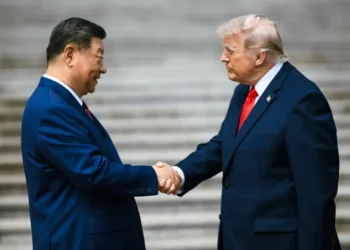
The summit provides another opportunity for Xi and Putin to demonstrate the strength of their strategic relationship.
The two leaders are scheduled to meet separately on the sidelines of the summit, with their countries increasingly aligned in opposition to U.S. global influence.
Russia’s dependence on China has grown as Western sanctions have restricted Moscow’s access to European markets and technology.
China, meanwhile, has continued purchasing Russian energy and supplying Russia with a range of goods while avoiding direct condemnation of Moscow’s invasion of Ukraine.
The relationship is not completely equal, however. Russia has become increasingly dependent on China’s economic strength, giving Beijing greater influence over Moscow’s strategic choices.
India plays a different game
India’s presence highlights the limits of describing the SCO as a unified anti-American alliance.
New Delhi maintains important relationships with both Washington and Moscow while simultaneously managing a difficult relationship with China.
India and China have longstanding territorial disputes along their Himalayan border, while India and Pakistan are also strategic rivals.
Indian officials therefore view the SCO as a platform through which New Delhi can protect its interests, maintain relationships with multiple major powers and observe developments across Eurasia rather than as a vehicle for joining a China-Russia bloc.
Modi is expected to hold talks with Putin during the summit and could also meet Xi as India seeks to manage its relationships with both countries.
Iran seeks support as war continues
Iran’s participation has taken on additional significance because the country is now six months into its war with the United States and Israel.
Pezeshkian is expected to meet Putin during the summit, while Iran continues to face severe U.S. sanctions and economic pressure.
Iran joined the SCO in 2023 and has sought to use its membership to deepen relationships with countries that are less willing to follow U.S. sanctions policy.
China remains a major buyer of Iranian oil, while Russia and Iran have expanded their military and economic relationship since Russia’s invasion of Ukraine.
Washington has warned countries supporting Iran that they could face secondary sanctions.
China has responded that it will defend its economic interests.
The summit comes amid growing U.S. pressure
The timing of the gathering is particularly significant.
The Trump administration is simultaneously applying pressure to several countries represented at the summit.
Washington is using sanctions against Iran, tariffs and trade restrictions against China and diplomatic and economic pressure against Russia.
The United States has also warned countries that continue conducting business with Iran that they could face additional sanctions.
The SCO therefore gives its members an opportunity to demonstrate that they have alternative diplomatic and economic relationships outside Washington’s influence.
But the group is far from united
Despite its growing membership, the SCO has major internal divisions.
China and India remain strategic competitors.
India and Pakistan have a history of military confrontation.
Russia and China compete for influence in Central Asia, where Beijing’s economic presence has expanded rapidly.
The members also have different relationships with the United States and Europe.
These differences make it difficult for the SCO to operate like NATO or another formal military alliance.
Instead, its influence comes largely from providing a diplomatic platform where countries with different interests can cooperate without accepting a Western-led political framework.
Central Asia becomes increasingly important
The summit also highlights the growing strategic importance of Central Asia.
Kyrgyzstan, Kazakhstan, Uzbekistan and neighboring countries sit along major transportation and energy routes connecting China, Russia, the Middle East and Europe.
China has expanded its economic influence throughout the region through infrastructure, trade and investment.
Russia remains an important security actor but faces increasing competition from Beijing.
For Central Asian governments, the SCO provides a way to maintain relationships with both powers while avoiding exclusive alignment with either.
The Ukraine war remains in the background
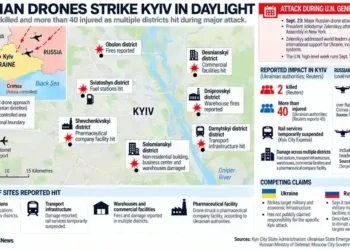
Russia’s continued war against Ukraine is another major issue surrounding the summit.
Moscow has used the SCO as an important diplomatic platform while facing widespread Western sanctions and international criticism.
China has called for negotiations and a political settlement but has refused to condemn Russia’s invasion.
The presence of other major powers allows Moscow to demonstrate that it is not internationally isolated, even though its relationships with the United States and much of Europe remain severely strained.
U.S. influence remains substantial
The summit’s significance should not be overstated.
The United States remains the world’s leading military power and maintains extensive alliances across Europe and Asia.
Many SCO members also have substantial economic relationships with the United States and Western countries.
India, for example, has deepened its strategic relationship with Washington even while maintaining strong ties with Russia.
That makes the emerging global order more complicated than a simple division between “Western” and “anti-Western” blocs.
A test of China’s diplomatic influence
The summit is also an opportunity for China to demonstrate its ability to shape a wider international network.
Beijing has increasingly promoted the concept of a multipolar world, arguing that international institutions should better reflect the influence of emerging economies and countries outside the Western alliance system.
The SCO provides China with one of the most important platforms for advancing that vision.
But whether the organization can translate its growing membership into coordinated economic, security or diplomatic action remains uncertain.
What happens next
Xi, Putin, Modi and other leaders are expected to hold bilateral meetings alongside the formal SCO sessions.
Putin’s planned meetings with Xi and Pezeshkian will be closely watched because of the countries’ increasingly important relationships amid the Ukraine and Iran wars.
The summit is unlikely to produce a formal military alliance against the United States.
Its broader significance is political: it demonstrates that China, Russia, India, Iran and other countries have increasingly overlapping forums through which they can coordinate, maintain diplomatic relationships and challenge aspects of a U.S.-dominated international system.
But the competing interests inside the organization mean the SCO remains a loose strategic grouping rather than a unified alternative to the Western alliance system.
Key Facts
- Organization: Shanghai Cooperation Organization
- Summit: Bishkek, Kyrgyzstan
- Dates: August 31–September 1, 2026
- Major leaders: Xi Jinping, Vladimir Putin, Narendra Modi
- Iran: President Masoud Pezeshkian attending
- Members: 10 countries
- Dialogue partners: 15 countries
- Founded: 2001
- Core theme: Regional cooperation and a multipolar international order
- U.S. context: Rising tensions over Iran, Russia, China and global trade
- Status: DEVELOPING
Reporting Credit: Shanghai Cooperation Organization — official summit and organizational information; Government of Kyrgyzstan — summit proceedings; Chinese Foreign Ministry — SCO policy and summit statements; Russian Kremlin — Putin’s summit schedule and bilateral meetings; Government of India — Prime Minister Modi’s SCO participation and bilateral meetings.