Last updated: August 11, 2026 | 00:34 UTC
Major Developments We’re Following
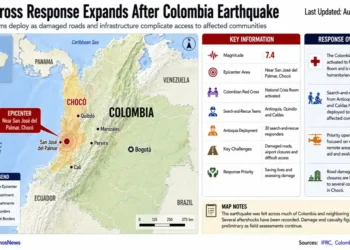
- A magnitude 7.4 earthquake struck near San José del Palmar, Chocó, at 07:34 local time on August 10.
- Colombia’s Geological Service identified the earthquake as the strongest recorded in the country during the 21st century.
- National authorities activated emergency-response mechanisms and deployed urban search-and-rescue teams from Bogotá, Envigado, Yopal and Medellín.
- Damage was reported across Chocó, Caldas, Valle del Cauca, Risaralda and Quindío, with authorities conducting assessments in affected communities.
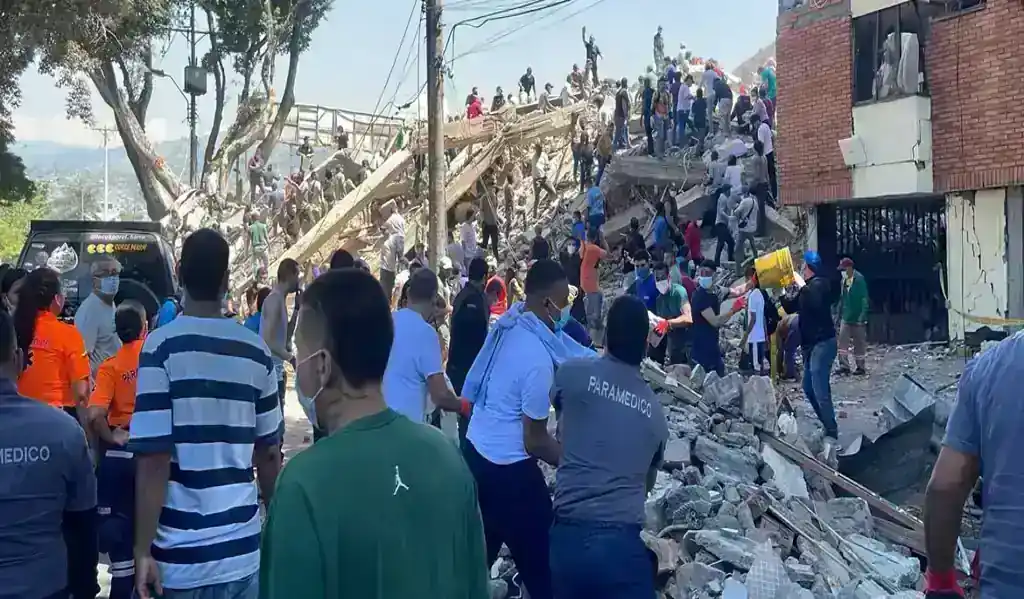
- Buildings collapsed in cities including Cali and Pereira, while damage was also reported in Manizales and Quibdó.
- By the end of the initial 12-hour window, rescue workers were continuing searches for people trapped beneath rubble.
What We Know
- Magnitude: 7.4
- Epicenter: San José del Palmar, Chocó
- Depth: 103 km according to Colombia’s Geological Service; the U.S. Geological Survey reported 107 km.
- Time: 07:34 local time / 12:34 UTC on August 10.
- The Colombian Geological Service said more than 12,000 people from about 900 population centers reported feeling the earthquake.
- The agency reported 18 aftershocks by noon local time, ranging from magnitude 1.4 to 4.8.
- The national government reported possible impacts in nine municipalities in Chocó, eight in Caldas, two in Valle del Cauca and two in Risaralda, as well as several municipalities in Quindío.
- Four urban search-and-rescue groups were activated from Bogotá, Envigado, Yopal and Medellín.
- Colombia’s president declared a national emergency and said the government’s first priority was rescuing people trapped beneath rubble.
- An initial government death toll of 111 was reported during the first day. Later casualty figures increased substantially, so the 111 figure should be treated as the preliminary national figure for this opening window rather than a final toll.
What We Don’t Know
- The full extent of damage across Chocó remains unclear.
- The final number of people killed or injured during the first 12 hours had not been established.
- The number of people trapped beneath collapsed structures remained uncertain.
- The total number of displaced residents had not been established.
- Assessments of roads, hospitals, airports and other critical infrastructure were still underway.
- Later casualty reports should not be retroactively inserted into this initial 12-hour chronology.
Public Safety Information
The Colombian Geological Service urged residents to rely on official information and noted that earthquake aftershocks can continue for days, weeks or longer. The agency also emphasized that earthquakes and their aftershocks cannot currently be predicted with a scientifically proven method.
Residents should follow instructions issued by Colombian emergency authorities and avoid damaged structures or areas where emergency operations are underway.

Live Updates
12:34 UTC — Magnitude 7.4 Earthquake Strikes Western Colombia
A magnitude 7.4 earthquake struck Colombia at 07:34 local time, with the epicenter in San José del Palmar, Chocó. Colombia’s Geological Service later reported the depth at 103 kilometers.
The U.S. Geological Survey independently reported a magnitude of 7.4 and a depth of 107 kilometers. The difference in depth reflects the measurements reported by the respective agencies.
13:00 UTC — Earthquake Felt Across Multiple Regions
Reports of the earthquake spread across western and central Colombia after the main shock.
The Colombian Geological Service said more than 12,000 people from approximately 900 population centers had reported feeling the earthquake. Reports also indicated that shaking was felt in Panama and Venezuela.
14:00 UTC — Geological Service Reports Aftershocks
Colombia’s Geological Service reported 18 aftershocks by noon local time, with magnitudes ranging from 1.4 to 4.8.
The agency said the aftershocks were located around San José del Palmar and Sipí in Chocó and warned that additional aftershocks could occur.
15:00 UTC — Emergency Assessment Expands Across Five Departments
Colombia’s national disaster-management authority said preliminary reports indicated possible impacts in nine municipalities in Chocó, eight in Caldas, two in Valle del Cauca and two in Risaralda, along with several municipalities in Quindío.
Authorities were still verifying damage to communities, homes and infrastructure, meaning the assessment remained preliminary.
16:13 UTC — National Search-and-Rescue Response Activated
The National Unit for Disaster Risk Management said the government had activated four urban search-and-rescue groups from Bogotá, Envigado, Yopal and Medellín.
Bogotá also offered specialized rescue equipment, while Antioquia made aircraft available to support operations if required. The national crisis room remained active as information was consolidated from affected territories.
17:00 UTC — Damage Reported in Major Western Cities
Reports from affected cities showed significant structural damage in Cali, Pereira and Manizales.
Reuters reported that a four-story building collapsed in Pereira and that part of Manizales’ landmark neo-Gothic cathedral collapsed. Emergency teams were searching damaged structures for survivors.
18:00 UTC — Airports Suspended Operations for Inspections
Colombia’s civil aviation authorities suspended operations at several regional airports, including Pereira, Manizales, Quibdó, Armenia, Cartago and Buenaventura, while engineers assessed infrastructure.
The closures were part of safety inspections following the earthquake and should not be interpreted as permanent airport closures.
19:00 UTC — Government Declares National Emergency
President Abelardo de la Espriella declared a national state of emergency as the government expanded its response.
The president said the immediate priority was rescuing people trapped beneath rubble and providing assistance to affected communities.
20:00 UTC — Rescue Operations Continue in Cali and Pereira
Rescue workers and volunteers continued searching collapsed buildings in Cali and Pereira.
Reuters reported that firefighters in Cali had rescued two adult women and two children from a collapsed building, while other rescuers continued searching for additional survivors.
21:00 UTC — Local Authorities Introduce Security Measures
Authorities in Cali, Armenia and Manizales announced curfews as emergency operations continued.
Cali’s mayor said additional police and military personnel were being deployed amid concerns about looting, while the national government announced plans to send additional security personnel to the city.
22:00 UTC — Initial National Death Toll Reaches 111
President de la Espriella reported an initial national death toll of 111 as authorities continued assessing the disaster.
The government figure was preliminary. Reuters reported that some local media were citing a higher national figure, but the origin of that higher number was unclear at the time. JournosNews therefore retains 111 as the attributed national figure for this stage rather than combining conflicting reports.
23:00 UTC — Rescue Teams Work Into the Night
As darkness fell, rescue workers and volunteers continued searching damaged structures with headlamps and other equipment.
Reuters reported that teams were working through rubble in Cali and other affected areas, while emergency operations continued in Pereira and elsewhere.
00:34 UTC — First 12 Hours: Search-and-Rescue Operations Continue
Twelve hours after the earthquake, emergency teams remained engaged in search-and-rescue operations across western Colombia.
Authorities were continuing to consolidate reports from affected municipalities while assessing casualties, structural damage and infrastructure disruptions. The Colombian Geological Service continued monitoring seismic activity and aftershocks.
The initial national death toll of 111 remained the appropriate figure for this opening 12-hour chronology because it was the figure publicly announced by the national government during the period. Subsequent increases in the death toll belong to later updates and should not be backdated into this section.
Emergency Response
Colombia’s national disaster-management system remained active through a national crisis room coordinated by the UNGRD.
Urban search-and-rescue teams from Bogotá, Envigado, Yopal and Medellín were activated, while Bogotá offered specialized rescue equipment and Antioquia offered aircraft support. Local authorities continued verifying damage and determining priority needs.
The Colombian Red Cross also activated its response, with volunteers involved in search-and-rescue and damage-assessment activities.
Background
The Colombian Geological Service said the magnitude 7.4 earthquake was the strongest earthquake recorded in Colombia during the 21st century.
The agency said the earthquake occurred in a region where the Nazca Plate subducts beneath the South American Plate, a process associated with seismic activity.
The SGC also explicitly said the earthquake was not related to activity at the Puracé volcano, addressing claims circulating on social media.