TEHRAN, Iran – Iran’s political and military leadership gathered in Tehran on Sunday for funeral prayers honoring the late Supreme Leader Ayatollah Ali Khamenei, as the country’s new leader remained absent from public view and negotiations with the United States remained suspended following the recent conflict.
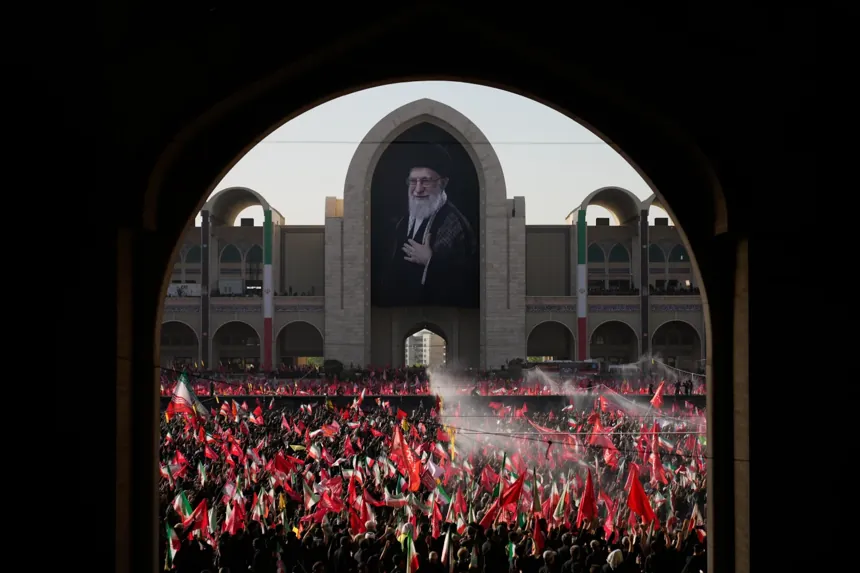
The funeral, attended by hundreds of thousands of mourners according to the Associated Press, became a display of political unity as senior government officials, military commanders and members of the Khamenei family appeared together following weeks of heightened tensions. The ceremonies come after the Feb. 28 attack that killed the 86-year-old leader and several senior Iranian officials, setting off a regional conflict that ended with an April ceasefire.
Iran’s new supreme leader, Ayatollah Mojtaba Khamenei, has not appeared during the multi-day funeral ceremonies. He is believed to be in hiding after reportedly being wounded in the strike that killed his father. During the conflict, Israel targeted senior Iranian officials and previously threatened the younger Khamenei.

Senior Leadership Appears at Funeral
Ayatollah Jafar Sobhani, a 97-year-old Shiite cleric, led funeral prayers at Tehran’s Grand Mosalla. Among those attending were Khamenei’s sons Masoud, Meysam and Mostafa, who had not been seen publicly since the outbreak of the war.
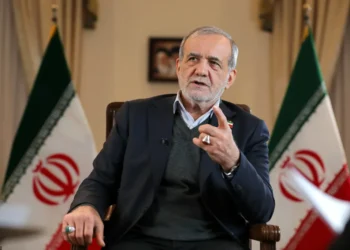
President Masoud Pezeshkian, Parliament Speaker Mohammad Bagher Qalibaf and Esmail Qaani, commander of the Revolutionary Guard’s elite Quds Force, also attended the ceremony.
Revolutionary Guard chief Gen. Ahmad Vahidi was seen publicly for the first time since the conflict, surrounded by plainclothes security personnel while wearing a black baseball cap.
Crowds dressed in black carried portraits, banners and flags honoring Khamenei as mourners filled the prayer grounds in larger numbers than the previous day.
Calls for Retaliation Echo Through Ceremony
Many attendees chanted slogans including “Death to America” and “Death to Israel,” while some demanded retaliation for Khamenei’s killing.
Posters and graffiti displayed at the Grand Mosalla also called for the deaths of U.S. President Donald Trump and Israeli Prime Minister Benjamin Netanyahu.
Poet Mohammad Rasouli, who addressed the crowd before the prayers, referred to Trump while telling mourners that “the world is no longer a good place” for the U.S. president, drawing cheers from those gathered.
Some mourners voiced support for carrying out revenge only after receiving guidance from Iran’s new supreme leader.
“I heard the call for revenge, but our leader should say what we need to do,” nurse Ziba Naderi said. “And we must listen to him.”
Another mourner, grocery worker Gholamreza Sabooni, said he attended the funeral seeking revenge over Khamenei’s death and called for action against Trump.
Diplomatic Talks Delayed After Funeral
The funeral ceremonies have also delayed diplomatic efforts between Tehran and Washington.
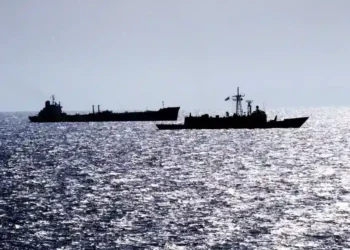
According to the Associated Press, the United States is continuing efforts to negotiate a permanent end to the conflict, including discussions involving Iran’s disputed nuclear program and the future of the Strait of Hormuz, one of the world’s most strategically important shipping routes for energy exports.
The talks are expected to remain on hold until after Khamenei’s burial.
Iran is also seeking greater influence over activity in the Strait of Hormuz, demands that Washington has rejected. The two sides remain divided over Tehran’s nuclear activities as well as regional issues involving the Iran-backed Hezbollah movement in Lebanon.
A multinational maritime organization overseen by the U.S. Navy said Sunday that 70 commercial transits had been assisted through the Strait of Hormuz during the previous 72 hours, including 18 on Saturday. While maritime traffic has remained steady near Oman and Iran, it continues below levels seen before the conflict. The organization said the security threat remained “substantial” as mine-clearing and survey operations continued.
Funeral Procession Continues Across Iran
Iranian authorities plan to transport Khamenei’s body to multiple cities across Iran as well as neighboring Iraq before his burial.
His casket and those of other officials killed in the strike are scheduled to be driven through Tehran on Monday. Authorities have closed roads, restricted airspace and suspended much of daily activity during the official mourning period.
The ceremonies are expected to conclude Thursday with Khamenei’s burial at the Imam Reza shrine in Mashhad, his birthplace.
Authorities have not released official attendance figures for the funeral events, while mourning ceremonies have also taken place in cities across the country.
The coming days are expected to focus on the completion of the funeral process before diplomatic negotiations with the United States resume amid continuing disagreements over regional security and Iran’s nuclear program.
Topics: Iran | Ayatollah Khamenei | Middle East | Nuclear Talks | United States | Strait of Hormuz | Regional Security | Funeral
This report is based on reporting by The Associated Press.