BEIJING, China — China has defended its recent coast guard patrols in waters east of Taiwan after Britain, France, and Germany voiced concern that Beijing’s latest maritime activities could undermine regional stability and international navigation.
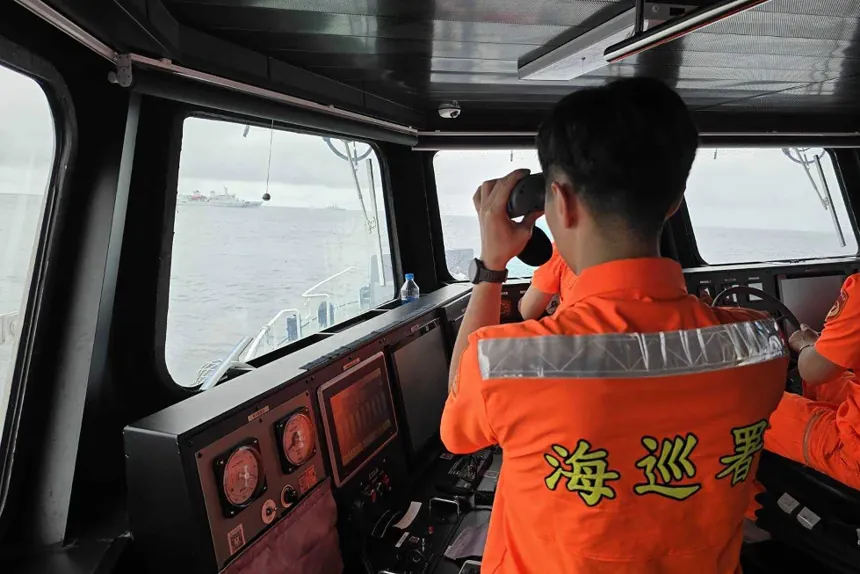
Speaking at a regular news briefing on Thursday, Chinese Foreign Ministry spokesperson Guo Jiakun said the patrols were legitimate law enforcement operations conducted to safeguard China’s maritime rights, maintain regional stability, and preserve maritime order.
The remarks came a day after the three European countries issued a joint statement through their representative offices in Taiwan expressing alarm over what they described as “novel Chinese activity” in the waters surrounding the self-governing island.

Europe raises concerns over regional security
In their joint statement, Britain, France, and Germany said China’s recent actions posed risks to regional stability, freedom of navigation, and the safety of international commercial shipping.
Although the European governments did not specify the exact activities prompting their concerns, the statement reflected growing international attention on maritime developments around Taiwan, one of the world’s most strategically significant shipping corridors.
Taiwan’s Central News Agency also reported that the United States expressed concern regarding the recent Chinese operations.
Beijing links patrols to maritime boundary discussions
Chinese officials said the coast guard deployments were a direct response to plans announced by Japan and the Philippines to discuss maritime boundary issues in waters that Beijing claims fall under its jurisdiction.
Guo said the patrols were necessary to counter what China described as actions by Japan and the Philippines that infringed upon Chinese maritime rights and interests.


He added that the coast guard operations represented lawful exercises of China’s jurisdiction in accordance with domestic and international legal procedures, according to Beijing’s position.
Taiwan reports increased pressure on commercial shipping
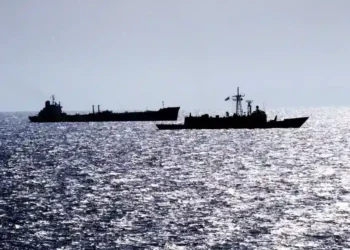
Earlier this month, Taiwan said Chinese coast guard vessels had approached commercial ships operating near the island and requested details about their planned routes.
The waters east of Taiwan serve as one of the world’s busiest maritime trade corridors, carrying significant volumes of oil, natural gas, and manufactured goods between the Middle East, Europe, and major East Asian economies including China, Japan, and South Korea.
Taiwan governs itself independently, but Beijing considers the island part of its territory and claims sovereignty over surrounding waters.
Military tensions continue to grow
The latest maritime dispute comes amid broader military tensions in the Taiwan Strait and the wider Indo-Pacific region.
Relations between China and Japan have remained strained after Japanese Prime Minister Sanae Takaichi indicated last year that Japan’s military could become involved should China use force against Taiwan.
The Taiwan issue continues to represent one of the most sensitive flashpoints in relations between Beijing and Washington. While the United States maintains no formal diplomatic ties with Taiwan, it remains the island’s primary supplier of defensive military equipment.
Earlier this week, China sailed its newest and most powerful aircraft carrier through the Taiwan Strait shortly after Taiwan launched a five-day military exercise designed to prepare for a potential Chinese military attack.
The parallel military activities highlighted the continued strategic importance of the Taiwan Strait, where diplomatic disagreements, military deployments, and competing territorial claims continue to draw close international attention.
Tags: China, Taiwan, Taiwan Strait, Europe, United Kingdom, France, Germany, Japan, Philippines, United States, Coast Guard, Indo-Pacific