Foreign nationals living legally in the United States will now be required to leave the country and apply for permanent residency from abroad under a major immigration policy change announced by the administration of Donald Trump. The directive marks one of the most significant revisions to the U.S. green card process in decades and is expected to affect hundreds of thousands of applicants already residing in the country.
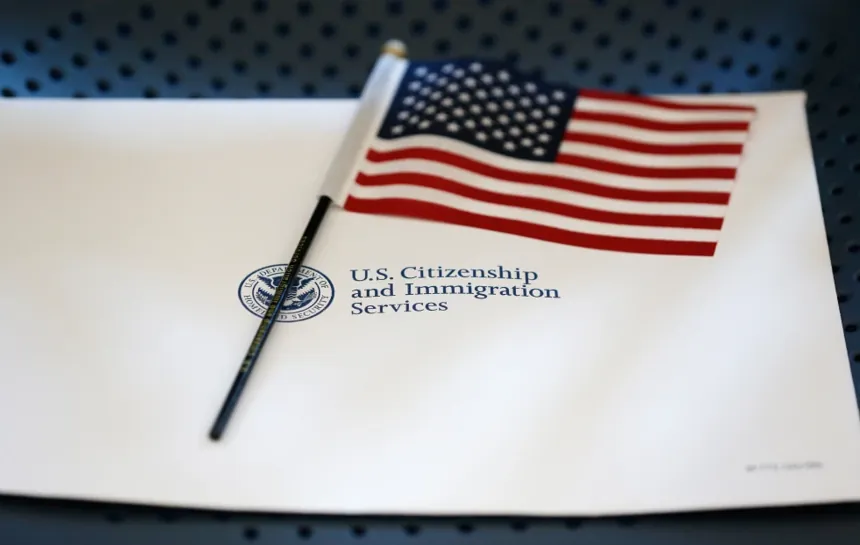
According to U.S. Citizenship and Immigration Services, most foreigners holding temporary legal status — including students, temporary workers, refugees and asylum recipients — must return to their country of origin to complete green card applications unless they qualify under undefined “extraordinary circumstances.” Officials said immigration officers will determine exemptions on a case-by-case basis.
The move represents a sharp departure from a long-standing “adjustment of status” system that allowed eligible applicants to remain inside the United States while seeking lawful permanent residency. Immigration attorneys and policy analysts said the change could restructure how employment-based and family-sponsored immigration operates across the country.

Policy Shift Expands Executive Immigration Controls
The administration framed the measure as an effort to restore the original purpose of temporary visas and reduce long-term overstays. In a statement cited by multiple outlets, USCIS argued that nonimmigrant visas were intended for short-term purposes and should not automatically function as pathways toward permanent residence.
According to Reuters and The Associated Press, the policy also aims to redirect agency resources toward other immigration priorities while tightening controls on legal migration channels. The administration has already introduced additional restrictions involving visa durations, entry suspensions and expanded screening measures since returning to office.
Former immigration officials said the policy could significantly reduce the number of applicants able or willing to pursue permanent residency due to travel barriers, lengthy consular processing times and uncertainty surrounding reentry approvals. Estimates cited in reports indicate that roughly 600,000 people annually apply for green cards while already residing in the United States.
Legal And Economic Concerns Intensify
Immigration advocates warned that the policy could create extended family separations, particularly for applicants from countries facing visa restrictions or limited U.S. diplomatic operations. Humanitarian organizations argued that refugees, trafficking survivors and applicants from politically unstable regions could face additional risks if forced to return abroad during processing.
Business groups and legal analysts also raised concerns about the effect on U.S. employers that rely on foreign labor programs, especially in technology, healthcare and higher education sectors. Critics said requiring applicants to leave the country during processing could disrupt employment continuity and weaken the attractiveness of U.S.-based recruitment.
■ Related News




The administration has not clarified whether pending adjustment-of-status applications will be affected or whether applicants must remain overseas for the full duration of processing. USCIS has also not released detailed implementation timelines or formal exemption standards.
Oversight And Legal Challenges Expected
Immigration lawyers and advocacy organizations indicated that legal challenges are likely once implementation guidance is finalized. Analysts said courts may ultimately determine whether the executive branch can substantially limit adjustment-of-status procedures without congressional action.
The policy is expected to become a central issue in broader debates over the administration’s immigration agenda and executive authority. With legal immigration increasingly becoming a focus of federal enforcement strategy, the change could reshape future pathways to U.S. citizenship and permanent residency for years ahead.