NATO allies reacted with confusion after U.S. President Donald Trump unexpectedly announced plans to send 5,000 additional American troops to Poland, reversing earlier moves aimed at reducing the U.S. military presence in Europe. The sudden policy shift has intensified concerns among European governments over Washington’s strategic direction and long-term commitment to NATO security arrangements.
The announcement came only weeks after the Trump administration signaled a reduction of roughly 5,000 troops stationed in Europe, including the suspension of several deployments linked to Poland and Germany. Defense officials and diplomats across the alliance said the rapid change created uncertainty about NATO planning at a time of heightened tensions involving Russia and the war in Ukraine.
NATO Allies Struggle to Interpret Washington’s Strategy
European officials said the conflicting announcements complicated military coordination within the alliance. Swedish Foreign Minister Maria Malmer Stenergard described the situation as difficult to navigate, while several NATO governments sought clarification from Washington regarding future troop levels and deployment priorities.

The Pentagon had previously indicated that troop rotations into Poland would be reduced and that certain missile-related deployments to Germany would be halted. Some American soldiers assigned to Eastern Europe reportedly had their deployments canceled shortly before departure.
Trump later announced on Truth Social that the United States would instead deploy “an additional 5,000 troops to Poland,” citing his relationship with Polish President Karol Nawrocki. The move surprised NATO officials because it appeared to contradict earlier plans for a drawdown in Europe.
Eastern Flank Security Remains Central Concern
Officials in Poland welcomed the revised deployment decision, arguing that maintaining a strong American presence remains critical for deterrence along NATO’s eastern flank. Polish Foreign Minister Radek Sikorski said the troop presence would remain broadly consistent with previous levels.
Baltic nations also monitored developments closely because several planned troop rotations into Estonia and Lithuania were linked to the suspended Poland deployment. Estonian and Lithuanian officials characterized the disruption as manageable but acknowledged concerns over operational uncertainty.
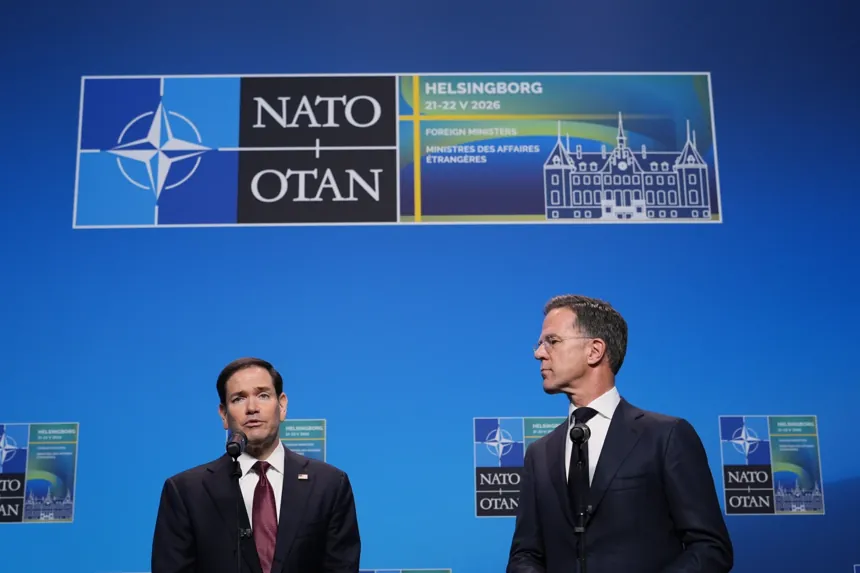
NATO Secretary-General Mark Rutte attempted to calm concerns by emphasizing that the alliance has procedures in place for reviewing troop posture and defense planning. However, he declined to discuss details of ongoing consultations regarding future U.S. commitments in Europe.
■ Related News

Diplomatic Tensions Add Pressure
The troop controversy unfolded amid wider friction between Washington and several European capitals. Trump had recently criticized Germany and threatened additional tariffs on European car imports following remarks by German Chancellor Friedrich Merz regarding U.S. strategy in the Iran conflict.
U.S. Secretary of State Marco Rubio insisted the changes were not punitive and reflected an ongoing reassessment of American force requirements worldwide. Rubio said NATO allies broadly understood that the United States may eventually reduce its military footprint in Europe as strategic priorities evolve.
Analysts said the inconsistent messaging has increased anxiety within Europe over whether Washington could scale back security guarantees more rapidly than expected. Several governments are already accelerating defense spending and considering greater military self-reliance amid uncertainty surrounding future U.S. policy.
Questions Grow Over NATO’s Long-Term Stability
The United States currently maintains around 80,000 troops across Europe, and American law requires consultations with allies before major reductions below certain thresholds. Despite Trump’s latest announcement regarding Poland, NATO officials believe broader force restructuring discussions are still underway.
Security experts warned that abrupt policy reversals risk undermining alliance cohesion at a time when NATO continues to face pressure from Russia and instability along its eastern borders. According to international reports, European diplomats are increasingly seeking clearer long-term guarantees from Washington to avoid strategic uncertainty within the alliance.