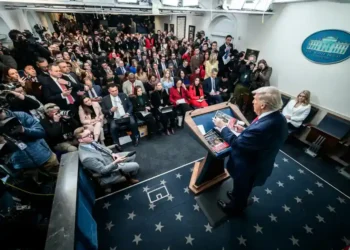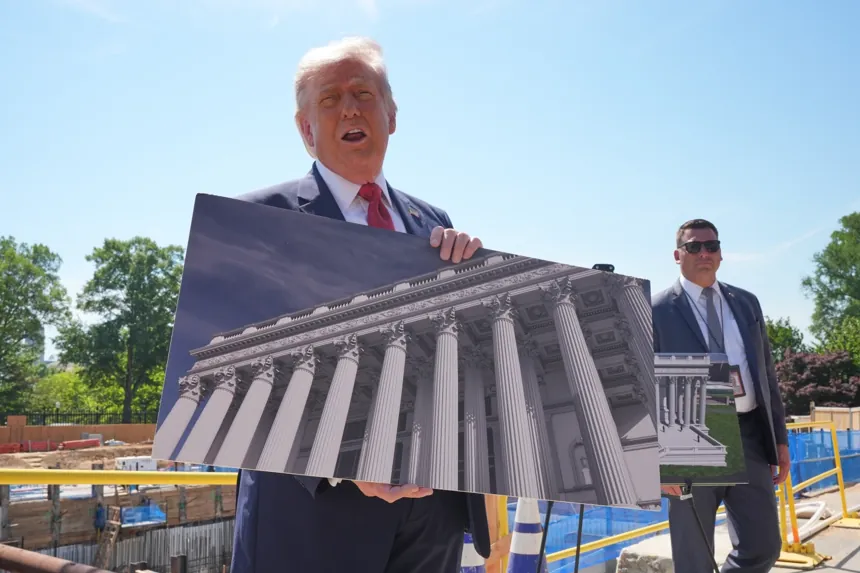
President Donald Trump toured reporters through the construction site of a new White House ballroom as congressional resistance intensified over a proposed $1 billion federal security package linked to the project and broader campus upgrades.
According to The Associated Press, Trump used the visit to defend the large-scale redevelopment effort after Senate lawmakers raised concerns about the cost and political timing of the proposal during an election year marked by inflation pressures and instability tied to the Iran conflict.
The administration argues the project is necessary to modernize White House event and security infrastructure, while critics in Congress question whether taxpayer funding should support elements connected to the president’s long-promoted ballroom expansion. The dispute has widened into a broader debate over executive spending priorities and congressional oversight authority.

Trump said the ballroom itself would be privately financed through donations and his own contributions, while federal funding would focus on security systems surrounding the White House complex.
Congressional Scrutiny Expands
The political conflict intensified after the Senate parliamentarian ruled that the administration’s proposed security funding could not remain inside a Republican-backed immigration enforcement package advancing through budget reconciliation procedures.
Several Republican lawmakers have also expressed discomfort with the scale of the request, particularly as voters continue facing high fuel and grocery prices. The administration has linked the enhanced security measures to evolving national security threats, including risks posed by drones and attacks on federal facilities.
Trump showcased multiple security-related features during the tour, including reinforced structural materials, underground facilities, and rooftop drone infrastructure that he claimed would strengthen White House protection capabilities.
Executive Expansion Faces Institutional Resistance
The ballroom project has become one of the most visible construction efforts undertaken at the White House in decades. The development replaced the former East Wing and is expected to include a large event space designed to host state functions and major gatherings.
■ Related News




Preservation groups and legal challengers argue the project exceeds traditional executive authority over White House modifications and should require deeper congressional review. Federal court disputes over construction approvals and historic preservation requirements have already delayed portions of the development.
The administration maintains the project carries long-term national security value beyond ceremonial functions, particularly after security concerns emerged following violent incidents at public political events earlier this year.
Oversight Debate Intensifies
The funding dispute reflects broader tensions between Congress and the executive branch over emergency spending, infrastructure authority, and presidential control over federal facilities. Democrats have criticized the proposal as an inappropriate use of taxpayer money, while some Republicans remain divided over balancing security concerns with fiscal restraint.
Trump has continued framing the ballroom as a long-term institutional investment intended for future administrations rather than a personal project. Still, the controversy surrounding financing, construction authority, and preservation challenges has transformed the development into a politically sensitive test of executive influence over federal infrastructure decisions.