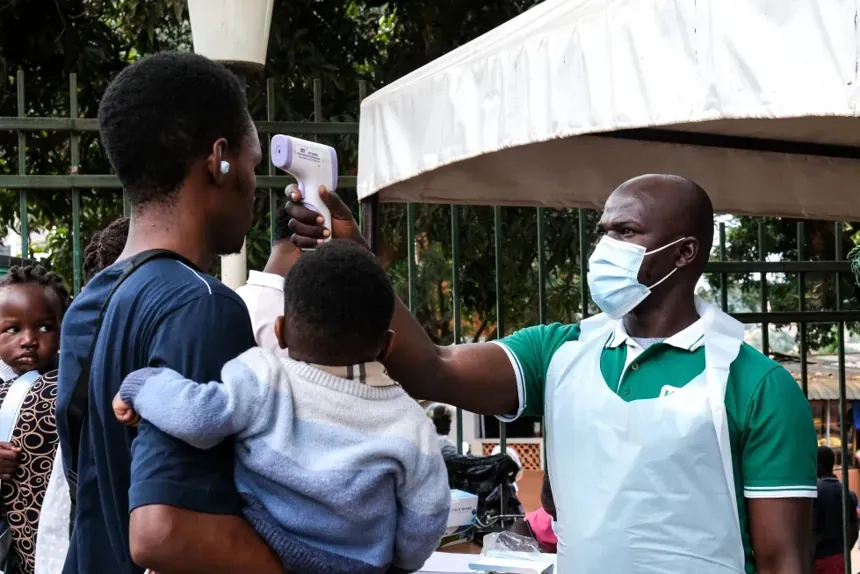
The Bundibugyo virus, one of several species of Ebola, has resurfaced in the Democratic Republic of Congo during a new outbreak that health officials are monitoring closely. Although less widely known than the Zaire strain responsible for some of the deadliest Ebola epidemics, Bundibugyo virus remains highly dangerous and difficult to contain in regions with limited healthcare infrastructure.
The outbreak has renewed attention on how Ebola viruses spread, why outbreaks continue to emerge in Central Africa, and what makes the Bundibugyo species particularly challenging for global health authorities. While decades of research have improved surveillance and treatment capabilities, experts say structural vulnerabilities — including weak health systems, regional instability, and limited vaccine coverage — continue to complicate containment efforts.
The Democratic Republic of Congo has experienced more Ebola outbreaks than any other country, making it central to global efforts to understand and control hemorrhagic fever diseases. According to reporting from Reuters, AP News, and the World Health Organization, the latest outbreak involves the Bundibugyo species, a relatively uncommon form of Ebola first identified in neighboring Uganda in 2007.

Unlike some previous outbreaks tied to the Zaire species, the Bundibugyo virus has fewer approved medical countermeasures specifically tailored to it. This distinction matters because vaccines and therapeutics developed over the past decade have largely focused on the Zaire strain, which caused the massive West African epidemic between 2014 and 2016.
The new outbreak also highlights broader concerns about emerging infectious diseases in regions where environmental pressures, population movement, and strained healthcare systems increase the risk of zoonotic transmission.
What Is the Bundibugyo Virus?
The Bundibugyo virus is one of six known species within the Ebola virus family. It belongs to the genus Ebolavirus, which includes several viruses capable of causing severe hemorrhagic fever in humans and primates.
The species was first identified during an outbreak in Uganda’s Bundibugyo district in 2007, which led to hundreds of infections and significant fatalities. According to the World Health Organization, Bundibugyo virus disease presents symptoms similar to other forms of Ebola, including fever, weakness, vomiting, diarrhea, and, in severe cases, internal and external bleeding.
Although it is considered somewhat less lethal than the Zaire species, the virus still carries a high mortality rate. Public health experts caution that fatality rates can vary significantly depending on the speed of diagnosis, availability of supportive treatment, and overall healthcare capacity.



Reuters and AP reporting have noted that the current outbreak in Congo has prompted rapid surveillance measures aimed at tracing contacts and isolating confirmed cases before wider transmission occurs.
How Ebola Viruses Spread
Ebola viruses are believed to originate in animals, with fruit bats widely considered the most likely natural reservoir. Human outbreaks typically begin when people come into contact with infected wildlife, including bats or nonhuman primates.
Once transmission to humans occurs, the virus spreads through direct contact with bodily fluids such as blood, saliva, sweat, vomit, or other secretions from infected individuals. Contaminated medical equipment and traditional burial practices involving close contact with bodies have historically contributed to transmission during outbreaks.
Unlike airborne respiratory viruses such as influenza or COVID-19, Ebola requires close physical contact for transmission. However, outbreaks can still escalate rapidly in communities lacking protective medical equipment, sanitation infrastructure, or accessible healthcare facilities.
According to WHO guidance, early isolation and supportive treatment significantly improve survival chances while also reducing transmission risks.
Why Congo Experiences Repeated Ebola Outbreaks
The Democratic Republic of Congo has faced repeated Ebola outbreaks since the virus was first discovered near the Ebola River in 1976. Several structural factors contribute to the country’s continued vulnerability.
Large tropical forest regions increase human interaction with wildlife reservoirs that may carry the virus. Population displacement, mining activity, deforestation, and rural economic pressures can intensify contact between humans and infected animals.
Healthcare infrastructure remains uneven across many provinces, particularly in remote regions where transportation and laboratory access are limited. Insecurity caused by armed conflict in eastern Congo has also complicated vaccination campaigns and contact-tracing operations during previous outbreaks.
Reuters has reported in past outbreaks that attacks on healthcare workers and mistrust of government authorities sometimes hinder public health responses. International health agencies have repeatedly warned that community trust is essential for containment strategies to succeed.
The recurring outbreaks have nevertheless helped Congolese health authorities build substantial institutional experience in Ebola response. Surveillance systems, rapid testing networks, and emergency coordination mechanisms have improved compared with earlier decades.
How the Bundibugyo Species Differs From Other Ebola Viruses
The Ebola virus family includes several species capable of infecting humans, but they differ in lethality, geographic distribution, and available medical countermeasures.
The Zaire species is the deadliest and best-studied form of Ebola. It was responsible for the West Africa epidemic that killed more than 11,000 people and led to the accelerated development of vaccines and antibody-based treatments.
The Sudan species has also caused significant outbreaks, including recent cases in Uganda. Meanwhile, the Bundibugyo species has appeared less frequently, resulting in more limited research and fewer targeted pharmaceutical tools.
This creates a major challenge for outbreak management. Vaccines approved for the Zaire strain may not provide equivalent protection against Bundibugyo virus disease. According to WHO assessments and scientific literature cited by international health agencies, researchers are continuing to evaluate broader vaccine platforms capable of addressing multiple Ebola species simultaneously.
Supportive care therefore remains central to treatment during Bundibugyo outbreaks. This includes hydration, management of complications, monitoring of organ function, and infection prevention measures.
The Role of Vaccines and Experimental Treatments
The development of Ebola vaccines after the 2014–2016 West Africa epidemic marked a major turning point in outbreak control. The rVSV-ZEBOV vaccine demonstrated strong effectiveness against the Zaire species and became a cornerstone of emergency response strategies in Congo and elsewhere.
However, the Bundibugyo species exposes the limitations of strain-specific vaccine development.
Researchers and international organizations are now working on broader “multivalent” vaccines designed to protect against several Ebola species at once. According to reporting from scientific agencies and global health institutions, some experimental vaccine candidates remain under study but have not yet achieved widespread deployment.
Therapeutic options face similar limitations. Monoclonal antibody treatments developed for Zaire Ebola may not perform the same way against Bundibugyo infections because the viruses differ genetically.
As a result, outbreak responses involving the Bundibugyo species depend heavily on traditional public health interventions: rapid case detection, contact tracing, quarantine procedures, and community education.
Why Global Health Agencies Monitor Ebola Closely
Although Ebola outbreaks are generally concentrated in Central and East Africa, international health authorities closely monitor each outbreak because infectious diseases can cross borders rapidly through modern travel networks.
The World Health Organization, the Africa Centres for Disease Control and Prevention, and humanitarian agencies typically coordinate emergency responses that include laboratory support, surveillance teams, protective equipment distribution, and public communication campaigns.
The Ebola experience has also influenced broader global health preparedness strategies. Lessons from Ebola outbreaks informed international responses to later public health emergencies, including COVID-19.
Experts frequently cite Ebola as an example of how localized outbreaks can become international concerns if early containment efforts fail. However, health officials stress that Ebola spreads far less easily than airborne respiratory diseases.
Global concern instead centers on the severe nature of the disease, high fatality rates, and the challenges of managing outbreaks in fragile healthcare environments.
Why the Threat Persists
Despite advances in vaccines, diagnostics, and outbreak response systems, Ebola outbreaks continue to emerge because the underlying ecological and structural conditions remain difficult to eliminate.
Scientists still do not fully understand all the environmental dynamics that trigger spillover events from animals to humans. Climate pressures, land-use changes, and expanding human settlement patterns may increase exposure risks in some regions.
At the same time, persistent poverty, weak healthcare access, and political instability can delay detection and containment efforts. Public health experts say outbreaks are likely to continue periodically even as scientific tools improve.
According to WHO and World Bank assessments, strengthening local healthcare systems remains one of the most important long-term defenses against recurring epidemics in Central Africa.
The latest Bundibugyo outbreak in Congo illustrates both the progress and the remaining vulnerabilities in global epidemic preparedness. Rapid surveillance systems and international coordination mechanisms are more developed than in previous decades, but gaps in vaccines and healthcare infrastructure continue to pose serious risks.
While the Bundibugyo species is less well known than other forms of Ebola, it underscores the broader reality that emerging infectious diseases remain a persistent challenge for global public health systems. Scientists and health agencies continue to study how Ebola viruses evolve, spread, and interact with environmental pressures, but many uncertainties remain unresolved. As outbreaks continue to occur in vulnerable regions, the ability to respond quickly and maintain public trust will remain central to limiting future epidemics.