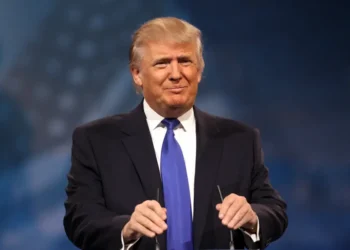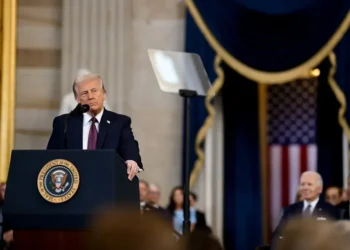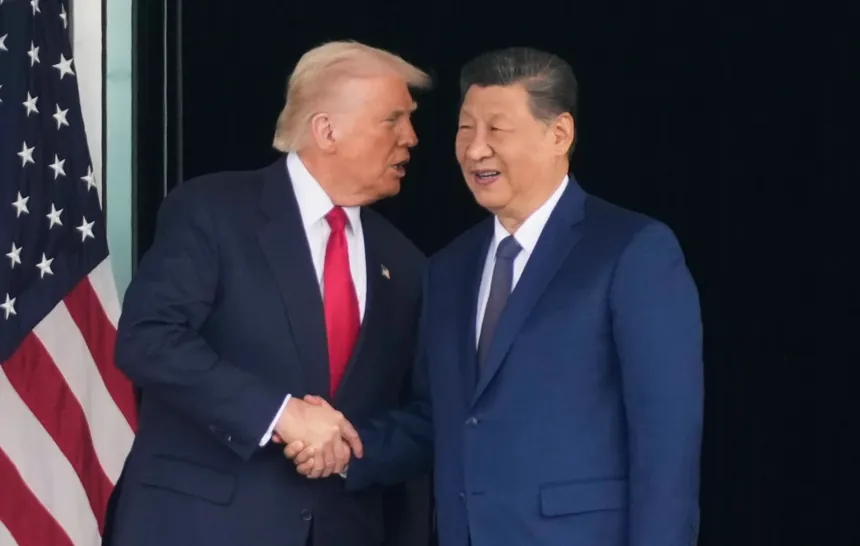
U.S. President Donald Trump and Chinese President Xi Jinping are entering a high-stakes summit in Beijing after months of efforts to stabilize a damaging trade confrontation, but major disputes over technology, Taiwan, energy security, and global influence continue to threaten longer-term relations between the world’s two largest economies.
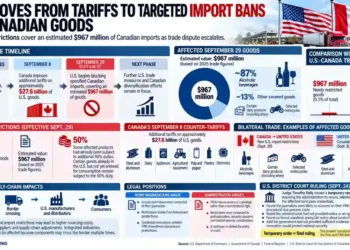
The summit, scheduled for May 14–15, follows a fragile trade truce that reduced tariff pressure after years of escalating economic restrictions and retaliatory measures. Reporting from the Associated Press indicated that both governments are expected to extend the current tariff pause while pursuing narrower economic agreements rather than a broad breakthrough.
Although Trump has publicly promoted the negotiations as evidence of improving ties with Beijing, trade volumes between the two countries remain significantly below previous levels. China has reduced imports of some American goods while diversifying supply chains and strengthening trade relationships elsewhere in Asia, the Middle East, and Africa.

The meeting also takes place amid mounting geopolitical strain caused by the Iran conflict, growing competition over artificial intelligence, and renewed tensions surrounding Taiwan. Analysts say these overlapping disputes have transformed the summit into a broader test of whether Washington and Beijing can manage strategic rivalry without triggering deeper economic or military confrontation.
Trade Stability Masks Deeper Economic Friction
The recent easing of tariffs has provided temporary relief to manufacturers, exporters, and financial markets after months of uncertainty. According to Associated Press reporting, negotiators are discussing additional Chinese purchases of U.S. agricultural products and commercial aircraft while Washington considers limited adjustments to export restrictions.
Despite those efforts, structural disagreements remain unresolved. U.S. officials continue pressing China over industrial subsidies, access to rare earth minerals, and restrictions affecting advanced semiconductor technology. Beijing, meanwhile, opposes American export controls that it argues are designed to slow China’s technological development.
Economists note that the two countries are increasingly reshaping supply chains rather than restoring the deep integration that defined earlier decades of globalization. Chinese exports to the United States have continued to decline, while U.S. companies have shifted portions of production to countries including Vietnam, India, and Mexico.
Taiwan and Regional Security Raise Diplomatic Stakes
Taiwan is expected to remain one of the most sensitive topics during the summit. Beijing has intensified pressure on Washington to reduce military and diplomatic support for the self-governing island, which China claims as its own territory.
■ Related News




Trump’s approach toward Taiwan has generated uncertainty among regional allies after he signaled a more transactional foreign policy stance during his second term. While his administration approved major arms sales to Taipei, analysts interviewed by AP warned that Chinese officials may test whether Washington is willing to soften its position in exchange for economic concessions.
At the same time, tensions linked to the Iran conflict have complicated the broader diplomatic environment. Washington is urging Beijing to use its influence with Tehran to help stabilize energy markets and reduce pressure on shipping routes through the Strait of Hormuz, a corridor critical to China’s oil imports.
Strategic Competition Continues Beyond Trade
The summit reflects a wider shift in global geopolitics in which economic negotiations are increasingly tied to national security and technological competition. Chinese officials have sought to present Beijing as a stable international actor capable of balancing global tensions, contrasting that image with what they describe as unpredictability in U.S. foreign policy.
Meanwhile, the White House continues to frame China as America’s principal long-term strategic competitor despite the temporary easing of tariff disputes. Analysts at the Council on Foreign Relations and other institutions noted that both governments appear focused more on managing rivalry than resolving it.
Business leaders accompanying the U.S. delegation are expected to push for greater market access and more predictable trade rules, but few observers anticipate major structural agreements emerging from the summit. Instead, diplomats and analysts widely expect incremental measures aimed at preventing further deterioration in relations while preserving economic stability ahead of politically sensitive election cycles in both countries.
The outcome of the Beijing meeting is likely to shape not only bilateral economic policy but also broader questions surrounding global supply chains, regional security in Asia, and the future balance of power between Washington and Beijing.