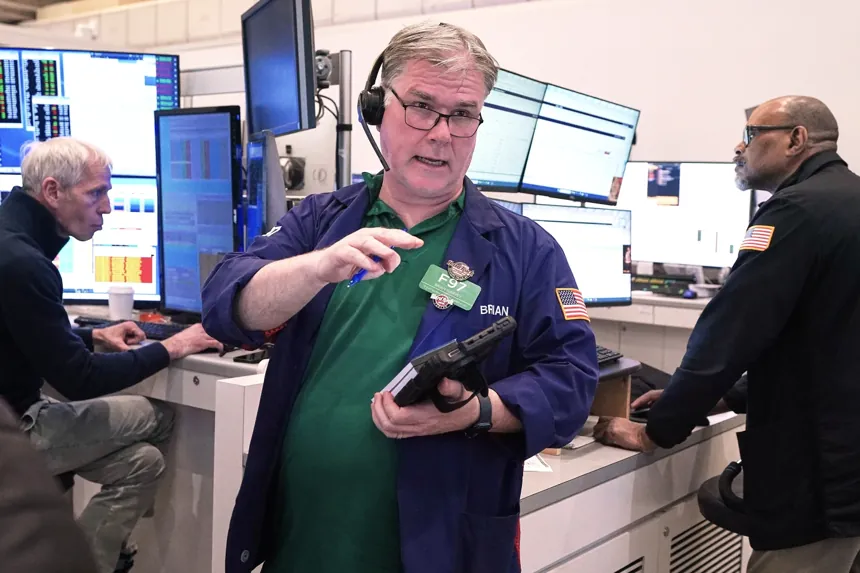
Wall Street’s record-setting rally lost momentum Tuesday as investors pulled back from high-flying artificial intelligence stocks while escalating oil prices revived concerns about inflation and interest rates.
The S&P 500 closed down 0.2% at 7,400.96 after reaching an all-time high a day earlier, while the Nasdaq Composite fell 0.7% to 26,088.20 amid weakness in semiconductor and AI-linked companies. The Dow Jones Industrial Average edged up 0.1% to 49,760.56, supported by gains in non-technology sectors, according to market data.
The market reversal reflected growing caution toward richly valued AI-related stocks following months of strong gains fueled by investor enthusiasm over artificial intelligence infrastructure spending and data center demand.

Chipmakers and AI infrastructure companies led the decline. Intel fell 6.8%, while Micron Technology dropped 3.6% after both stocks posted significant gains earlier this year. Cloud-computing company CoreWeave also declined 6.1%, trimming part of its 2026 advance.
Analysts said the downturn highlighted increasing sensitivity among investors to valuation risks in the technology sector, particularly as higher energy costs threaten to complicate the broader inflation outlook.
Oil prices climbed sharply as geopolitical tensions linked to the ongoing U.S.-Iran conflict continued to disrupt global supply routes. Brent crude rose 3.4% to settle at $107.77 per barrel, extending gains tied to shipping disruptions in the Strait of Hormuz, a critical channel for global energy exports.
The rise in crude prices added to investor concerns after recent U.S. inflation data came in above economists’ expectations, reinforcing fears that the Federal Reserve could maintain tighter monetary policy for longer. Treasury yields also moved higher as markets adjusted expectations for future rate decisions.
Technology Sector Faces Renewed Scrutiny
The latest selloff also reflected broader unease over the sustainability of the AI-driven market rally that has propelled major indexes throughout 2026.
■ Related News




Pressure on technology shares intensified after South Korea’s Kospi index fell 2.3% amid debate over proposals tied to redistributing AI-related corporate windfall profits, according to market reports. The decline in Asian tech stocks spilled into U.S. trading hours and amplified weakness in semiconductor shares.
Despite the retreat in major technology names, earnings results from several U.S. companies continued to provide support for parts of the market.
Zebra Technologies surged 11.4% after reporting quarterly results and full-year profit guidance above analyst expectations. The company cited continued enterprise demand for automation and workflow digitization products.
Other companies faced steeper declines tied to earnings disappointments and deal-related developments. Under Armour dropped 17% after reporting a wider-than-expected quarterly loss, while GameStop declined following the rejection of its acquisition proposal for eBay.
Global Markets Mixed as Energy Risks Persist
European and Asian equity markets also weakened as investors monitored energy supply disruptions and the potential economic effects of sustained higher oil prices.
Germany’s DAX fell 1.6%, while France’s CAC 40 lost 0.9%. Japan’s Nikkei 225, however, gained 0.5%, supported by selective technology buying.
Market strategists said equities remain vulnerable to swings in oil prices and inflation expectations, particularly as investors reassess whether the strong earnings growth underpinning recent gains can offset mounting geopolitical and macroeconomic risks.
Although major U.S. indexes remain significantly higher for the year, Tuesday’s session underscored the market’s growing dependence on continued AI-sector momentum and stable inflation conditions to sustain the rally.