Journos News - Breaking News, World News, Top Stories, Todays Headlines and Flash Reports
Wednesday, September 2, 2026
  • Login
  • Home
  • World
    • Africa
    • Americas
    • Asia
    • Europe
    • Middle East
    • Oceania
  • Politics
  • Business
  • Technology
  • Health
  • Science
  • Sports
  • Entertainment
  • Culture
No Result
View All Result
  • Home
  • World
    • Africa
    • Americas
    • Asia
    • Europe
    • Middle East
    • Oceania
  • Politics
  • Business
  • Technology
  • Health
  • Science
  • Sports
  • Entertainment
  • Culture
No Result
View All Result
Journos News - Breaking News, World News, Top Stories, Todays Headlines and Flash Reports
No Result
View All Result
Home World News Politics

Gulf Pressure Campaign Intensifies as Trump Weighs Deeper War Against Iran

Regional allies push Washington toward decisive escalation while risks of wider conflict mount

The Daily Desk by The Daily Desk
March 31, 2026
in Politics, World News
0
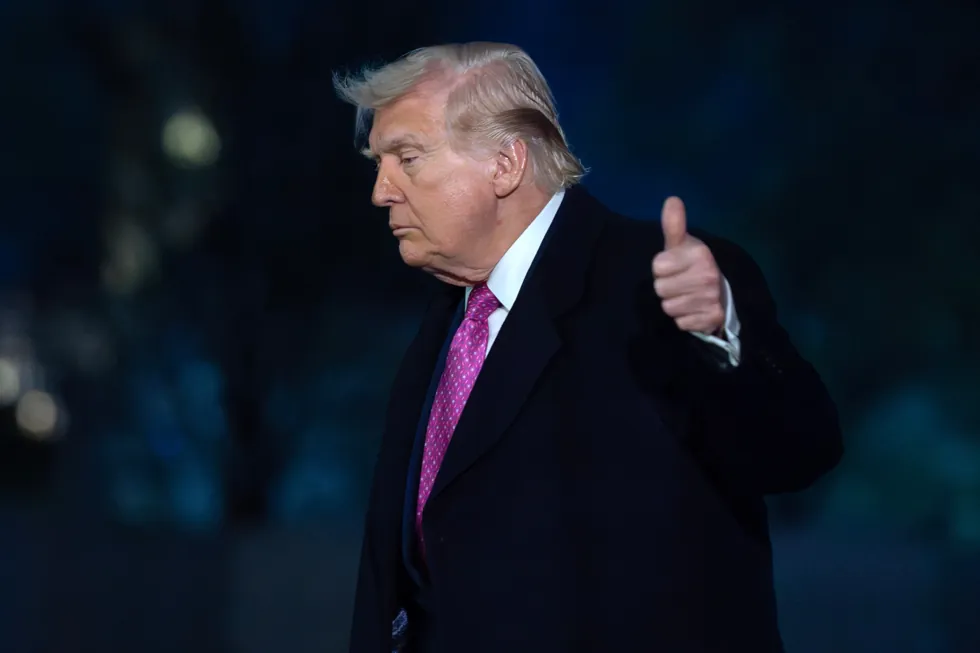
Gulf leaders press US for deeper military action against Iran- AP Photo/Jose Luis Magana

Saudi and UAE pressure Washington for a more decisive Iran war strategy.- AP Photo/Jose Luis Magana

WASHINGTON — A coordinated push by Gulf Arab states is reshaping the trajectory of the U.S.-led war against Iran, with key regional partners quietly urging President Donald Trump to extend military operations until Tehran’s leadership and strategic capabilities are fundamentally weakened.

According to a report by The Associated Press, officials from Saudi Arabia, the United Arab Emirates, Kuwait, and Bahrain have conveyed in private discussions that a limited campaign risks leaving Iran structurally intact. Instead, they argue the current moment presents a rare opening to impose lasting constraints on Tehran’s regional power.

The appeals come as Trump signals mixed intentions — alternating between suggestions that Iran may be ready to negotiate and warnings of further escalation if no agreement emerges.

Strategic Alignment Hardens Behind Escalation Path

What began as early unease among Gulf capitals over the launch of the conflict has shifted into a more assertive posture. Regional governments that initially warned of destabilizing consequences are now recalibrating, aligning more closely with Washington’s military objectives.

Privately, officials argue that halting operations prematurely could embolden Iran’s leadership, allowing it to reconstitute its military and proxy networks. The emphasis has shifted toward achieving structural changes — either through behavioral transformation or direct pressure on Iran’s ruling system.

This recalibration reflects a broader strategic calculation: that incremental damage to Iran’s capabilities may prove insufficient to alter long-term regional dynamics.

Diverging Thresholds Expose Coalition Strains

Despite broad alignment, differences are emerging over how far escalation should go. Saudi Arabia and the United Arab Emirates are leading calls for sustained military pressure, with some officials advocating for more aggressive options.

The UAE, in particular, has adopted a sharper tone, with senior figures framing Iran’s current posture as incompatible with regional stability. Kuwait and Bahrain are also seen as supportive of intensified action.
■ Related News

Business graphic showing higher Treasury yields, rising Brent crude prices, inflation concerns, market impacts, Federal Reserve policy and Strait of Hormuz risks.

U.S. Bonds Sell Off as Rising Oil Prices Fuel Inflation Anxiety

September 1, 2026
Graphic explaining Iran war economic impacts, showing costs for consumers and farmers, beneficiaries, oil prices, markets, and global trade pressures.

Investors Prosper as Consumers Pay the Price of Six Months of Iran War

August 31, 2026
Pacific Islands Forum leaders meet during a regional leaders meeting in 2017.

Great Power Rivalry Threatens to Overshadow Pacific Islands Summit

August 31, 2026
Russian President Vladimir Putin stands with Indian Prime Minister Narendra Modi and Chinese leader Xi Jinping before a BRICS Summit meeting.

China, Russia and India Leaders Gather for SCO Summit as U.S. Influence Faces Challenge

August 31, 2026

By contrast, Oman and Qatar continue to favor diplomatic channels, underscoring lingering concerns that a prolonged conflict could trigger wider regional fallout.

These internal divergences highlight a fragile consensus — one that could fracture if escalation crosses certain thresholds or if civilian and economic costs mount further.

Economic Lifelines and Energy Security at Risk

At the core of Gulf concerns is the vulnerability of critical infrastructure and global energy flows. The Strait of Hormuz — through which a significant portion of the world’s oil supply transits — has already emerged as a pressure point in the conflict.

Saudi officials have argued that any acceptable end-state must guarantee the uninterrupted flow of energy exports, alongside the dismantling of Iran’s missile arsenal and constraints on its nuclear ambitions.

Yet the longer the conflict persists, the greater the exposure of Gulf economies to retaliatory strikes. Iranian attacks — while officially framed as targeting U.S. assets — have increasingly affected civilian and commercial sites, amplifying regional anxiety.

This dual dynamic — seeking decisive outcomes while managing immediate vulnerabilities — underscores the high-stakes balancing act facing Gulf leadership.

Diplomatic Space Narrows as Rhetoric Hardens

Public messaging from regional actors is also shifting. Emirati officials have adopted more explicit language, framing the conflict as a necessary response to systemic threats posed by Iran’s military doctrine and regional activities.

At the same time, U.S. officials have emphasized alignment with Gulf partners. Secretary of State Marco Rubio underscored that regional governments broadly support Washington’s objectives, reinforcing the perception of a unified front despite underlying tensions.

Iran, for its part, continues to signal that its operations are directed at U.S. forces, while warning of broader consequences if the conflict deepens.

As rhetoric intensifies on all sides, diplomatic pathways appear increasingly constrained — raising the likelihood that military calculations will dominate near-term decision-making.

Escalation Risks Expand Beyond Initial War Objectives

Even as Gulf allies press for a more decisive campaign, the operational complexities of widening the war remain significant. The United States has so far refrained from formally incorporating regional militaries into offensive operations, partly to avoid coordination risks and unintended clashes.

Incidents in the early days of the conflict, including friendly fire and operational mishaps, have reinforced caution about expanding the coalition’s combat role.

At the same time, political considerations — including varying levels of formal ties with Israel among Gulf states — add another layer of complexity to any deeper military integration.

Analysts warn that a major triggering event — such as mass casualties or a direct strike on critical infrastructure — could rapidly shift calculations, potentially drawing Gulf states into a more active combat role.

A Conflict Moving Toward Strategic Inflection

The convergence of Gulf pressure and U.S. deliberation is pushing the conflict toward a critical juncture. What began as a campaign aimed at degrading Iran’s capabilities is increasingly framed by regional actors as an opportunity to reshape the balance of power.

Yet the absence of a clearly defined end-state continues to cloud decision-making. Without consensus on what constitutes “decisive” success, the risk of prolonged conflict — and unintended escalation — remains high.

For Washington, the challenge now lies in reconciling allied expectations with operational realities, as the war enters a phase where each additional step carries broader regional consequences.


Tags: #Diplomacy#Geopolitics#GulfWar#IranConflict#MiddleEast#OilMarkets#SaudiArabia#Security#StraitOfHormuz#Trump#UAE#WorldNews
The Daily Desk

The Daily Desk

The Daily Desk is a contributor at JournosNews.com covering politics, media, governance, and the evolving dynamics of public discourse. Stories published under this byline are produced in accordance with JournosNews' editorial standards, with an emphasis on verified reporting, accuracy, context, and impartiality.

Related Posts

U.S. Navy sailor mans a .50-caliber machine gun aboard USS Kitty Hawk while transiting the Strait of Hormuz toward the Arabian Gulf.

U.S. Strikes Iranian Rocket Launchers Near Strait of Hormuz, Breaking Month-Long Lull

August 31, 2026
Iranian leader pictured in an official image associated with a message marking Workers’ Day and Teachers’ Day in May 2026.

Iran’s Leaders Defy the U.S. Six Months Into War, Signaling Little Tolerance for Dissent

August 29, 2026
Donald Trump speaks at the Conservative Political Action Conference in Washington, D.C., in 2011 during a political address.

After Six Months of Iran War, U.S. Goals Have Shifted. Strait of Hormuz Is Now a Top Concern

August 27, 2026
USS Abraham Lincoln aircraft carrier underway in the Atlantic Ocean during a U.S. Navy training exercise.

USS Abraham Lincoln to Stop in Thailand After Lengthy Middle East Deployment

August 27, 2026
Asian stock markets rise as oil prices fall, with market indexes, crude prices, Nvidia shares and key investor risks highlighted. - Journos News, File

Asian Shares Rise as Lower Oil Prices and AI Optimism Support Markets

August 26, 2026
Iranian fuel tankers arrive in Lebanon as Hezbollah-linked fuel shipments enter the country amid a severe energy crisis.

Iran’s Fuel Lines Grow as U.S. Sanctions Deepen Economic Pressure

August 26, 2026
Strait of Hormuz connecting the Gulf of Oman and Persian Gulf, photographed from the International Space Station.

LIVE: Middle East Conflict — Ongoing Coverage

August 12, 2026
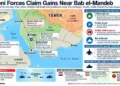
Map showing reported Houthi attack near Bab el-Mandeb and U.S. maritime operations across the Gulf of Oman and Strait of Hormuz

Houthi Attack Kills Six as U.S. Forces Strike Ship Near Iranian Blockade

August 12, 2026
Load More
Next Post
Spain blocks US military aircraft linked to Iran war operations - AP Photo/Omar Havana, file

Spain’s Iran Airspace Ban Deepens NATO Strains as Alliance Reciprocity Comes Under Pressure

Gulf shipping disruption and Iran strike developments on March 31 - AP Photo

LIVE: Iran War Escalation — 40 Rolling Security Updates

JournosNews logo

Journos News delivers globally neutral, fact-based journalism that meets international media standards — clear, credible, and made for a connected world.

  • Categories
  • World News
  • Politics
  • Business & Markets
  • Technology
  • Health
  • Science
  • Sports
  • Arts & Culture
  • Resources
  • Editorial Standards
  • Submit a Story
  • Advertise with Us
  • Syndication & Partnerships
  • Site Map
  • Press & Media Kit
  • Editorial Team
  • Careers

Join thousands of readers receiving the latest updates, tips, and exclusive insights straight to their inbox. Never miss an important story again.

  • About Us
  • Editorial & Trust Center
  • Contact Us
  • Privacy Policy
  • Terms of Use & Copyright Notice

© JournosNews.com All rights reserved.

Welcome Back!

Login to your account below

Forgotten Password?

Retrieve your password

Please enter your username or email address to reset your password.

Log In
JournosNews

Independent Journalism.
Verified Facts.

You're about to read a professionally edited article from JournosNews.com.

Every article is produced in accordance with our editorial standards, emphasizing factual accuracy, transparent attribution, fairness, editorial independence, and meaningful context.

Editorial Standards
No Result
View All Result
  • Home
  • World
    • Africa
    • Americas
    • Asia
    • Europe
    • Middle East
    • Oceania
  • Politics
  • Business
  • Technology
  • Health
  • Science
  • Sports
  • Entertainment
  • Culture

© JournosNews.com All rights reserved.

This website uses cookies. By continuing to use this website you are giving consent to cookies being used. Visit our Privacy and Cookie Policy.